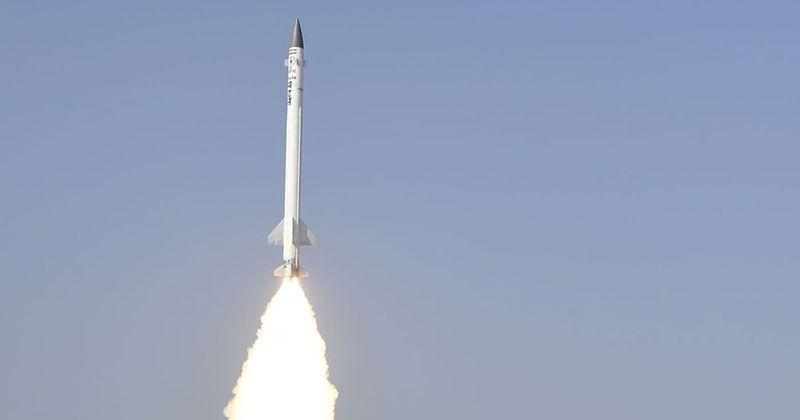
India has issued a Notice to Airmen (NOTAM) for a major missile test scheduled to take place in the Bay of Bengal from December 17 to December 20, 2025. The NOTAM establishes a massive no-fly and no-ship exclusion zone extending up to 3,550 kilometers, making it one of the largest safety corridors ever declared for an Indian missile trial. This unprecedented expansion of the exclusion zone signals a significant leap in India's strategic missile capabilities, with strong speculation pointing to the test of a long-range ballistic missile capable of traveling over 3,000 kilometers.
Strategic Significance
The scale of the exclusion zone—stretching over 3,550 kilometers—dwarfs previous missile test zones, such as the 1,480-kilometer corridor notified in October 2025. This dramatic increase indicates that India is likely testing a missile with a much longer operational range, possibly an intermediate or intercontinental ballistic missile. Such systems are crucial for bolstering India's nuclear deterrence and enhancing its strategic reach, especially in the context of regional security dynamics.
Experts believe the test could involve a Submarine Launched Ballistic Missile (SLBM), a system that would further strengthen India's second-strike capability and nuclear triad. The location of the test, off the Odisha coast near Chandipur, is the country's primary missile testing range and has been used for previous Agni and Prithvi missile launches. The timing and scale of this test suggest that India is moving closer to operationalizing advanced missile systems capable of covering targets across Asia and beyond.
Civilian and Military Impact
The NOTAM will be active daily from 6:00 am to 6:00 pm IST throughout the test window. Civilian aviation and maritime traffic have been advised to reroute, while the Indian Air Force and Indian Navy will jointly enforce the restricted zone to ensure safety during the trial, particularly due to the risk of debris from missile stages. The extensive exclusion zone is designed to minimize the risk to commercial aircraft, ships, and coastal communities, reflecting the high stakes involved in such advanced missile tests.
The Indian government has not officially confirmed the nature of the missile being tested, but the expanded exclusion zone has triggered widespread speculation in defense circles and among regional observers. The test is seen as a demonstration of India's growing indigenous missile technology and its commitment to self-reliance in strategic defense systems.
Technological and Geopolitical Implications
India's missile development program, led by the Defence Research and Development Organisation (DRDO), has made significant strides in recent years. The country has successfully tested a range of ballistic missiles, including the Agni series, Prithvi, and K missile variants. The latest test, with its expanded range, is likely part of efforts to further validate the missile’s range, accuracy, and system integration, possibly as part of advanced user or operational trials.
From a geopolitical perspective, the test underscores India's intent to maintain a credible minimum deterrent against potential adversaries. The ability to deploy long-range missiles enhances India's strategic posture in South Asia and the Indo-Pacific region, where missile capabilities are a key factor in regional stability. The test also highlights India's growing defense ties with countries like the United States, France, and Israel, which have supported India's missile technology development through technology transfers and joint exercises.
Regional and Global Reactions
The announcement of the missile test has drawn attention from both regional and global observers. Neighboring countries, including China and Pakistan, are closely monitoring the situation, given the implications for regional security. The test is expected to prompt discussions on arms control and strategic stability in South Asia, as well as broader debates on missile proliferation and deterrence.
India's missile program is part of a broader effort to modernize its armed forces and strengthen its defense capabilities. The successful development and testing of long-range missiles are seen as critical for maintaining India's status as a major regional power and for ensuring its ability to respond to emerging security challenges.
Conclusion
India's missile test in the Bay of Bengal from December 17 to 20, 2025, marks a significant milestone in the country's strategic defense program. The expanded exclusion zone and speculation about a missile with a range exceeding 3,000 kilometers highlight India's growing capabilities and its commitment to self-reliance in missile technology. The test has important implications for regional security, India's defense posture, and its role as a major power in the Indo-Pacific region.