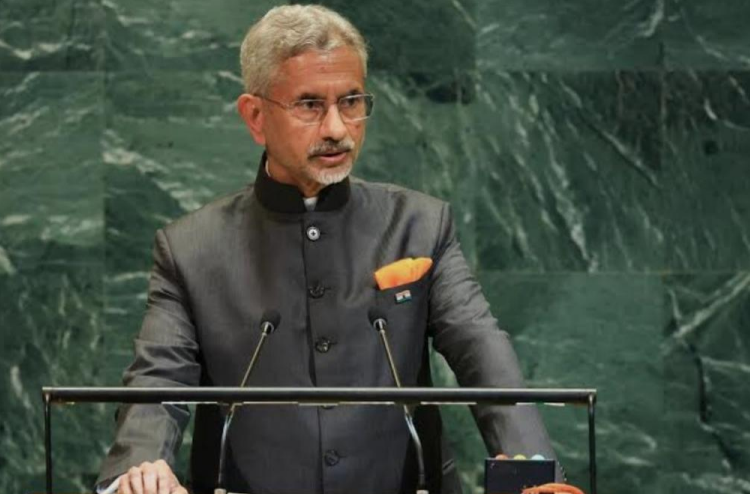
On the sidelines of the 80th session of the United Nations General Assembly, India’s External Affairs Minister Subrahmanyam Jaishankar held high-level discussions with U.S. Secretary of State Marco Rubio, signalling renewed momentum in the India–United States strategic partnership. The talks, confirmed on January 13, covered a wide range of priorities including trade, critical minerals, nuclear cooperation, defence, and energy, reflecting the expanding breadth of bilateral engagement between the two countries.
The conversation took place as global leaders gathered in New York for the milestone UN General Assembly session, providing a diplomatic backdrop that underscored India’s growing role in shaping economic and strategic discussions on the world stage.
Trade Talks Revived Amid Economic Pressures
Trade featured prominently in the discussions, with both sides reiterating their ambition to significantly expand bilateral commerce. India and the United States have set a target of more than doubling two-way trade to $500 billion by 2030, a goal that has gained urgency following setbacks in negotiations last year.
Previous trade talks failed to yield a comprehensive agreement, a development that unsettled markets and contributed to the Indian rupee sliding to record lows, unnerving investors awaiting progress in negotiations. Against this backdrop, Jaishankar and Rubio’s engagement was viewed as an effort to restore confidence and re-anchor economic dialogue at a time of global uncertainty.
According to the U.S. State Department, the two leaders discussed ongoing bilateral trade agreement negotiations and reaffirmed their shared interest in strengthening economic cooperation.
Critical Minerals and Energy Security Take Centre Stage
Another focal point of the talks was cooperation on critical minerals, a sector increasingly central to clean energy transitions, electric vehicles, and advanced manufacturing. As global supply chains for lithium, rare earths, and other strategic materials come under strain, India and the U.S. are seeking closer coordination to reduce vulnerabilities and diversify sourcing.
Energy cooperation also featured strongly. India has pledged to increase purchases of U.S. energy and defence equipment as part of efforts to narrow the trade gap and deepen strategic interdependence. These commitments reflect New Delhi’s broader strategy of securing reliable energy supplies while aligning more closely with key partners amid shifting geopolitical dynamics.
Nuclear Cooperation and a Policy Breakthrough
Civil nuclear cooperation emerged as a key area of convergence following India’s recent policy shift. The U.S. State Department said Secretary Rubio congratulated India on its move to end decades of state control over nuclear power, following parliamentary approval of landmark legislation opening the sector to greater private and foreign participation.
Rubio expressed interest in enhancing U.S.–India civil nuclear cooperation and expanding opportunities for American companies in India’s nuclear energy sector. The development is seen as potentially transformative, both for India’s clean energy ambitions and for deepening technological collaboration between the two democracies.
Strategic Alignment and the Indo-Pacific Dimension
Beyond economics and energy, the leaders also discussed defence cooperation, regional development, and their shared commitment to a free and open Indo-Pacific. These themes underline the strategic dimension of the relationship, which has steadily expanded from trade and technology into security and regional stability.
In a post on X following the call, Jaishankar described the exchange as productive, stating:
“Just concluded a good conversation with Secretary Rubio. Discussed trade, critical minerals, nuclear cooperation, defence and energy.”
Outlook
The Jaishankar–Rubio talks highlight an effort by both sides to recalibrate and reinvigorate a relationship that is increasingly central to global economic and strategic balances. While ambitious targets such as the $500 billion trade goal remain challenging, the renewed focus on trade, energy, and technology suggests an intent to move past recent frictions.
As India projects itself more assertively on the global stage—exemplified by its active diplomacy during the UN’s 80th General Assembly—the trajectory of India–US ties will be closely watched by markets, allies, and rivals alike. Whether this renewed engagement translates into concrete agreements will shape not only bilateral relations, but also broader dynamics across the Indo-Pacific and the global economy.