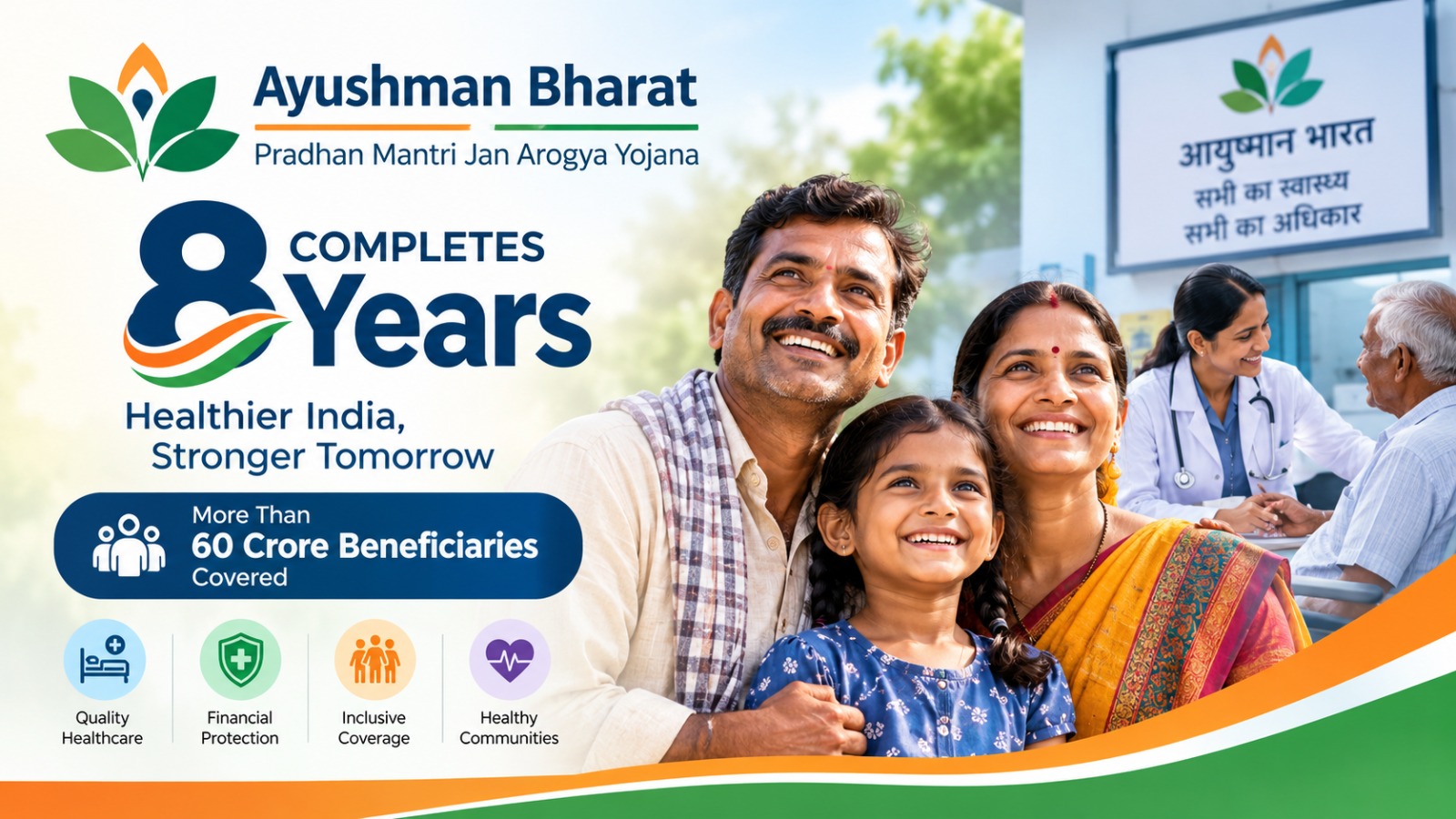
India’s Ayushman Bharat programme has completed eight years, marking a significant milestone in the country’s public healthcare journey. The programme, which includes the Pradhan Mantri Jan Arogya Yojana (PM-JAY), was launched in September 2018 with the objective of expanding access to healthcare for eligible families.
According to a September 23 report from Akashvani News, more than 60 crore beneficiaries have been covered under the health scheme. The programme was launched in Ranchi, Jharkhand, in September 2018.
The anniversary comes at a time when healthcare access, affordability and digital transformation remain important areas of public policy in India.
What Is Ayushman Bharat?
Ayushman Bharat was introduced as a major healthcare initiative aimed at improving access to medical treatment for eligible sections of the population.
One of its most prominent components is Pradhan Mantri Jan Arogya Yojana (PM-JAY), which provides health assurance coverage to eligible beneficiaries for hospitalisation-related treatment.
Over the years, the programme has become an important part of India's public healthcare infrastructure.
Eight Years of Healthcare Expansion
The completion of eight years provides an opportunity to examine how India's healthcare system has developed since the programme's launch.
The reported figure of more than 60 crore beneficiaries reflects the scale at which public healthcare programmes are operating across the country.
Large-scale healthcare coverage can be particularly significant for families that may otherwise face financial difficulties when dealing with major medical expenses.
The broader objective is not only to increase the number of people covered but also to improve accessibility and ensure that beneficiaries can use available healthcare services effectively.
Digital Transformation in Healthcare
Healthcare delivery in India has also increasingly incorporated digital systems.
Digital health infrastructure can help connect patients, hospitals and government systems while improving access to information and services.
The Health Secretary recently highlighted India's progress in areas including universal health coverage and digital health transformation during an interaction at Harvard T.H. Chan School of Public Health, according to a September 23 report carried by WebIndia123.
Digital systems can potentially make healthcare administration more efficient, although successful implementation depends on infrastructure, awareness, data security and accessibility.
Why Healthcare Coverage Matters
Healthcare expenses can have a major impact on household finances, particularly when treatment involves hospitalisation or long-term medical care.
Public health assurance programmes can help reduce some of the financial barriers associated with accessing treatment for eligible beneficiaries.
However, healthcare coverage is only one part of the larger healthcare ecosystem. Availability of hospitals, doctors, medicines, diagnostic facilities and quality treatment also influences the actual experience of patients.
The Role of Hospitals and Healthcare Providers
The expansion of public health coverage also increases the importance of healthcare infrastructure.
For a healthcare programme to work effectively, beneficiaries need access to participating hospitals and medical facilities.
This makes the development of healthcare infrastructure across different regions an important component of improving access.
Urban and rural areas can have different healthcare challenges, making accessibility an important consideration alongside financial coverage.
Healthcare and Technology
Technology is becoming increasingly connected with healthcare delivery.
Digital records, telemedicine, online appointment systems, health applications and data-driven healthcare services are changing the way patients interact with medical systems.
India's broader digital transformation could provide additional opportunities for improving healthcare access, particularly where technology can help connect patients with services that may not be physically available nearby.
At the same time, digital healthcare requires attention to privacy, cybersecurity, accessibility and digital literacy.
Looking Beyond Coverage Numbers
The number of beneficiaries covered is an important measure of scale, but it does not provide the complete picture of healthcare outcomes.
Other factors also matter, including:
- Availability of healthcare facilities
- Quality of medical treatment
- Awareness among eligible beneficiaries
- Ease of accessing services
- Availability of doctors and healthcare professionals
- Timely diagnosis and treatment
- Digital accessibility
- Patient experience
Evaluating these factors alongside coverage numbers can provide a broader understanding of public healthcare delivery.
What the Eight-Year Milestone Represents
The completion of eight years represents the continued expansion of one of India's major public healthcare programmes.
More than 60 crore beneficiaries have been covered according to the latest government-linked reporting, demonstrating the large scale of the programme.
The next stage of India's healthcare journey will involve not only expanding coverage but also strengthening healthcare infrastructure, improving awareness and making healthcare services easier to access.
Conclusion
The Ayushman Bharat 2026 milestone highlights the changing landscape of public healthcare in India. Eight years after its launch, the programme has reached more than 60 crore beneficiaries, according to Akashvani News.
As India continues to develop its healthcare system, the focus will increasingly extend beyond coverage to accessibility, quality, digital transformation and effective delivery of medical services.
For citizens, healthcare providers and policymakers, the anniversary provides an opportunity to look at both the progress achieved and the challenges that remain in ensuring accessible healthcare across the country.