
A Forgotten USB Drive Sparked Dropbox: Drew Houston’s Startup Story
Explore Drew Houston and Arash Ferdowsi’s Dropbox journey, from a forgotten USB drive to cloud collaboration, with practical lessons for founders.
Drew Houston’s account of Dropbox begins with a forgotten USB drive, a bus journey, and the frustration of being unable to work on files that were somewhere else. It is an unusually concrete origin for a cloud software company. The problem was not a lack of digital storage in the abstract. It was the gap between having important information and being able to reach the right version when it mattered.
Houston and co-founder Arash Ferdowsi built a business around closing that gap. Dropbox’s history offers a detailed lesson in product simplicity: customers can experience a service as effortless only when a company does difficult engineering behind the interface. For founders, the story also raises a second question. What happens when a tool designed for one person’s inconvenience becomes infrastructure for teams, institutions, and entire working relationships?
A problem on the way to New York
In his September 2008 public-launch announcement, Houston placed the first lines of Dropbox code at Boston’s South Station in November 2006. He was waiting for a bus to New York, had left his USB drive at home, and could not do the work he intended. Ferdowsi joined later, and the team developed the company through Y Combinator in Cambridge before moving west.
The specificity matters. Many startup pitches begin with an enormous market and work backward toward a feature. Houston’s account starts with an observed failure in an existing workflow. A person had several computers, important files, and a reasonable expectation that those files should be available. The available habits did not satisfy that expectation reliably. That mismatch supplied a clearer starting point than a general ambition to participate in cloud computing.
The engineering background behind the simple idea
MIT’s 2013 profile of Houston describes the institute’s role in his development, from technical training to entrepreneurial peers and early recruiting. It also records an earlier venture, Accolade, an online SAT-preparation startup. Dropbox was therefore not his first experience of trying to build something people might use, even if it became the company most closely associated with his name.
Technical knowledge was particularly important because the promise was deceptively demanding. A folder that synchronizes across devices must handle interrupted connections, concurrent edits, different operating systems, and user mistakes. Customers should not have to understand those engineering complications. But the company must. Houston’s background helped connect a relatable need with the ability to build and judge the underlying system, rather than treating implementation as a minor detail after the pitch.
Why the folder was a powerful interface
Dropbox’s original concept fit into a behavior people already understood: putting files in folders. This reduced the amount of new behavior a customer had to learn. The service changed where information could travel while keeping a familiar way of organizing it. In a 2009 company interview, Houston explained that he had needed the product because he used several computers and repeatedly forgot his USB drive.
For a founder, the design lesson is to distinguish the technical novelty from the user’s experience of it. A new system does not always need a new interaction model. Familiarity can make a technically ambitious product easier to adopt. The strongest simplification is not a slogan on a landing page; it is removing steps from the customer’s task without asking them to become an expert in how the replacement works.
Making reliability the product
File synchronization is a category in which failure can be more memorable than success. A user may barely notice hundreds of correct updates, then remember one lost or conflicting document for years. That asymmetry makes dependability central to the value proposition. A visually attractive product cannot compensate for uncertainty about the information someone has entrusted to it.
This is a useful lens for evaluating other infrastructure-like startups. The customer may buy convenience, but the provider is also accepting a responsibility. Monitoring, recovery, security, and understandable error handling become part of the product even when they do not appear in a promotional demonstration. An early prototype can establish that an idea is possible. A sustainable service must show that the outcome can be delivered repeatedly under imperfect real-world conditions.
Showing the outcome before explaining the machinery
Dropbox’s story is often discussed through the lens of demonstrations and early adoption. The more general principle is that some products are easier to understand when people see the result than when they read the architecture. A file appearing where it is needed communicates a benefit more directly than a detailed explanation of synchronization protocols or distributed storage.
That observation does not mean every founder should build a promotional video before building a product. It means the evidence should match the question a prospective customer is asking. If the question is whether the experience feels substantially easier, demonstrate the experience. If the question concerns security or administrative control, provide evidence appropriate to that concern. Good communication reduces uncertainty about the product rather than distracting the audience with technical vocabulary.
The co-founder and the early team
Ferdowsi belongs in any account of Dropbox’s beginnings. Houston’s launch post credits his arrival and their shared work through the early development period. MIT’s profile also describes the role of engineering connections in recruiting the first team. The origin is better understood as a collaboration built around a problem than as a story of one founder single-handedly creating a finished company.
The distinction has practical value. A founder’s insight can identify an opportunity, but additional people must challenge assumptions, build systems, and sustain the effort. Early hiring also shapes how a company evaluates quality. In a technically demanding service, the ability to recruit and work with strong engineers affects what promises can credibly be made to customers. Networks are useful when they help create a capable team, not simply because they provide impressive names.
From keeping files in sync to keeping people in sync
In their 2018 founders’ letter, Houston and Ferdowsi described learning that customers were using Dropbox for more than personal file access. Scientists, filmmakers, and disaster-response workers appeared among the users whose work expanded the founders’ understanding of the product. The letter framed the resulting opportunity around helping people work together.
That is an important transition in a startup’s development. Customers can reveal a larger job than the one originally imagined, but the evidence must be interpreted carefully. A handful of creative uses does not automatically justify a broad platform strategy. Founders need to establish which behaviors recur, which customers share the need, and whether the company can solve it well. Expansion is strongest when it follows observed work rather than the desire for a larger market description.
The organizational buyer changes the requirements
Personal convenience and organizational suitability overlap, but they are different purchasing tests. A company may require permissions, account administration, collaboration rules, and clear ownership of information. Employees want the easy experience that attracted them; administrators need enough control to manage risk and continuity. Serving both groups introduces product and operational complexity.
For a startup, this is the point at which a popular tool can become an institutional responsibility. The provider must explain how the service behaves when a team changes, a device disappears, or access needs to be withdrawn. Those concerns are not peripheral obstacles to a sale. They are part of what the buyer needs solved. Dropbox’s movement toward collaborative work illustrates how a growing customer base can change the definition of a complete product.
Going public was another operating chapter
Dropbox reached the public markets in March 2018. A 2018 MIT account of Houston’s founder lessons discussed the company’s development and the initial public offering. The listing marked a financing and governance milestone; it did not remove the need to keep earning customer preference in a competitive software market.
For founders studying mature startups, that distinction prevents a common storytelling mistake. An IPO is an observable event, while the quality of the business must continue to be demonstrated through products, customers, finances, and execution. Treating a listing as the end of the story hides the ongoing work. Companies still have to decide where to invest, which needs to prioritize, and how to remain useful as the surrounding technology changes.
Competing when the category becomes familiar
Once customers expect files to be accessible across devices, the original innovation can become an industry assumption. That is a success for the behavior the company helped popularize, but it changes the competitive environment. Customers compare alternatives against a higher baseline. The provider must continue to explain why its particular implementation, workflow, or service deserves a place in their work.
This pattern appears across software categories. A startup can help establish an expectation and then face rivals offering similar functionality. The answer cannot be to rely indefinitely on having introduced the idea early. Reliability, ease of use, integrations, and a clear understanding of customer needs must keep producing value. Founders should therefore study the operating capabilities behind a successful product as closely as the moment that inspired it.
What founders can take from Houston’s journey
Dropbox’s beginnings suggest a practical sequence: notice a problem personally, determine whether it recurs for others, build a solution that fits existing behavior, and invest in the reliability required by the promise. None of those steps guarantees success. Together, they explain why a modest-sounding idea can demand serious work and still justify that work commercially.
Houston’s story is compelling because the customer’s desired outcome remained easy to describe while the company evolved around it. People wanted their information available when and where they needed it. Teams wanted that availability to support shared work. The founder’s challenge was to keep reducing the distance between those expectations and the experience delivered. That is a more useful model of entrepreneurship than waiting for an idea that sounds revolutionary before anyone has tried to use it.
Read more startup stories.
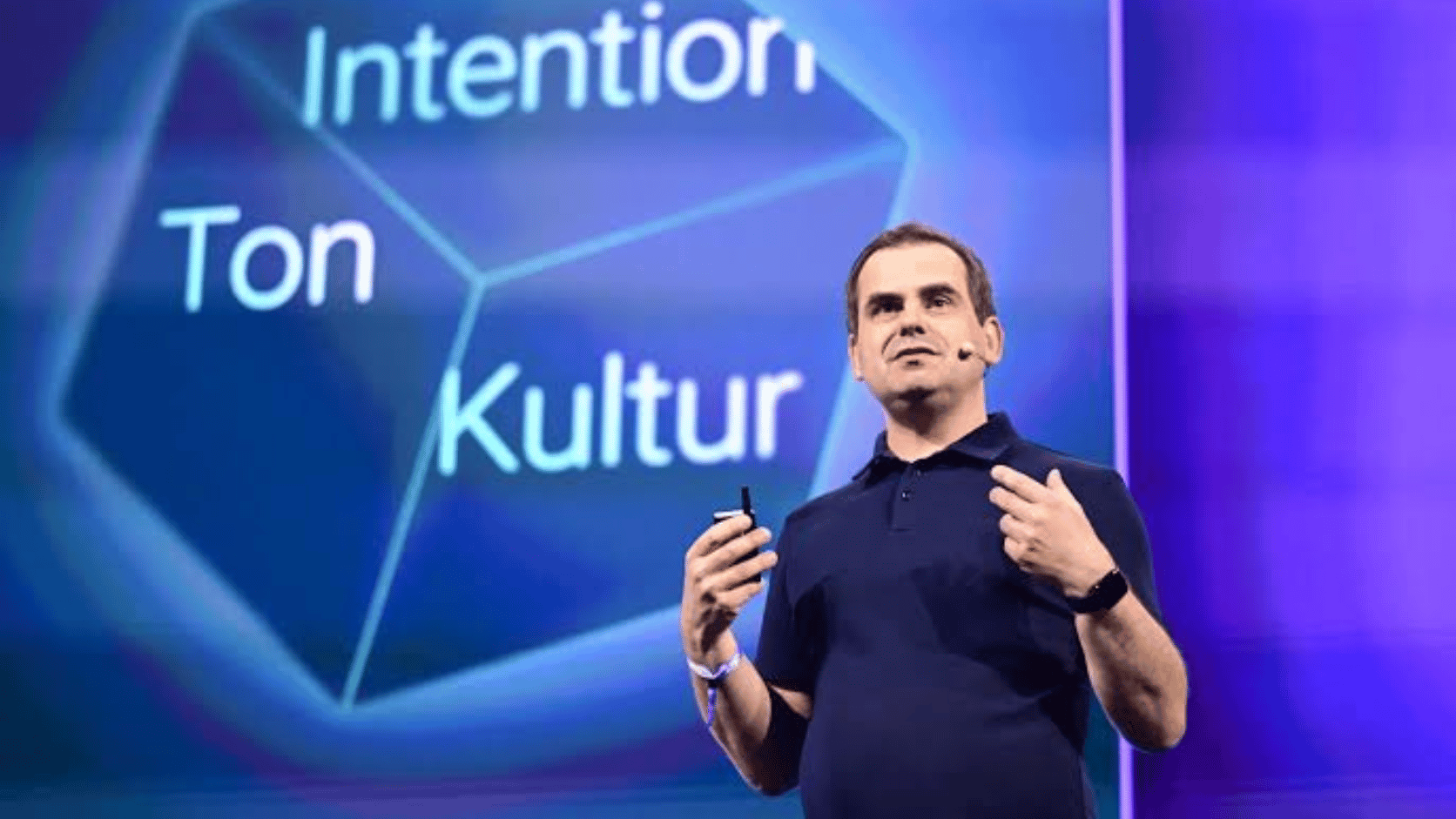
Image credit: Chad Riley / MIT News. Drew Houston, co-founder of Dropbox.

Leave a comment
Your email address will not be published. Required fields are marked *
Add a newsletter to your widget area.
Top Stories