Germany’s Industrial AI Push: What NVIDIA’s New Partnership Signals
Germany and NVIDIA have announced a new push to bring AI into manufacturing and other industries. Here’s what the move could mean for startups, small businesses, and the future of industrial AI.
A major business story from Berlin on October 19 points to a new phase in the AI race: the move from digital assistants to technology designed for factories, machines and other physical operations.
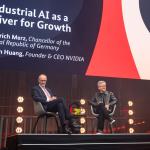
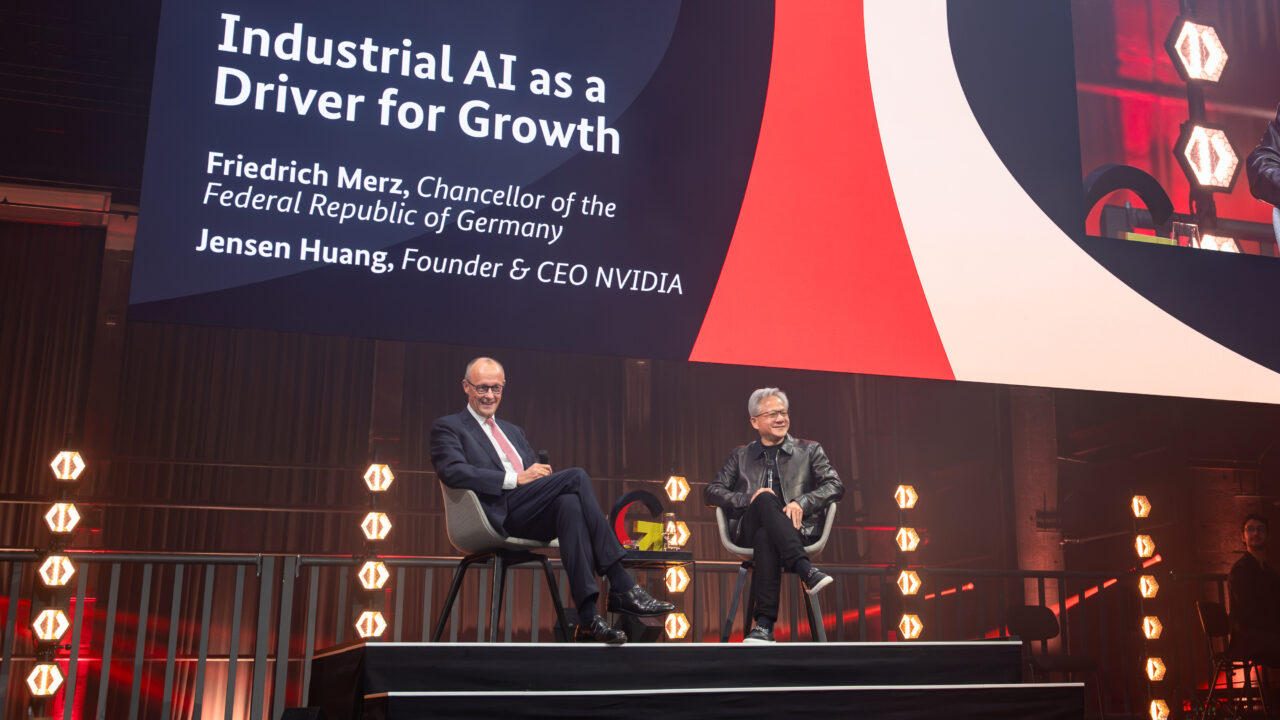
At the Invest in Germany Summit, German Chancellor Friedrich Merz and NVIDIA founder and CEO Jensen Huang discussed industrial AI. Germany’s federal government and NVIDIA also signed a Joint Declaration of Intent to work on advanced AI models for physical AI, according to NVIDIA. The company said it plans to invest in four German startups: Agile Robots, Avelios Medical, Mirelo and Reflex Aerospace.
The announcement matters because Germany is trying to connect its established strengths in manufacturing, automotive engineering and industrial research with newer AI capabilities. The Associated Press reported that Huang urged manufacturers to adopt AI, arguing that it can augment industrial expertise rather than replace it. The opportunity, in this framing, is to make decades of operational knowledge more usable in design, production and maintenance.
From chatbots to the factory floor
Physical AI refers broadly to AI systems that interact with the real world: robotics, vehicles, production equipment and the software that helps run them. That can include using simulation to test a factory change before making it on the shop floor, or applying machine data to help teams spot defects and anticipate equipment problems.
The shift also changes what success looks like. A useful industrial AI system must fit into existing workflows, connect safely to reliable data and improve a measurable outcome. A polished demo is not enough if it cannot reduce downtime, improve quality, shorten engineering cycles or help a team make better decisions.
Why smaller firms should pay attention
Germany’s Mittelstand—its network of small and midsize specialist businesses—was central to the discussion. These companies often hold valuable process knowledge and years of operational data, but they may not have the budgets or in-house teams of large technology firms.
That creates room for startups to build focused tools: machine-vision quality checks for a specific production line, predictive maintenance for a particular class of equipment, or simulation software that helps suppliers adapt to changing orders. The strongest products are likely to solve one costly, repeated problem and prove their value in a live operation.
For founders, the lesson is to start with the workflow and the customer’s economics. What is the cost of an unexpected stoppage? How much time does a design change take? Which decisions still depend on information trapped in spreadsheets or individual experience? Those questions can reveal where AI is useful—and where a simpler software improvement may be enough.
Partnerships and trust will shape adoption
Industrial AI depends on collaboration among manufacturers, software companies, equipment providers, researchers and public institutions. It also raises practical questions about data ownership, cybersecurity, safety, interoperability and where sensitive information is processed. Smaller firms will need clear answers before they share operational data or let automated systems influence production.
That makes trusted implementation partners as important as the underlying models. Startups that can work with existing equipment, explain how their systems reach a recommendation and support deployment on site may have an advantage over products that require a complete technology overhaul.
An announcement, with execution still to come
The declaration and investment plans are signals of intent, not proof that industrial AI has already delivered broad productivity gains. Adoption will depend on whether companies can move from pilots to dependable systems, train workers and measure outcomes over time. The NVIDIA announcement also comes from a company selling AI infrastructure, so its claims about the scale of the opportunity should be read with that perspective in mind.
Still, the direction is clear: the next business opportunity in AI may be less about generating another answer on a screen and more about helping people design, build and operate things better. For startups, the opening is to pair deep industry knowledge with practical technology—and make the improvement visible in the numbers.
Sources:Associated Press report on Huang’s remarks in Berlin; NVIDIA’s October 19 announcement.


Leave a comment
Your email address will not be published. Required fields are marked *
Add a newsletter to your widget area.
Top Stories