Google AI Initiatives in India 2026: Healthcare & Startups
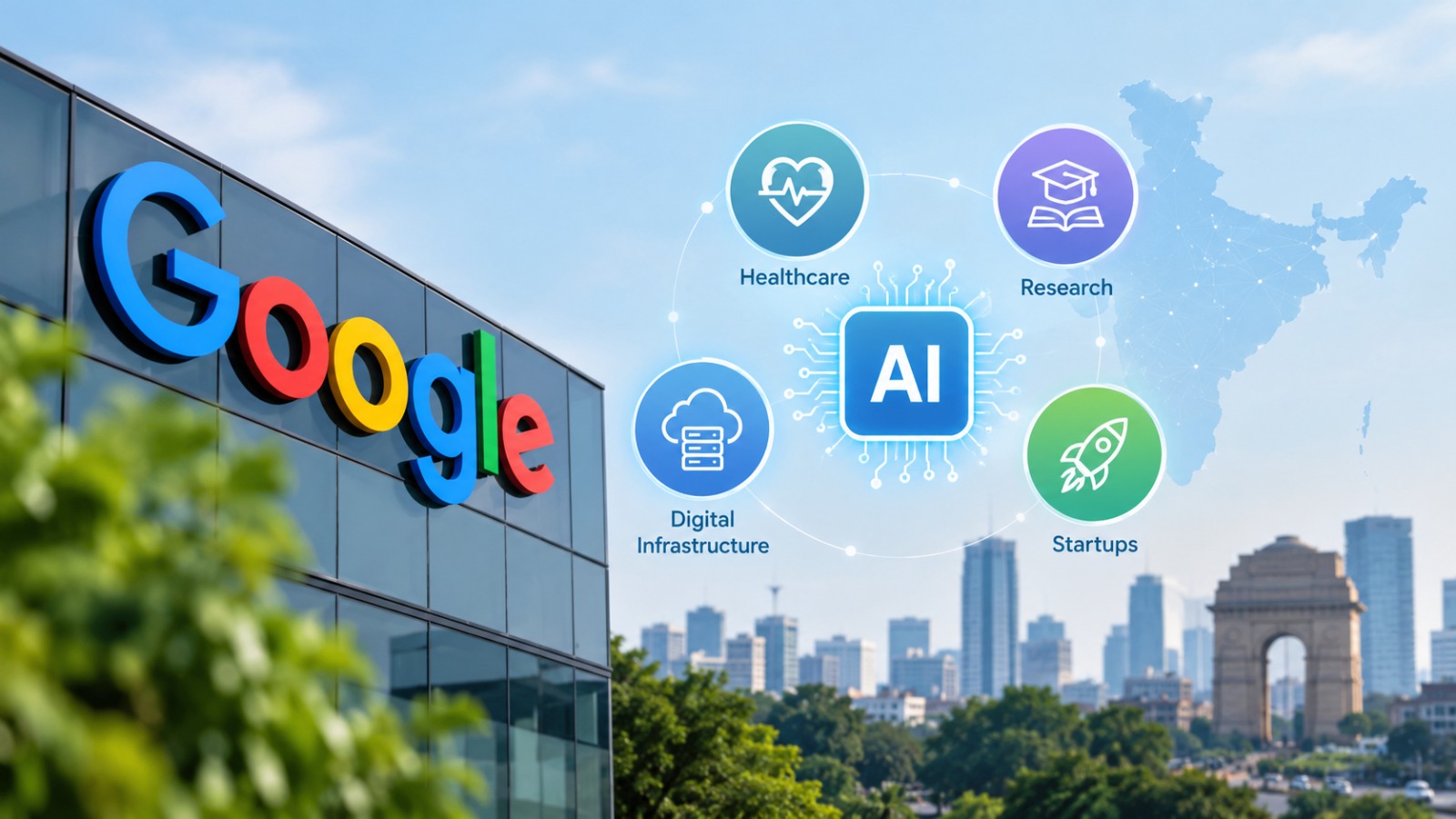
Google AI initiatives in India 2026 aim to support healthcare, academic research, digital infrastructure and startups through AI collaborations.
Google has announced a series of artificial intelligence (AI) collaborations and funding initiatives aimed at strengthening India's healthcare sector, academic research capabilities and startup ecosystem. The announcements were made during the company's “Lab to Impact” dialogue, held alongside the India AI Impact Summit 2026.
The initiatives reflect the growing role of AI in India's digital transformation, with technology companies increasingly looking beyond traditional software services to develop solutions for healthcare, research, public services and business innovation.
Google's AI Initiatives Focus on Multiple Sectors
Artificial intelligence is becoming an important tool for organisations seeking to improve productivity, analyse complex information and deliver services more efficiently.
Google's latest announcements focus on several areas where AI could create practical benefits, including healthcare, academic research, digital public infrastructure and startup development.The initiatives also align with India's broader ambition to expand AI adoption and strengthen its domestic innovation ecosystem.
While the announcements signal new opportunities for collaboration, the exact outcomes will depend on how individual programmes are implemented and how effectively organisations adopt the technology.
How AI Could Transform India's Healthcare Sector
Healthcare is one of the areas where AI could support significant improvements in the way information is analysed and services are delivered.
AI-powered systems can help medical professionals organise information, identify patterns in medical data and support certain administrative tasks. When properly validated and supervised, these tools may help healthcare organisations improve efficiency and make better use of available resources.
In India, where healthcare services must reach large and diverse populations, technology could also help address challenges involving access to information, service delivery and operational efficiency.However, healthcare AI requires careful implementation. Patient privacy, data security, accuracy and professional oversight remain essential, particularly when systems are used in clinical settings.
Google's healthcare-focused collaborations could contribute to the development of new applications, although the effectiveness of individual solutions will need to be assessed through their actual results.
AI Research Could Receive a Major Boost
Academic and scientific research is another area highlighted by Google's initiatives.
Researchers increasingly use AI to process large datasets, identify relationships between variables, automate repetitive analytical tasks and explore complex scientific questions.Collaboration between technology companies and academic institutions can help researchers access technical expertise, computing resources and specialised tools.
For Indian universities and research organisations, these opportunities could support work across healthcare, engineering, environmental science and other disciplines.
The long-term impact will depend on whether researchers can translate these capabilities into reliable findings, useful applications and solutions to real-world problems.
What Google's Initiatives Mean for Indian Startups
Startups are an important part of India's growing technology ecosystem. Many young companies are developing products in healthcare technology, education, enterprise software, agriculture and financial services.
Access to AI tools and technical support could help startups test ideas, develop prototypes and improve existing products.
Potential benefits include:
Faster product development: AI tools can assist with coding, testing, research and product design.
Improved customer service: AI-powered systems can support customer queries and routine business operations.
Better data analysis: Businesses can use AI to identify patterns and generate insights from available information.
Greater operational efficiency: Automation can reduce repetitive work and help teams focus on higher-value activities.
New business opportunities: Entrepreneurs can explore AI-powered products for specific industry problems.
These are potential benefits of wider AI adoption, not guaranteed outcomes of Google's announced programmes. Startups will still need to address implementation costs, data protection, product quality and customer trust.
Digital Public Infrastructure and AI Adoption
Digital public infrastructure includes digital systems that help people and organisations access services, exchange information and complete transactions.AI could complement these systems by supporting information processing, improving certain service workflows and helping organisations analyse complex data.
For India, combining digital infrastructure with responsible AI development could create opportunities to improve public service delivery and encourage innovation.
However, deploying AI in public-facing systems requires safeguards. Authorities and technology providers must consider accessibility, transparency, security and the risk of inaccurate or unfair automated decisions.
Successful implementation will require collaboration among government agencies, researchers, technology companies and businesses.
Challenges That Could Affect AI Adoption in India
Despite its potential, AI adoption presents several challenges that organisations must address.
Data privacy and security: AI systems may process sensitive information, making appropriate data governance essential.
Accuracy and reliability: AI-generated outputs can contain errors, so important decisions require suitable verification and oversight.
Infrastructure requirements: Advanced AI applications may require reliable computing resources, connectivity and technical support.
Skills and training: Businesses and educational institutions need people who understand how to use AI responsibly and effectively.
Access for smaller organisations: Smaller businesses and startups may face financial or technical barriers when adopting advanced systems.
Addressing these issues will be important if AI initiatives are to deliver benefits beyond a limited number of large organisations.
What This Development Means for India's Technology Industry
Google's announcements highlight the growing importance of collaboration in the AI ecosystem. Technology companies, universities, healthcare providers and startups can each contribute different expertise to the development of useful AI applications.
For India's technology industry, such initiatives could encourage experimentation, create opportunities for specialised startups and support the development of new digital products.
They may also strengthen discussions around responsible AI deployment, research capabilities and the development of solutions suited to India's needs.
Nevertheless, the impact of these initiatives should be measured through concrete outcomes, such as research advances, practical healthcare applications, startup participation and improvements in service delivery.
Conclusion
Google's latest AI collaborations and funding initiatives highlight the potential for artificial intelligence to support healthcare, academic research, digital infrastructure and startups in India.
The announcements come as the country seeks to expand its AI capabilities and encourage technology-driven innovation across multiple sectors.
The next stage will be turning these initiatives into practical applications that deliver measurable benefits. With appropriate safeguards, technical expertise and collaboration, AI could become an increasingly important part of India's digital and economic development.
SEO publishing tip: Before publishing, add the original announcement or a reliable news source as a reference link. Avoid claiming specific funding amounts, programme deadlines or confirmed results unless those details are verified.
To read more such news visit Startup Times .

Leave a comment
Your email address will not be published. Required fields are marked *
Add a newsletter to your widget area.
Top Stories