
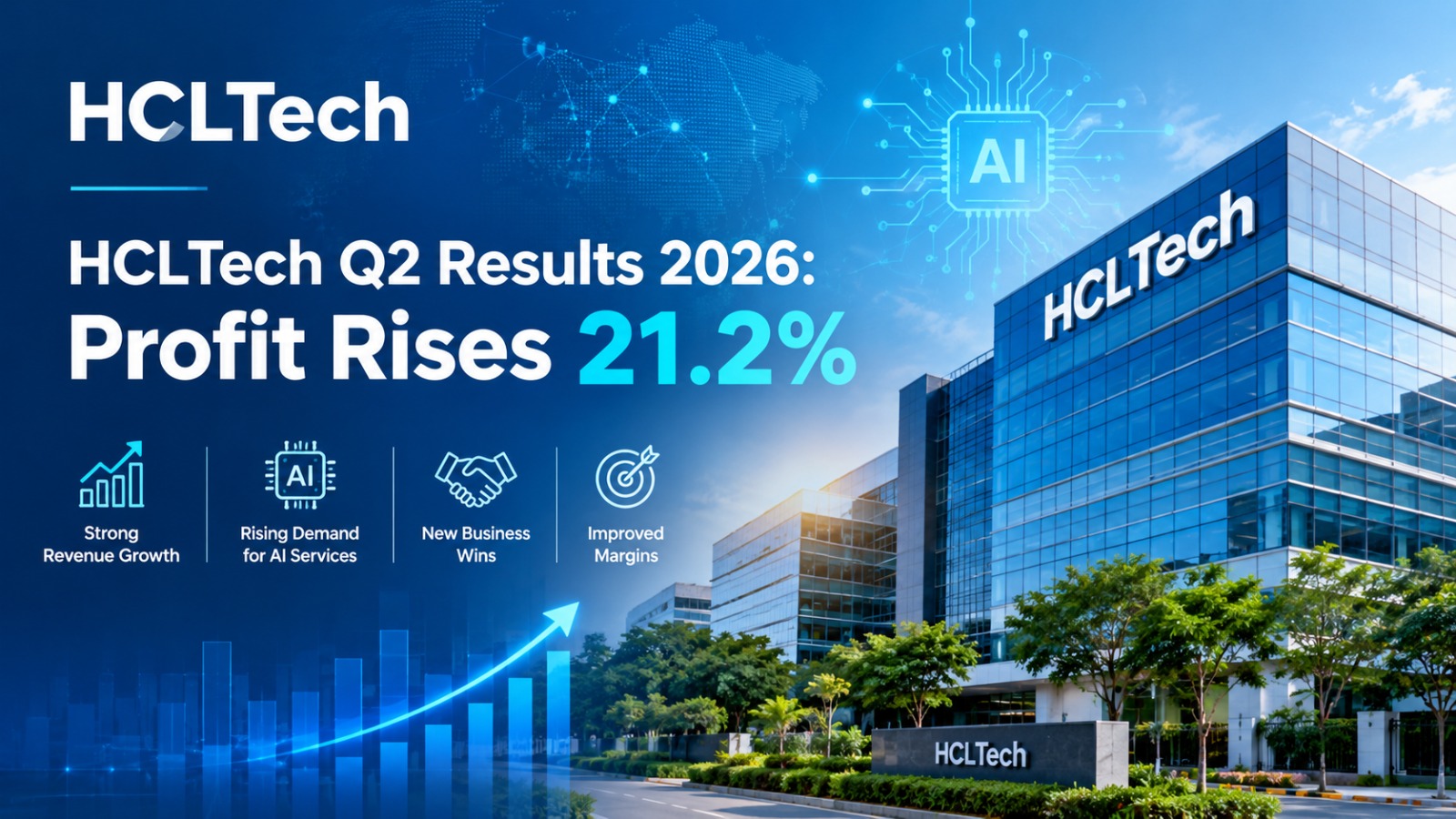
HCLTech Q2 Results 2026: Profit Rises 21.2%
HCLTech reports a 21.2% rise in second-quarter net profit in 2026, driven by AI revenue growth, stronger deal bookings and improved operating margins.
HCLTech, one of India's leading information technology services companies, reported a strong performance in its second-quarter results for 2026, with net profit increasing by 21.2% year-on-year. The results highlight the growing importance of artificial intelligence (AI), business transformation services and technology-led efficiency in the global IT industry.
According to a Reuters report published on October 13, 2026, HCLTech's consolidated net profit rose to ₹5,132 crore, while revenue increased by 11.5% year-on-year to approximately ₹35,620 crore. The company's performance was supported by strong deal bookings, improving operating margins and increased revenue from advanced AI services.
The results have drawn attention to the changing business environment for Indian IT companies as enterprises worldwide explore ways to integrate AI into their operations.
HCLTech Reports Strong Quarterly Profit Growth
HCLTech recorded net profit of ₹5,132 crore for the reported quarter, representing a 21.2% increase compared with the corresponding period a year earlier. Revenue reached approximately ₹35,620 crore, registering year-on-year growth of 11.5%.
The company's operating performance also improved, with its earnings before interest and tax margin reaching 18.2%. Better operational efficiency, a stronger mix of technology services and AI-related productivity gains contributed to the improvement.
Although revenue came in slightly below analysts' average expectations, the growth in profitability and margins provided an encouraging signal about the company's ability to manage costs while pursuing new business opportunities.
These results arrive at a time when technology service providers are balancing traditional outsourcing demand with the need to develop newer AI-powered offerings.
Artificial Intelligence Becomes an Important Growth Driver
Artificial intelligence is increasingly influencing how IT service providers develop products, deliver services and support business customers. HCLTech's latest results illustrate the growing contribution of AI-related services to its business.
The company's annualised advanced AI revenue increased to $219 million from $171 million in the previous quarter, according to Reuters. This reflects the growing commercial importance of AI solutions for enterprise customers.
Businesses are exploring AI applications across software development, customer service, data analytics, cybersecurity, business process automation and enterprise operations. These applications can help organisations improve productivity, streamline workflows and make better use of their data.
For IT service providers, this shift creates opportunities to develop specialised AI services, implement automation systems and help companies modernise existing technology infrastructure.
However, the transition also creates challenges. As AI tools automate certain tasks, technology companies must adjust their service models, retrain employees and develop capabilities that address more complex customer requirements.
Strong Deal Bookings Support Business Confidence
HCLTech's quarterly performance was also supported by strong deal bookings and a healthy pipeline of potential business opportunities.
Large organisations continue to require technology partners for cloud migration, digital transformation, software modernisation, cybersecurity and AI implementation. These projects can provide opportunities for established IT companies with the technical capabilities and global delivery networks needed to serve enterprise customers.
A healthy pipeline of deals can help companies plan their resources and pursue future revenue growth. However, the actual financial impact depends on when projects begin, how quickly contracts are executed and the pace at which customers use the contracted services.
For HCLTech, maintaining strong client relationships and converting new business opportunities into delivered projects will remain important as the technology industry continues to evolve.
What the Results Mean for India's IT Industry
India's IT services industry plays a significant role in the country's technology exports, employment generation and global business relationships. Companies operating in this sector are now navigating a major shift as customers increasingly expect technology services to deliver measurable business outcomes.
HCLTech's results suggest that AI can contribute to new revenue opportunities while also supporting operating efficiency. The broader implications, however, will depend on how successfully companies adapt their services to changing customer needs.
Traditional IT services, including application maintenance and routine software development, face pressure to become more efficient as automation tools improve. At the same time, demand may increase for AI integration, data engineering, cloud infrastructure, enterprise consulting and specialised technology implementation.
This creates an opportunity for Indian technology companies to move beyond conventional outsourcing and offer higher-value solutions.
The industry must also address concerns around global technology spending, pricing pressure, changing skill requirements and the possibility that AI will reduce demand for certain categories of work.
Opportunities for Startups and Small Businesses
The expansion of AI services is not limited to large technology companies. Startups and small businesses can also benefit from tools that automate routine tasks, improve customer communication and simplify data analysis.
For example, a small business can use AI-powered customer support systems to answer common questions, automate appointment scheduling and organise incoming enquiries. Sales teams can use intelligent CRM tools to prioritise leads, while marketing teams can use automation to improve campaign management and reporting.
Technology startups can also explore specialised solutions for industries such as healthcare administration, education, retail, manufacturing and financial services.
However, businesses should evaluate AI solutions based on practical requirements, data privacy, implementation costs and measurable results rather than adopting technology solely because it is trending.
The continued development of enterprise AI services could create opportunities for technology partners, software developers, consultants and startups that help businesses implement these tools effectively.
Challenges Facing the Technology Sector
Despite the positive quarterly results, the outlook for the IT services industry remains complex.
Companies must manage uncertainty in global technology spending while responding to rapid changes in AI capabilities. Customers increasingly expect faster delivery, improved productivity and clear returns from technology projects.
Service providers must also invest in employee training, cybersecurity, responsible AI practices and updated delivery models. These requirements can create short-term costs even when they support long-term competitiveness.
For Indian IT companies, the challenge is to ensure that AI-related productivity gains translate into sustainable business growth. This may require new service offerings, stronger consulting capabilities and closer collaboration with enterprise customers.
Conclusion
HCLTech's second-quarter performance highlights the growing influence of artificial intelligence on India's IT services industry. With net profit rising 21.2%, revenue increasing 11.5% and annualised advanced AI revenue reaching $219 million, the company has demonstrated progress in combining traditional technology services with newer AI-driven opportunities.
The results also reflect a wider transformation across the sector. Companies that successfully integrate AI, improve operational efficiency and respond to evolving customer needs may be better positioned to compete in the changing global technology market.
For startups and businesses, the broader lesson is clear: adopting technology strategically can create opportunities for productivity, innovation and growth. The long-term impact will depend on how effectively organisations turn new capabilities into practical business value.
To Read More Such News Visit Startup Times .


Leave a comment
Your email address will not be published. Required fields are marked *
Add a newsletter to your widget area.
Top Stories