
Bad Movie Dubbing Inspired ElevenLabs. Two Polish Friends Built the Fix
How Mati Staniszewski and Piotr Dąbkowski built ElevenLabs, connecting Polish roots, voice AI research, dubbing workflows, and responsible deployment.
The distance between understanding a story and feeling it can be surprisingly large. A translated voice may convey the words while losing the rhythm, emotion, and identity that made the original performance engaging. Mati Staniszewski and Piotr Dąbkowski started ElevenLabs with an interest in that gap. Their ambition connected speech research with a practical question: could more people access spoken content across languages without losing so much of the experience?
Founded in 2022 by the two Polish friends, ElevenLabs developed into a voice AI company with an international footprint and a London base. Its founder story is an example of European talent addressing a global market from the outset. It also shows why the creation of a powerful new capability changes the founder’s job. Realistic synthetic speech offers useful applications, but it brings responsibilities around permission, identity, and the reliability of what listeners hear.
A shared frustration becomes a technical direction
In its Series A announcement, ElevenLabs described the founders as childhood friends inspired by the poor voiceovers in films they watched while growing up in Poland. The company’s January 2023 launch announcement identifies Dąbkowski’s earlier work in machine learning at Google and Staniszewski’s deployment-strategy experience at Palantir.
The combination brought research and implementation perspectives to the problem. Building a speech model and helping customers put it into a workflow require different kinds of attention. The founders’ opportunity lay in connecting them. A system could sound impressive in isolation, yet still need editing, predictable access, and appropriate controls before a publisher or developer could rely on it. The commercial product had to extend beyond the model’s most striking output.
Launching with a specific audience in mind
ElevenLabs’ January 2023 announcement introduced a beta platform for creators and publishers after a $2 million pre-seed round. The initial proposition centered on turning written material into spoken audio, with developer access through an API. The company described potential uses in newsletters, books, videos, and other formats where producing narration can create a significant additional workload.
That audience selection gave the research a practical test. A creator already has material and an intended audience; the product changes how the material can be delivered. For founders, this is a useful way to move from capability to demand. Identify a person who is already trying to produce an outcome, understand the current production burden, and establish which parts a new system can improve. A broad technology becomes easier to evaluate when attached to a recognizable job.
Voice quality is more than intelligibility
Listeners do not assess speech only by whether they can recognize the words. Pacing, emphasis, pronunciation, and emotional context affect how they experience the content. A synthetic voice that is clear but tiring may be unsuitable for long-form listening. A lively voice may still mispronounce a name or deliver a sentence in a way that changes its meaning.
Those considerations explain why audio tools need evaluation within the intended use case. A brief demonstration is not the same as a complete audiobook, training module, or interactive conversation. Founders should ask customers to test the actual material and listening conditions that matter to them. This reduces the risk of optimizing a highly visible technical quality while overlooking practical details that determine whether a person will continue using the product after the initial novelty fades.
Dubbing is a workflow, not a single button
Translating spoken content involves more than generating a second voice track. The team may need a transcript, a translation, timing adjustments, and a review of how the result fits the original material. ElevenLabs’ 2024 Series B announcement introduced Dubbing Studio alongside tools for editing transcripts, translations, and timecodes. That product direction recognized the work around generation.
The broader lesson for AI founders is that users often need control over intermediate steps. An automated first version can save time, but professional adoption may depend on the ability to inspect and correct it. That is especially relevant when language, names, tone, or meaning matter. A workflow product gives the user a route from promising output to approved output. The quality of that route can be as important commercially as the model’s ability to generate the first draft.
Creators and developers buy different experiences
A creator may want an interface for selecting a voice, editing a passage, and exporting audio. A developer may want dependable programmatic access that fits an existing application. These needs share underlying speech technology but require different product decisions. Documentation, response behavior, usage management, and integration support can matter more to a developer than a polished editing screen.
ElevenLabs’ current company overview presents creative tools, conversational applications, and developer access as distinct parts of its offering. The structure illustrates a common platform challenge: serving several customer groups without pretending they all use the same workflow. For a founder, the strategic task is to identify which capabilities should be shared and which experiences need to be designed separately. A wider product portfolio must remain understandable to the people buying and operating it.
Accessibility gives the technology another purpose
Spoken content can help people access information when reading is difficult, inconvenient, or impossible. Voice technology can also be relevant to individuals whose ability to speak has changed. ElevenLabs’ company materials describe an Impact Program supporting accessibility and nonprofit uses. These applications show why the value of synthetic speech cannot be understood solely through entertainment or marketing production.
They also call for careful product judgment. A person using a voice as part of everyday communication has different needs from someone producing a short promotional clip. Reliability, personal agency, and the ability to control the voice can become particularly important. Founders should avoid treating a socially valuable use case as a decorative example. Serving it well requires understanding the people involved and designing support around the consequences of the technology failing or behaving unexpectedly.
The same realism creates a trust problem
When synthetic speech becomes convincing, a listener may struggle to determine whether the person apparently speaking actually said the words. That is a foreseeable risk of the capability, not merely an unrelated misuse scenario. ElevenLabs’ safety materials describe its approach to preventing and responding to abuse. The company’s product announcements also discuss verification and detection work.
For founders, this means safety belongs among the product’s operating requirements. Permission to use a voice, processes for reporting abuse, and the treatment of suspicious activity affect whether legitimate customers can trust the platform. No single safeguard should be portrayed as eliminating all risk. The more credible approach is to explain the intended controls clearly and keep improving them as usage changes. Responsible deployment is continuing work rather than a one-time condition satisfied at launch.
Funding accelerated the next product chapter
In January 2024, ElevenLabs announced an $80 million Series B and a set of new products including Dubbing Studio, a voice marketplace, and an early reader-app preview. These are dated milestones in the company’s development. They should not be mistaken for its latest funding position, current valuation, or a permanent description of the product range.
The business significance is the movement from an initial generation tool toward several ways of creating, distributing, and using audio. That creates opportunities for customers, but it also adds operational complexity. Different products can require different pricing, support, review processes, and partnerships. A founder must decide how much expansion the organization can support while preserving the quality of the core capability. Capital provides resources for that work; it does not remove the need to make those choices carefully.
A global company with European roots
ElevenLabs is particularly relevant to a collection of European founder stories because its origins connect Polish founders and a London launch with worldwide distribution. Its early announcement also described a globally remote presence and US incorporation. These details are a reminder that a technology business can span several jurisdictions and identities rather than fit neatly into a single national category.
For entrepreneurs, that structure raises practical questions about hiring, customer support, market access, and coordination. International ambition does not mean every region can be served identically. Languages, use cases, and expectations differ. The founders’ early interest in communication barriers made those differences part of the problem to solve. A global product needs to understand local experience well enough that expansion means more than making the same interface available in another place.
What the founders’ journey teaches
Staniszewski and Dąbkowski began with a recognizable dissatisfaction and pursued the research needed to address it. Their company’s development shows how the opportunity widened as speech generation became useful in more workflows. It also shows that the responsibilities widened with it: the more a voice can do, the more carefully permission, quality, and identity must be handled.
The transferable lesson is to build around the complete task. A creator needs usable narration, a developer needs a dependable component, and a listener needs communication they can understand and appropriately trust. A strong founder story includes all three perspectives. ElevenLabs’ journey is therefore about more than realistic audio. It is about turning a powerful capability into products that people can control, integrate, and use for purposes that matter to them.
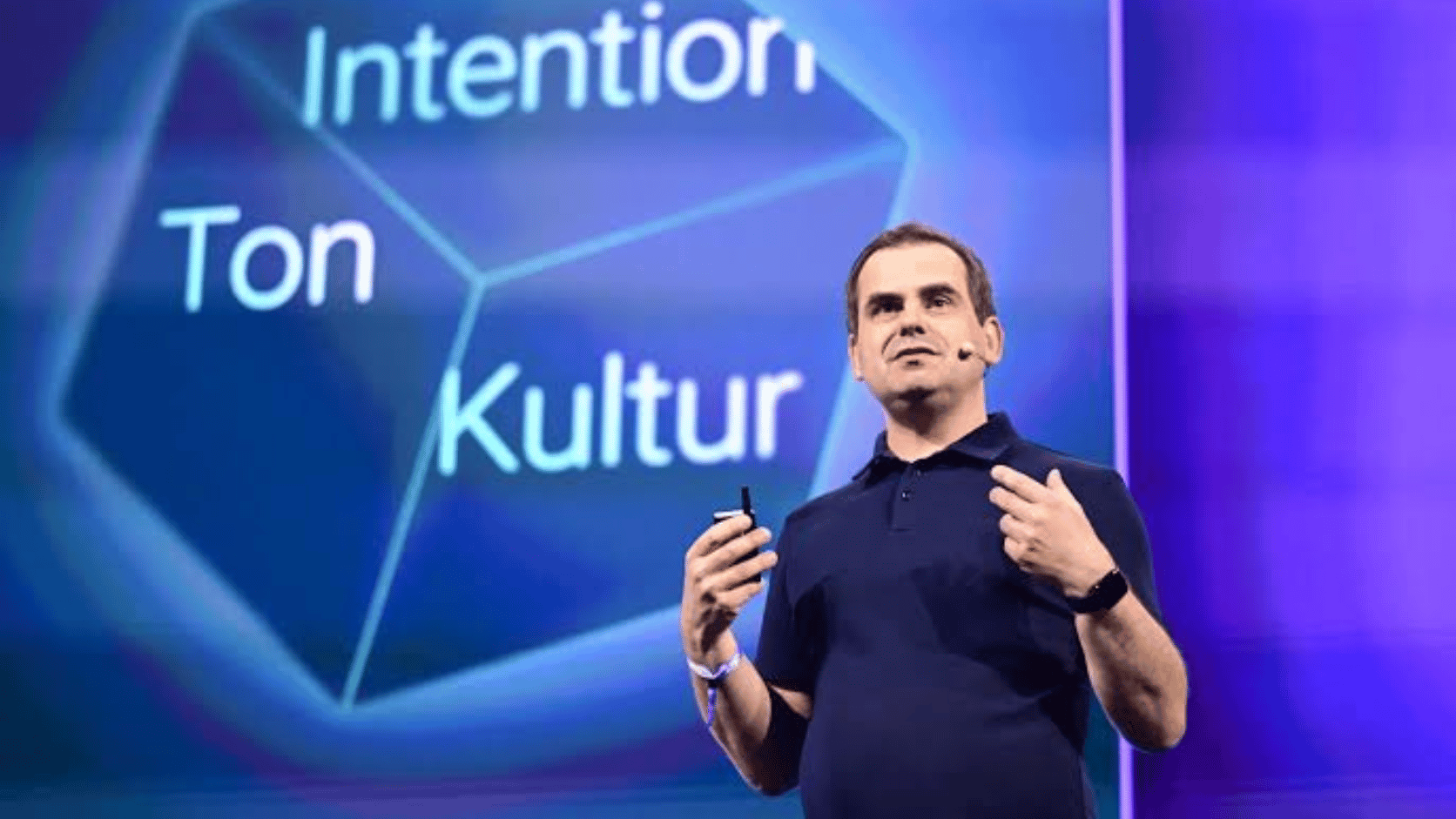
Image credit: ElevenLabs. Mati Staniszewski and Piotr Dąbkowski, co-founders of ElevenLabs.
Leave a comment
Your email address will not be published. Required fields are marked *
Add a newsletter to your widget area.
Top Stories