RBI Raises Repo Rate to 5.5% Amid Inflation Concerns
RBI raises the repo rate by 25 bps to 5.5% in October 2026 as inflation and global energy prices increase pressure on the Indian economy.
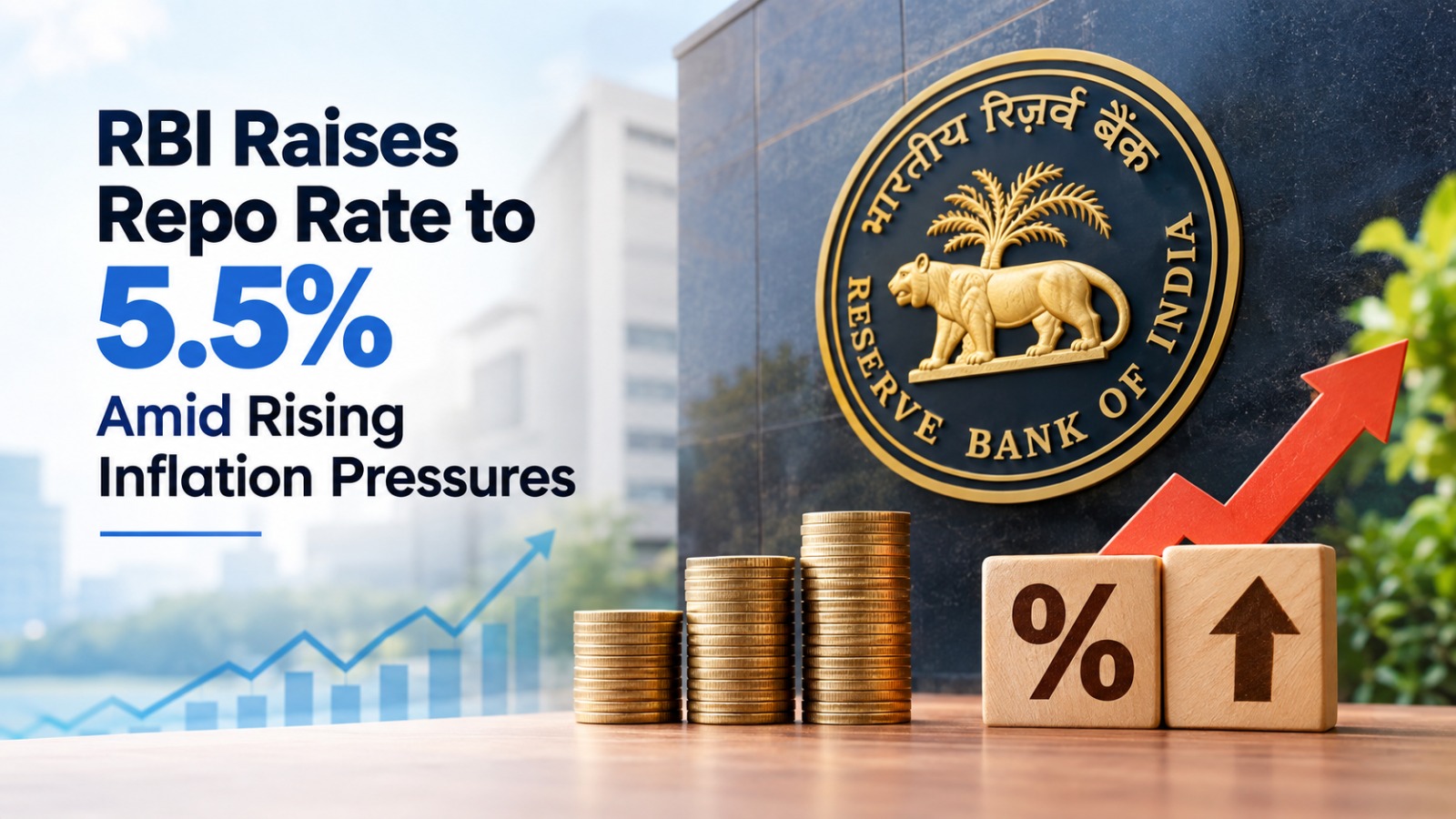
RBI repo rate hike 2026 has become one of the key economic developments in India this week, with the Reserve Bank of India raising its benchmark repo rate by 25 basis points to 5.5% on October 7, 2026. The move represents the central bank's first rate increase in nearly four years and signals a shift toward a tighter monetary policy environment.
The decision comes at a time when India's economy continues to demonstrate strong growth, while inflationary pressures are becoming more challenging. The RBI has also shifted its policy stance from “neutral” to “calibrated tightening,” indicating that further policy action could be considered depending on inflation and economic conditions.
Why Did the RBI Raise the Repo Rate?
The latest decision is largely connected to rising inflation risks and higher global energy prices. India's dependence on imported crude oil makes the economy particularly sensitive to movements in international oil prices.
Consumer inflation increased to 4.82% in August, remaining above the RBI's medium-term target of 4% for the third consecutive month. The central bank expects inflation to remain elevated over the coming quarters.
Global geopolitical developments and higher oil prices have added further uncertainty to the inflation outlook. Food prices and fuel costs can influence household spending as well as business operating expenses, making inflation an important consideration for monetary policymakers.
Indian Economy Continues to Show Strong Growth
Despite the inflation concerns, India's economic growth remains relatively strong. The RBI expects India's GDP to expand by approximately 7.1% in the current financial year, while GDP growth in the April-June quarter reached 7.8%.
This combination of strong growth and increasing inflation pressure creates a difficult balancing act for policymakers. The RBI needs to control price pressures without unnecessarily weakening economic activity.
The central bank's latest decision therefore reflects an attempt to maintain price stability while allowing the economy to continue expanding.
What Does the Rate Hike Mean for Businesses?
Higher interest rates can increase the cost of borrowing for companies. Businesses planning expansion, purchasing equipment or investing in new projects may face higher financing costs if banks pass the increase through to lending rates.
Small businesses and startups that rely heavily on loans or external financing could also experience greater pressure on their cash flows.
However, the impact will vary across sectors. Companies with strong balance sheets and substantial internal cash reserves may be better positioned to manage a higher interest-rate environment.
Impact on Home Loans and Consumers
The repo rate also matters to individual borrowers because changes in the policy rate can influence lending rates offered by banks and financial institutions.
Existing borrowers with floating-rate loans could see their borrowing costs increase if lenders adjust their rates. Prospective homebuyers and consumers considering large loans may also need to reassess their financing plans.
Higher interest rates can encourage saving while making borrowing more expensive, potentially affecting consumer demand.
What Does It Mean for Investors?
The RBI's decision could also influence financial markets, bonds, equities and currency movements.
Higher interest rates can make fixed-income instruments more attractive while potentially putting pressure on companies that depend heavily on borrowing. Investors may therefore pay closer attention to corporate earnings, debt levels and future RBI policy decisions.
The rupee also remains under pressure, with global energy prices and broader international developments creating additional challenges for India's currency.
RBI Signals a More Cautious Policy Environment
The shift toward calibrated tightening is particularly important because it suggests that the RBI is prepared to respond if inflationary pressures continue.
At the same time, the central bank has indicated that the timing and extent of any additional rate increases will depend on incoming inflation and growth data rather than following a predetermined path.
This means businesses, investors and consumers will be watching upcoming inflation figures, crude oil prices, economic growth data and global developments closely.
What Lies Ahead for India’s Economy?
India enters the final part of 2026 with a mixed economic picture. Growth remains resilient, but inflation, energy prices and global geopolitical uncertainty present significant risks.
The RBI's latest rate increase highlights the challenge of maintaining economic momentum while preventing inflation from becoming entrenched.
For businesses, the changing interest-rate environment reinforces the importance of careful financial planning, efficient cash-flow management and disciplined investment decisions.
For consumers and investors, the coming months could provide greater clarity on whether the latest rate hike represents the beginning of a longer tightening cycle or a targeted response to temporary inflationary pressures.
Conclusion
The RBI repo rate hike 2026 marks an important shift in India's monetary policy. By increasing the repo rate to 5.5%, the central bank is responding to rising inflation risks while acknowledging that India's economy continues to grow strongly.
The decision will have implications for borrowers, businesses, investors and consumers. With global oil prices, inflation and geopolitical uncertainty continuing to influence the economic outlook, India's monetary policy will remain closely watched in the months ahead.
To Read More Such News Visit Startup Times .


Leave a comment
Your email address will not be published. Required fields are marked *
Add a newsletter to your widget area.
Top Stories