Samsung Solve for Tomorrow 2026: Four Teams Win Rs 2 Crore
Four teams win Rs 2 crore at Samsung Solve for Tomorrow 2026. Discover the winning innovations, AI solutions and IIT Delhi incubation support.
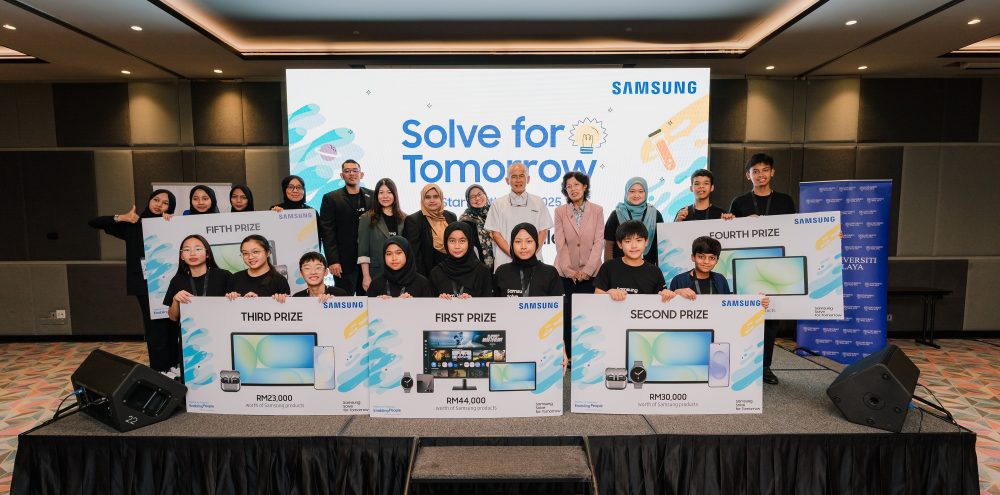
Four young innovator teams have won incubation grants worth Rs 2 crore collectively at Samsung Solve for Tomorrow 2026, marking another milestone in India's growing technology and entrepreneurship ecosystem. The winners were announced at the programme's Grand Finale in New Delhi on October 16, 2026, where teams presented technology-driven solutions designed to address real-world challenges across cybersecurity, healthcare, environmental sustainability and sports.
The winning teams are QuantHunt from Raebareli, Uttar Pradesh; morphism from Raipur, Chhattisgarh; InnoBotix from New Delhi; and Somatrace from Hyderabad, Telangana. Each team represents one of the four focus areas of the competition and will receive incubation support and mentorship through the Foundation for Innovation and Technology Transfer (FITT) at the Indian Institute of Technology Delhi.
The programme aims to help young innovators move beyond the idea stage by strengthening their prototypes, refining their technology and preparing their solutions for practical applications. With financial assistance and access to expert guidance, the winning teams will have an opportunity to explore how their innovations can develop into viable products and potential startups.
According to Samsung India, the 2026 edition attracted participation from 648 cities across 28 states and seven union territories, highlighting the growing interest among young Indians in using science and technology to solve societal problems.
Meet the Four Winning Teams of Samsung Solve for Tomorrow 2026
The four winning teams have developed solutions that apply emerging technologies to different challenges affecting individuals, communities and industries. Their projects demonstrate how artificial intelligence, connected devices and sustainable technology can be used to address practical problems.
1. QuantHunt: Addressing Emerging Cybersecurity Risks
QuantHunt, from Raebareli in Uttar Pradesh, won under the AI Living for India category. The team has developed an artificial intelligence-based cybersecurity solution designed to identify encryption vulnerabilities and help organisations prepare for potential risks associated with emerging quantum computing technologies.
As businesses and institutions increasingly rely on digital platforms, cybersecurity has become an important concern. Sensitive information, financial transactions and digital infrastructure depend on encryption systems to protect data from unauthorised access.
Advances in quantum computing could eventually challenge certain widely used cryptographic methods, making it important for organisations to assess their existing security arrangements and prepare for future threats. Solutions that help identify weaknesses and improve cybersecurity readiness could therefore play a valuable role in the evolving digital economy.
QuantHunt's project reflects the growing importance of proactive security assessment. With further technical development and validation, the team can explore how its solution could support organisations in understanding potential vulnerabilities and strengthening their digital defences.
2. morphism: Using AI to Support Autistic Individuals
The second winning team, morphism, comes from Raipur, Chhattisgarh, and competed in the Health and Education category. Its artificial intelligence-based system is designed to help autistic individuals better understand emotions by analysing subtle facial expressions and other behavioural signals.
Understanding emotional cues can be challenging for some autistic individuals, particularly in social situations where expressions, gestures and other non-verbal signals influence communication. Technology designed with accessibility and individual needs in mind may provide additional ways to understand these interactions.
morphism's solution explores how AI can interpret behavioural information to support emotional understanding. Its potential applications may include educational settings, personalised learning environments and other supportive contexts, depending on how the technology is developed and validated.
However, assistive technologies must be designed carefully, taking into account differences in individual communication styles, privacy and the limitations of automated emotion recognition. Further research and feedback from autistic people, families and relevant professionals will be important as the project advances.
The team's selection highlights how young innovators are exploring the use of AI beyond conventional business applications, including technologies intended to improve accessibility and support more inclusive learning experiences.
3. InnoBotix: Using Solar-Powered AI for Wildlife Protection
InnoBotix, based in New Delhi, secured the award under the Environmental Sustainability category with its project, Sentinel. The solution is a solar-powered AI edge device designed to detect wildlife approaching human settlements using cameras, radar and seismic data.
Human-wildlife conflict can create serious challenges for communities living near forests and wildlife habitats. Encounters between people and animals can threaten human safety, disrupt livelihoods and put wildlife at risk. Timely warnings may help communities take precautionary measures and reduce the chances of dangerous encounters.
Sentinel combines different sensing technologies to monitor signs of approaching wildlife and provide early warnings. Its solar-powered design also aims to support operation in locations where reliable electricity access may be limited.
The solution illustrates how artificial intelligence and environmental monitoring can work together to address conservation challenges. By processing information from multiple sources, such systems can potentially help distinguish relevant movement patterns and alert people when wildlife approaches populated areas.
Further development will need to consider reliability in different weather conditions, false alarms, maintenance requirements and the needs of communities using the technology. If successfully validated, Sentinel could contribute to broader efforts to use technology for wildlife monitoring and conflict prevention.
4. Somatrace: Improving Athlete Training Through Wearable Technology
Somatrace, from Hyderabad, Telangana, won under the Sport and Tech category. Its innovation is a wearable Internet of Things (IoT) training tool that measures spinal angles and training loads to help precision-sport athletes and coaches better understand movement patterns and potential injury risks.
Athletes require consistent training, technical accuracy and appropriate physical conditioning to improve performance. However, training intensity and body positioning can influence physical strain, particularly when movements are repeated over extended periods.
Somatrace aims to provide measurable information about spinal posture and training load. Wearable sensors and connected technology can help athletes and coaches gain additional insights into movement, potentially supporting more informed decisions about technique, training intensity and recovery.
The solution could be particularly relevant in sports where body positioning and controlled movement are important. Its practical value will depend on measurement accuracy, usability and validation against appropriate sports science methods.
By combining wearable technology with athletic training, Somatrace demonstrates how connected devices can be applied beyond general fitness tracking to address specialised performance and training requirements.
IIT Delhi to Provide Incubation and Mentorship Support
Along with the collective Rs 2 crore in incubation grants, the four winning teams will receive support through FITT at IIT Delhi. The incubation programme is intended to help the teams strengthen their prototypes and move towards market-ready solutions.
For early-stage innovators, funding is only one part of the development process. Turning an idea into a practical product can require technical expertise, testing facilities, user feedback, business planning and an understanding of the market in which the product will operate.
Incubation support can help young teams work through these challenges by providing access to mentors, technical resources and guidance on developing their projects. The teams will be able to further examine their solutions, identify areas for improvement and explore possible pathways towards implementation.
This support is particularly important for innovations involving hardware, artificial intelligence and connected devices, where the transition from a prototype to a reliable product may require repeated testing and refinement.
The programme's focus on incubation also reflects a broader shift in innovation initiatives: encouraging participants not only to generate ideas but also to develop solutions that can be tested, improved and potentially adopted by users.
Samsung Solve for Tomorrow 2026 Sees Nationwide Participation
The scale of participation is another important feature of this year's competition. Samsung reported entries spanning 648 cities across 28 states and seven union territories, demonstrating the programme's reach across different parts of India.
More than half of the ideas came from Tier 2 and Tier 3 cities, according to Samsung. This highlights how technology-driven problem-solving is emerging from locations beyond the country's traditional metropolitan startup centres.
Young people in smaller cities and towns often experience challenges related to healthcare access, education, environmental protection, infrastructure and economic opportunity. These experiences can provide a starting point for identifying problems that technology might help address.
By creating a platform for students to develop and present solutions, Samsung Solve for Tomorrow seeks to encourage innovation among young people from diverse educational and geographical backgrounds.
The programme also offers an opportunity for participants to learn how to approach problems systematically, evaluate the needs of potential users and communicate the value of their ideas. These skills can be useful for students considering careers in technology, research, product development and entrepreneurship.
From Design Thinking Workshops to National Competition
Samsung Solve for Tomorrow 2026 followed a six-month journey that included 184 design thinking workshops across 135 cities, intensive bootcamps, prototype development and pitch evaluations.
Design thinking encourages participants to begin by understanding a problem and the people affected by it before developing possible solutions. Instead of focusing exclusively on technology, the approach places importance on identifying user needs, testing assumptions and improving ideas through feedback.
For students, this process can provide an introduction to the practical stages of innovation. A promising idea must be assessed not only for its technical possibilities but also for its usability, affordability, accessibility and potential impact.
Throughout the competition, participating teams received opportunities to develop their concepts and present their work for evaluation. The final stage brought together teams working across the programme's four themes: AI Living for India, Health and Education, Sport and Tech, and Environmental Sustainability.
The selection of four winners represents the culmination of this process, while the incubation phase will allow the teams to continue developing their solutions beyond the competition.
A Boost for India's Student Entrepreneurship Ecosystem
The results of Samsung Solve for Tomorrow 2026 arrive at a time when student entrepreneurship and technology-led innovation are becoming increasingly important to India's economic development.
Artificial intelligence, connected devices, cybersecurity and sustainability technologies are creating opportunities for new products and services across industries. At the same time, many communities continue to face challenges that require affordable, accessible and locally relevant solutions.
Student innovation programmes can help bridge the gap between these two developments by encouraging young people to apply their knowledge to practical problems. They can also expose participants to mentorship, prototyping and the early stages of venture development.
For teams such as QuantHunt, morphism, InnoBotix and Somatrace, the next challenge will be translating their ideas into dependable solutions that can demonstrate real-world value. This may involve technical testing, user feedback, further research and the development of sustainable operating models.
The Rs 2 crore grant pool and incubation support provide a foundation for this next phase. However, the long-term success of the projects will depend on their ability to meet user needs, establish technical reliability and demonstrate meaningful impact.
The programme also sends a wider message to aspiring innovators: impactful ideas can emerge from different regions, educational backgrounds and personal experiences. A strong understanding of a problem, combined with thoughtful technology and the willingness to test and improve a solution, can create opportunities for meaningful innovation.
What the Samsung Solve for Tomorrow 2026 Results Mean for Young Innovators
The four winning teams demonstrate the range of challenges that young innovators can address through technology. From preparing digital systems for emerging cybersecurity risks to supporting autistic individuals, reducing human-wildlife conflict and improving sports training, their projects apply innovation to different areas of everyday life.
The competition also highlights the importance of support systems that help young people move from ideas to implementation. Access to funding, mentorship, prototyping facilities and expert guidance can make a significant difference in the development of early-stage projects.
For students interested in participating in similar initiatives, the key lesson is to begin with a clearly defined problem. Understanding who experiences the problem, why existing solutions may be insufficient and how a proposed innovation could improve the situation can provide a stronger foundation for developing a project.
Technology should serve as a means of solving the problem rather than being the objective on its own. Solutions must also be evaluated for safety, affordability, accessibility and practical usefulness.
As the four winning teams continue their work with FITT at IIT Delhi, their progress will offer an opportunity to see how student-led ideas can evolve through technical development and incubation.
Conclusion
Samsung Solve for Tomorrow 2026 has recognised four teams for developing technology-led solutions addressing challenges in cybersecurity, healthcare and education, environmental sustainability, and sports. QuantHunt, morphism, InnoBotix and Somatrace will collectively receive Rs 2 crore in incubation grants, along with mentorship and incubation support through FITT at IIT Delhi.
With participation spanning hundreds of cities across India, the programme reflects the growing interest among young people in applying technology to real-world problems. Its emphasis on design thinking, prototype development and mentorship also demonstrates the importance of helping innovators move beyond initial ideas.
The next stage will be to refine and validate the four winning solutions and explore their potential for wider application. Their journey could provide valuable lessons for India's emerging student entrepreneurs and demonstrate how youth-led innovation can contribute to a more inclusive, sustainable and technology-enabled future.
To read more such news kindly visit: Startuptimes

Leave a comment
Your email address will not be published. Required fields are marked *
Add a newsletter to your widget area.
Top Stories