
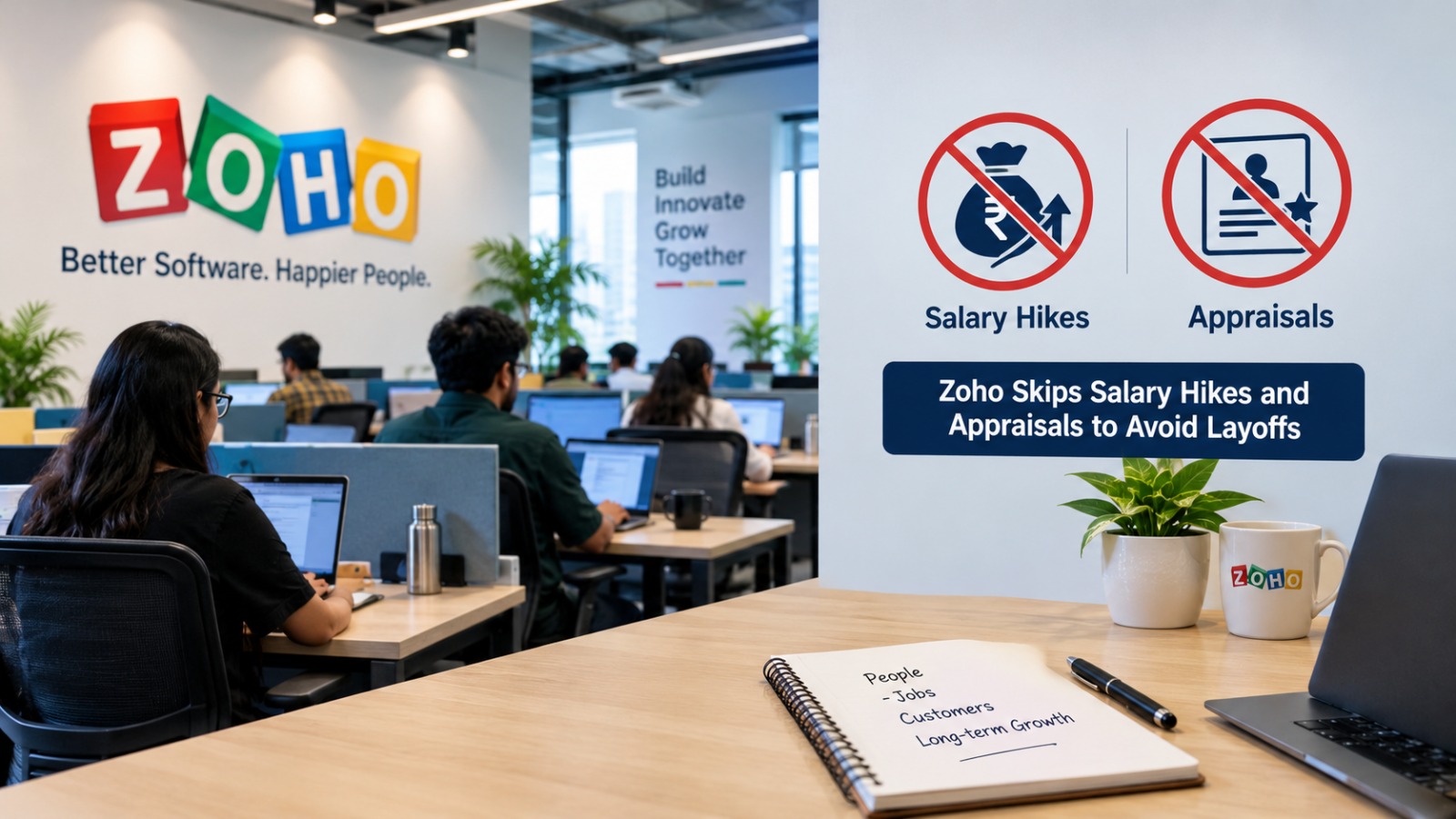
Zoho Skips Salary Hikes in 2026 to Avoid Layoffs
Zoho skips salary hikes and employee appraisals amid rising operating costs, aiming to avoid layoffs and prevent price increases for customers.
Indian enterprise software company Zoho has decided to forgo employee salary hikes and performance appraisals as it faces challenging market conditions and rising operating expenses. Zoho CEO Mani Vembu said the decision is intended to help the company avoid layoffs and prevent additional costs from being passed on to customers.
The announcement highlights the difficult decisions technology companies may face when balancing employee compensation, operational expenses and customer affordability. It also reflects the growing importance of cost management in the software industry, where companies must continue delivering services while managing changing business conditions.
According to a report published by The Economic Timesand coverage by The Times of Indiaon October 15, Vembu explained that the company had taken the decision to protect jobs rather than reduce its workforce or increase prices.
Why Is Zoho Skipping Salary Hikes?
Zoho's decision comes amid higher operating expenses and challenging market conditions. For software companies, costs associated with servers, cloud infrastructure, employee operations and technology development can influence business decisions.
Vembu indicated that the company wanted to avoid putting additional financial pressure on employees through layoffs or on customers through higher prices.
Rather than increasing compensation this cycle, Zoho is prioritising employment stability and maintaining affordable services. The decision represents a trade-off between short-term employee pay growth and the company's broader approach to managing expenses.
The company has not publicly detailed how long the decision will remain in effect or when regular salary reviews may resume.
Rising Technology Costs Affect Software Businesses
The software industry depends on reliable computing infrastructure to deliver applications, manage customer information and support business operations. As demand for digital services grows, infrastructure-related expenses can become a significant consideration.
Companies operating cloud-based products and enterprise applications must balance these costs with pricing, product development and customer support.
Higher operating expenses can also affect decisions about recruitment, employee benefits and internal budgets. For software providers serving businesses of different sizes, maintaining competitive prices can be important for customer retention.
Zoho's decision illustrates how rising costs may influence workforce policies even when companies are attempting to avoid layoffs.
Zoho Prioritises Job Security
Employee salary increases and performance appraisals are important parts of career progression. They help organisations recognise contributions, review performance and adjust compensation.
By forgoing these processes, Zoho is taking a different approach to managing its current cost pressures. The company's stated objective is to protect employment rather than respond to rising expenses through workforce reductions.
However, skipping salary hikes can also create challenges for employee morale, particularly if living costs continue to rise. Employees may expect clarity about future appraisal cycles, compensation reviews and career development opportunities.
The long-term impact will depend on how the company communicates the decision and whether normal review processes return once business conditions improve.
What Does This Mean for India's IT Industry?
Zoho's announcement comes as technology companies worldwide adjust to changing customer expectations, infrastructure costs and evolving technology requirements.
Indian IT and software businesses must manage several priorities simultaneously, including talent retention, service quality, operational efficiency and competitive pricing.
Some companies may respond to higher expenses by improving productivity, streamlining internal processes or investing in automation. Others may revise budgets, recruitment plans or employee benefit programmes.
Zoho's approach demonstrates one possible response, although the company's decision should not be taken as evidence that every Indian IT company is following the same strategy.
The wider impact will depend on individual company finances, customer demand and the costs associated with delivering technology services.
Impact on Employees and Customers
For employees, the immediate concern is the absence of salary increases and performance appraisals during the current period. While job security may be a positive consideration, the lack of compensation growth can affect financial planning and expectations.
For customers, avoiding price increases could help maintain predictable software expenses. Businesses that depend on enterprise applications often value stable pricing because it supports budgeting and long-term planning.
The company's approach seeks to balance these interests by controlling costs without immediately passing them on to customers or reducing its workforce.
Conclusion
Zoho's decision to skip salary hikes and performance appraisals in 2026 highlights the difficult choices technology companies can face when operating expenses increase.
CEO Mani Vembu has presented the move as an effort to avoid layoffs and protect customers from higher prices. Whether the approach proves sustainable will depend on future business conditions and the company's ability to manage costs.
For the broader software industry, the announcement serves as a reminder that operational efficiency, employee expectations and customer affordability remain closely connected.
To Read more such News Visit Startup Times.


Leave a comment
Your email address will not be published. Required fields are marked *
Add a newsletter to your widget area.
Top Stories