
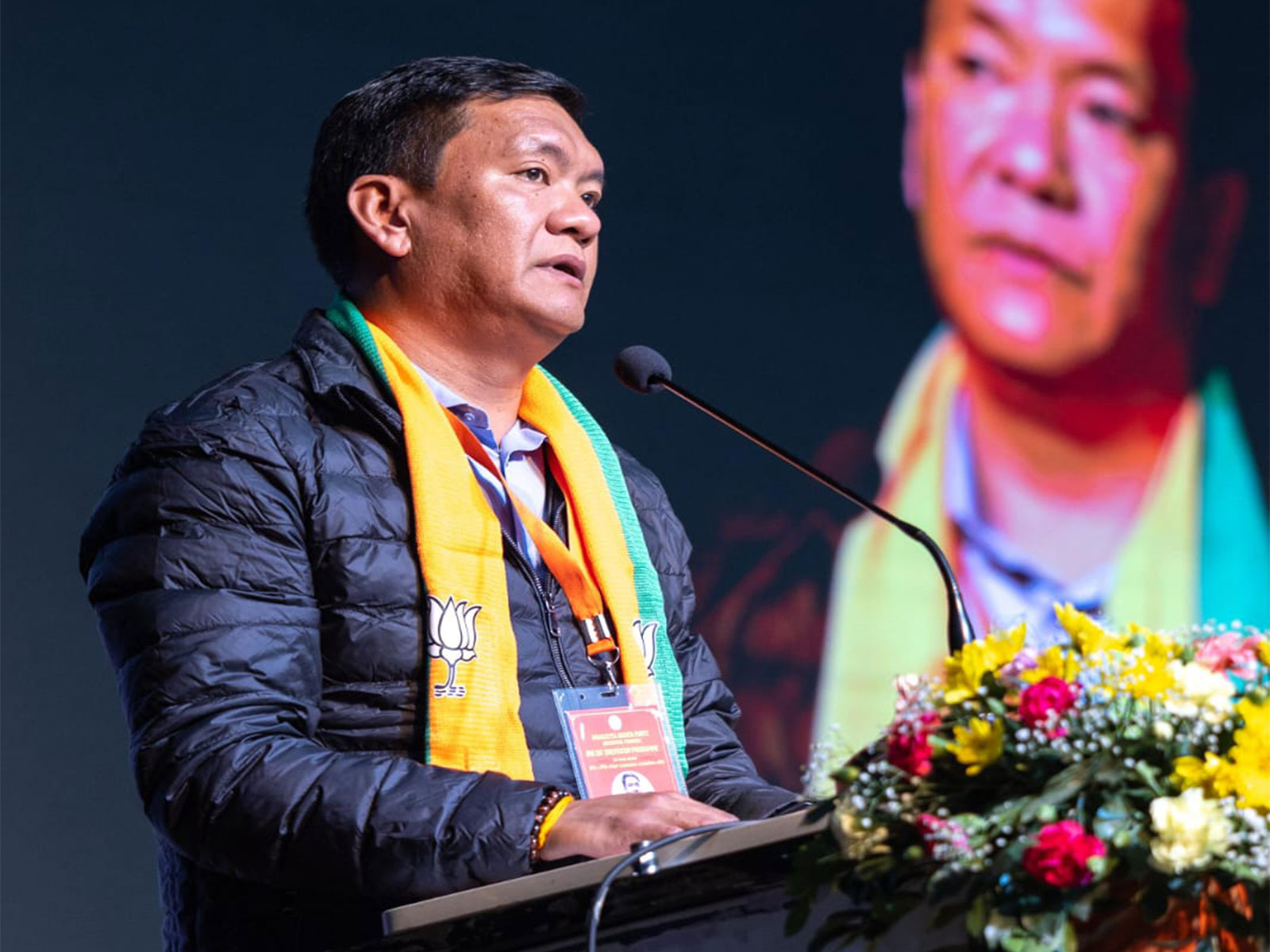
Arunachal Pradesh CM Announces New Startup and Investment Initiatives
Arunachal Pradesh CM Pema Khandu announces new startup initiatives, expanded incubation support, investor outreach and schemes to boost entrepreneurship.
Arunachal Pradesh Startup Ecosystem: Arunachal Pradesh Chief Minister Pema Khandu has announced a series of new initiatives aimed at strengthening the state's startup ecosystem, attracting investments and creating more opportunities for young entrepreneurs. The initiatives include the Arunachal Creative Economy (ACE) programme, the proposed Institute for Transforming Arunachal (ITA), expanded incubation facilities in educational institutions and efforts to connect local startups with venture capitalists.
The announcements were made in Itanagar on October 13, 2026, during a programme marking the graduation of Cohort 4 and the commencement of Cohort 5 of the Arunachal Pradesh Entrepreneurship Development Programme (APEDP). The event also featured the inauguration of satellite incubation cells in seven higher education institutions and the signing of memoranda of understanding with five additional institutions.
The latest measures reflect the state government's efforts to promote entrepreneurship, encourage innovation and strengthen the role of startups and small businesses in Arunachal Pradesh's economic development.
Arunachal Creative Economy Programme to Support Young Entrepreneurs
One of the key announcements was the proposed Arunachal Creative Economy programme, which aims to help young people turn creative ideas into viable businesses. The initiative is expected to provide a platform for aspiring entrepreneurs who want to develop innovative products, services and business models.
The programme could create opportunities for ventures associated with traditional crafts, tourism, cultural products, digital services and other creative industries. By connecting local talent with business opportunities, the initiative could also help entrepreneurs preserve the state's cultural identity while building commercially sustainable enterprises.
For young people in Arunachal Pradesh, creative entrepreneurship offers an alternative to conventional employment. With appropriate mentoring, access to markets and financial support, locally developed ideas can potentially grow into businesses that serve customers across India and international markets.
Institute for Transforming Arunachal to Strengthen Policy Planning
Chief Minister Pema Khandu also announced the Institute for Transforming Arunachal, an expert think tank envisioned as a state-level institution similar in concept to NITI Aayog.
The proposed institute will bring together subject experts to provide policy guidance in important sectors, including agriculture, allied activities and tourism. Its work is expected to support evidence-based decision-making and help the government identify opportunities for economic growth.
Effective policy planning is particularly important for a state such as Arunachal Pradesh, where geographical conditions, connectivity challenges and differences in local economic activity can influence business development. Expert recommendations could help the government identify sector-specific investment opportunities and design policies that respond to the needs of local entrepreneurs.
The proposed institute may also contribute to aligning entrepreneurship initiatives with the state's broader development priorities.
APEDP Expands Support for Startups and Emerging Businesses
The Arunachal Pradesh Entrepreneurship Development Programme remains a central component of the state's startup promotion strategy. According to the Chief Minister, the programme has helped launch more than 150 startups since it began in 2021 during the COVID-19 pandemic.
The programme's intake has been increased from 50 to 100 startups, while the seed funding amounts have also been raised. The support has increased from Rs 5 lakh to Rs 10 lakh and from Rs 4 lakh to Rs 8 lakh across the two funding categories.
Entrepreneurs entering Cohort 5 are expected to undergo a nine-month incubation programme at the Arunachal Pradesh Innovation and Investment Park (APIIP). The programme includes mentorship and guidance from institutions such as the Indian Institute of Management, helping founders develop their business ideas and improve their chances of building sustainable enterprises.
Incubation support is important for startups because early-stage businesses often face challenges involving product development, customer acquisition, financial management, marketing and business strategy. Access to experienced mentors and structured training can help entrepreneurs address these issues before expanding their operations.
The expanded programme is also expected to give more aspiring business owners an opportunity to pursue entrepreneurship as a career.
Satellite Incubation Cells to Connect Colleges With Startups
Another important step is the expansion of incubation facilities across higher education institutions in Arunachal Pradesh. Satellite incubation cells were inaugurated at seven institutions, while memoranda of understanding were signed with five additional colleges.
The institutions receiving incubation facilities include Rajiv Gandhi University, Arunachal Pradesh University at Pasighat, Arunachal University of Studies at Namsai, NIT Jote, NEDIS at Nirjuli, Dera Natung Government College in Itanagar and Dorjee Khandu Government College in Tawang.
New partnerships were also established with Donyi Polo Government College at Kamki, Government College at Bomdila, Indira Gandhi Government College at Tezu, Government Model College at Seppa and St. Claret College at Ziro.
The expansion is intended to bring entrepreneurship support closer to students and aspiring founders. Instead of depending entirely on facilities located in major centres, young innovators may be able to access guidance and startup-related resources through participating institutions.
College-based incubation can also strengthen connections between academic knowledge and practical business development. Students with ideas in technology, agriculture, tourism, food processing and other fields could receive opportunities to explore whether their concepts can be converted into marketable products and services.
YES Arunachal Portal to Improve Access to Government Schemes
The Chief Minister also launched the YES (Youth Empowerment Sphere) Arunachal portal, a single-window platform hosted by APIIP that is intended to provide access to Central and state government schemes.
Access to reliable information about funding, training, subsidies and other government programmes is a significant consideration for first-time entrepreneurs. A centralised digital platform can help reduce the difficulty of identifying relevant schemes and understanding the support available to eligible applicants.
The portal could be particularly useful for young entrepreneurs and small-business owners who may not have dedicated administrative teams to navigate government programmes.
Alongside the portal, Khandu encouraged young people to participate in the National Innovation Challenge under the Sewa Sankalp Abhiyan. The broader objective is to encourage innovation and help young people identify opportunities to address practical challenges through entrepreneurship.
Government Explores Incentives for Growing Startups
The state government is also examining potential incentives for startups that transition from proprietorships into private limited companies or limited liability partnerships.
Khandu directed the Planning and Investment Department and the APEDP cell to consult the Department for Promotion of Industry and Internal Trade (DPIIT) regarding possible state incentives, including income tax-related support. A policy decision was expected in the coming days, according to the announcement.
Formalising a business can help entrepreneurs establish clearer ownership structures, improve financial documentation and pursue certain forms of investment. However, the transition can also introduce additional regulatory and compliance responsibilities.
Any future incentives could therefore play a role in encouraging businesses to formalise their operations and prepare for expansion. The exact benefits will depend on the policy decisions ultimately announced by the government.
The Chief Minister also asked officials to organise workshops for APEDP alumni, focusing on how businesses can reach national and international markets through digital platforms. These workshops are expected to address the importance of online visibility, digital marketing and the use of technology to expand customer reach.
Investment Promotion and Venture Capital Opportunities
Connecting startups with investors is another major priority under the new initiatives. Khandu said he was in contact with venture capitalists and planned to convene a conference where Arunachal-based startups could present their business ideas to potential investors.
Such interactions can help promising ventures gain exposure to funding opportunities and build relationships with people who understand the requirements of business expansion.
Early-stage startups frequently struggle to secure external investment because they may have limited operating histories, small customer bases or insufficient financial records. Investor-focused events can provide a platform for founders to explain their business models, demonstrate their products and outline their plans for growth.
The government also directed the Arunachal Pradesh Innovation and Investment Park CEO to expedite the organisation's conversion into a Section 8 company. The conversion process is intended to advance the institutional development of the state's startup-support infrastructure.
Beyond venture capital, entrepreneurs may also explore opportunities through micro, small and medium enterprises (MSMEs), government-backed schemes and other available financing channels.
MSMEs, Tourism and Agriculture Offer Growth Opportunities
The state government's startup initiatives are closely connected to the development of the MSME sector. Khandu encouraged entrepreneurs to explore opportunities in small businesses and highlighted support programmes, including UNNATI, Deen Dayal Upadhyaya Swavalamban Yojana, Chief Minister Paryatan Vikas Yojana and various Atmanirbhar schemes for agriculture, horticulture and fisheries.
These sectors have the potential to support local economic activity by creating businesses that respond to regional needs and use locally available resources.
Tourism and hospitality, for example, can provide opportunities for entrepreneurs interested in accommodation, travel services, local experiences and related businesses. Agriculture, horticulture and food processing can create opportunities to add value to locally produced goods, while digital services can help businesses reach customers outside the state.
Arunachal Pradesh's traditional products and cultural resources may also offer opportunities for branding, product development and online sales. The Chief Minister encouraged entrepreneurs to build on the state's 20 Geographical Indication (GI) tags through value addition and digital marketing.
For these opportunities to translate into sustainable growth, businesses will need access to suitable infrastructure, reliable supply chains, skilled workers and customers willing to pay for their products and services.
Investment Commitments and Economic Development
Arunachal Pradesh is also working to attract investment across sectors beyond startups. According to the announcement, five investments worth Rs 809 crore under the Rising North East Investment Summit have been grounded, while promised investments worth Rs 7,941 crore are being pursued.
The figures indicate the scale of investment opportunities being explored by the state, although promised investments should be distinguished from projects that have already been implemented.
The Chief Minister also highlighted hydropower development, noting that projects totalling approximately 19,000 MW were at various stages of work. In addition, five mineral blocks, including graphite and vanadium, had been auctioned in collaboration with the Union Ministry of Coal and Mines.
These sectors could contribute to the state's economic prospects, but the extent of their benefits will depend on project implementation, infrastructure development, environmental considerations and the participation of local communities.
Khandu appealed to communities to support investors and help make Arunachal Pradesh an investor-friendly destination. At the same time, a sustainable investment environment will require transparent processes, effective governance and development that considers local interests.
Focus on Financial Management and Business Readiness
Alongside funding and incubation, the Chief Minister highlighted the importance of financial discipline among entrepreneurs. He advised businesses to engage chartered accountants, maintain annual balance sheets and file income tax returns even when their tax liability is nil, where applicable.
Sound financial management can help startups monitor cash flow, understand operating costs and prepare for discussions with lenders or investors. Maintaining proper accounts and meeting applicable compliance requirements can also reduce the risk of administrative problems as a business grows.
For early-stage founders, these responsibilities may appear secondary to developing products or attracting customers. However, financial transparency and sound business management are important elements of long-term sustainability.
The government has also emphasised the importance of understanding company law, relevant state industrial and investment policies, and labour regulations. These areas can become increasingly important as businesses hire employees, enter new markets or expand their operations.
What the New Initiatives Mean for Arunachal Pradesh's Startup Ecosystem
The latest announcements represent a broader effort to build an entrepreneurship ecosystem that combines financial assistance, incubation, policy guidance, digital access and investor engagement.
For students and young professionals, expanded incubation facilities could create more opportunities to test business ideas and receive mentorship. For existing startups, investor conferences and digital-market workshops may help improve access to funding and customers. For smaller businesses, government schemes and better information access could make it easier to identify suitable support.
However, the long-term impact will depend on implementation. Startups will need consistent access to funding, practical mentorship, market connections and infrastructure that supports business operations. Entrepreneurs outside major urban centres will also need opportunities to benefit from these initiatives.
The state's ability to convert early-stage business ideas into sustainable companies will be an important measure of success. Equally important will be the number of jobs created, the survival and expansion of supported startups, and the extent to which new enterprises contribute to local livelihoods.
Conclusion
Arunachal Pradesh Chief Minister Pema Khandu's new initiatives signal a continued push to strengthen the state's startup and investment ecosystem. Through the Arunachal Creative Economy programme, the proposed Institute for Transforming Arunachal, expanded APEDP support, college-based incubation cells and the YES Arunachal portal, the government is seeking to create a more supportive environment for entrepreneurship.
The proposed investor conference and the exploration of incentives for growing startups could further support business expansion if implemented effectively. Meanwhile, opportunities in MSMEs, tourism, agriculture, digital services and other sectors could help diversify the state's economic activity.
As these initiatives move forward, their success will depend on how effectively policy announcements translate into practical assistance, stronger businesses and sustainable employment opportunities. For Arunachal Pradesh, building a vibrant startup ecosystem could become an important part of its long-term economic development strategy.
To read more such news kindly visit : Startuptimes


Leave a comment
Your email address will not be published. Required fields are marked *
Add a newsletter to your widget area.
Top Stories