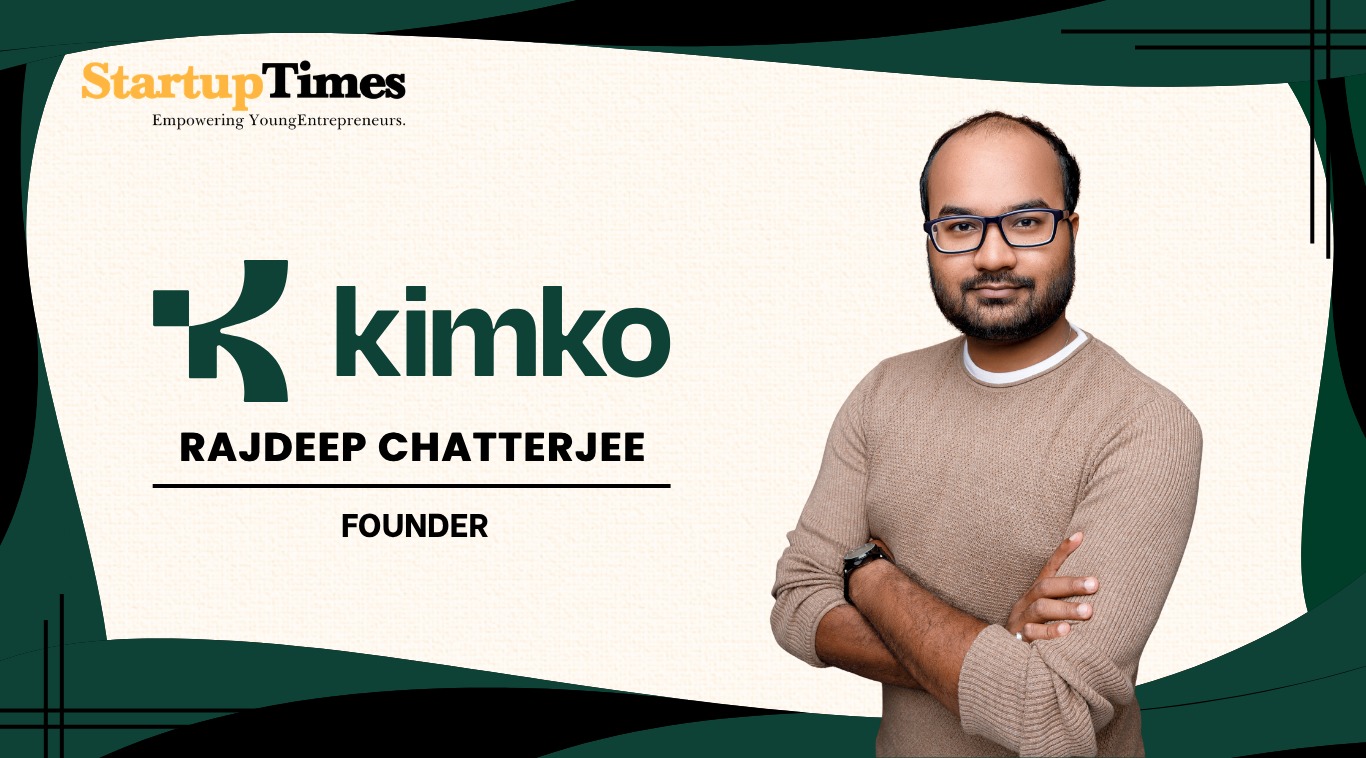
Not every founder sets out with a business plan in hand. Some begin with a moment of curiosity that slowly turns into a career, and eventually, a company shaped by years of observation and experience.
For Rajdeep Chatterjee, that moment came in an unlikely place, a tuition class.
An Unplanned Beginning
Rajdeep’s entry into the world of design was not mapped out. Back in 2008, during a casual conversation, a friend mentioned wanting to pursue animation. At the time, animated films were gaining popularity, and the idea itself felt exciting.
The thought was simple. People get paid to draw.
That curiosity stayed. What started as an interest in animation soon opened the door to a much larger space. Rajdeep moved from animation to graphic design, then into communication design, and eventually specialized in Interaction Design, focusing on UX and UI.
Over the last decade, he has worked on products that millions of Indians use every day. From designing the Voot app and Zee5 in 2019 to contributing to Oyo Rooms for Business and leading the Swiggy One membership experience, his work has quietly shaped digital experiences across the country.
The Insight That Sparked Kimko

The idea behind Kimko’s 1st product did not come from a boardroom discussion. It came from conversations with users.
While working on Voot, Rajdeep and his team were focused on regionalising the platform. This meant understanding how users in Tier 2 and Tier 3 cities interacted with digital products. As part of this effort, he personally interviewed over 100 people.
What he discovered was not a technical gap, but a cultural one.
Many users struggled to understand the meaning of icons used in apps. These icons, often borrowed from Western design systems, did not always translate well in an Indian context. The very purpose of icons is instant recognition, especially for users who may not rely heavily on text. But that clarity was missing.
This raised an important question. If India has its own languages, behaviors, and visual cues, why are its digital products still relying on global design libraries that do not fully reflect this diversity?
That question stayed, and eventually turned into a problem worth solving.
Building for Indian Context
Kimko was created with a clear focus. To build a design asset ecosystem that is rooted in the Indian context.
At its core, the platform aims to provide a library of icons, components, and eventually fonts that are designed specifically for Indian users. While global libraries offer standard assets, they often miss cultural nuances that matter in everyday interactions.
This gap becomes more visible as more startups build for Indian audiences. Apps like Sri Mandir, AstroTalk, and several platforms across healthcare, agriculture, and government services are growing rapidly. Many of them are forced to create custom assets from scratch because existing options do not meet their needs.
Kimko steps in to simplify that process.
What Kimko Offers Today
Kimko is working on several design products, Kimko stocks is the first one and focuses on providing flat icons in both filled and outlined styles. These are available through subscription models, making them accessible for startups and teams working on tight timelines.
The platform has already started building categories such as healthcare, devotional, and agriculture. These are not random choices. They reflect sectors where Indian users interact heavily with digital products.
Alongside ready-to-use assets, the team also works with companies to build custom icon libraries that align with their brand identity. This helps maintain consistency while still allowing flexibility.
Another important addition in the pipeline is regional fonts, something that could further strengthen localised design systems.
The Challenge of Building at Scale
Creating high-quality design assets is not easy. It takes time, attention to detail, and significant effort. For a small team, scaling this process comes with its own challenges.
Rajdeep and his team are addressing this by evolving Kimko into a marketplace. The idea is to bring in top illustrators who can contribute their work and earn through commissions on each sale.
This approach does two things. It expands the library faster and also creates an ecosystem where designers can participate and benefit.
The platform is currently being tested through an invite-only model, while the backend systems are still under development. The goal is to build something that is not just a library, but a community-driven resource.
Still Early, But Intent is Clear
Rajdeep is candid about where the company stands today. There hasn’t been a defining breakthrough moment yet. But that does not take away from the clarity of the vision.
Kimko is still in its early stages, but it is built on a strong understanding of a real problem. And that often matters more than quick milestones.
Looking Ahead
Under Kimko, Kimko stocks is our first product.
The long-term vision for Kimko stocks goes beyond icons and fonts.
Rajdeep sees the platform growing into a full AI-powered design suite. This includes tools like AI image generators, icon generators, and even video generation capabilities.
The idea is to reduce the effort required in creating assets while still maintaining cultural relevance and design quality.
If executed well, this could significantly change how startups approach design in India.
Advice for Aspiring Founders
Rajdeep keeps his advice simple and grounded.
Focus deeply on the problem you are trying to solve. Stay obsessed with it. Talk to people as much as possible, because every conversation brings a new perspective.
In a space where trends change quickly, clarity of problem often becomes the only constant.
A Journey That’s Still Taking Shape
Kimko is not just about designing assets. It reflects a larger shift in how digital products are being built for India. Instead of adapting global systems, it focuses on creating something that truly fits the people who use it.
As more startups emerge across the country, the need for culturally relevant design will only grow. Platforms like Kimko could quietly become an essential part of that ecosystem.
Connect & Explore
To know more about Rajdeep and his work, you can explore his platform at:
Website:https://stocks.kimko.design/
Instagram:https://www.instagram.com/rajdeepchatterjee7/
LinkedIn:https://www.linkedin.com/in/rajdeep-chatterjee-08728648/