
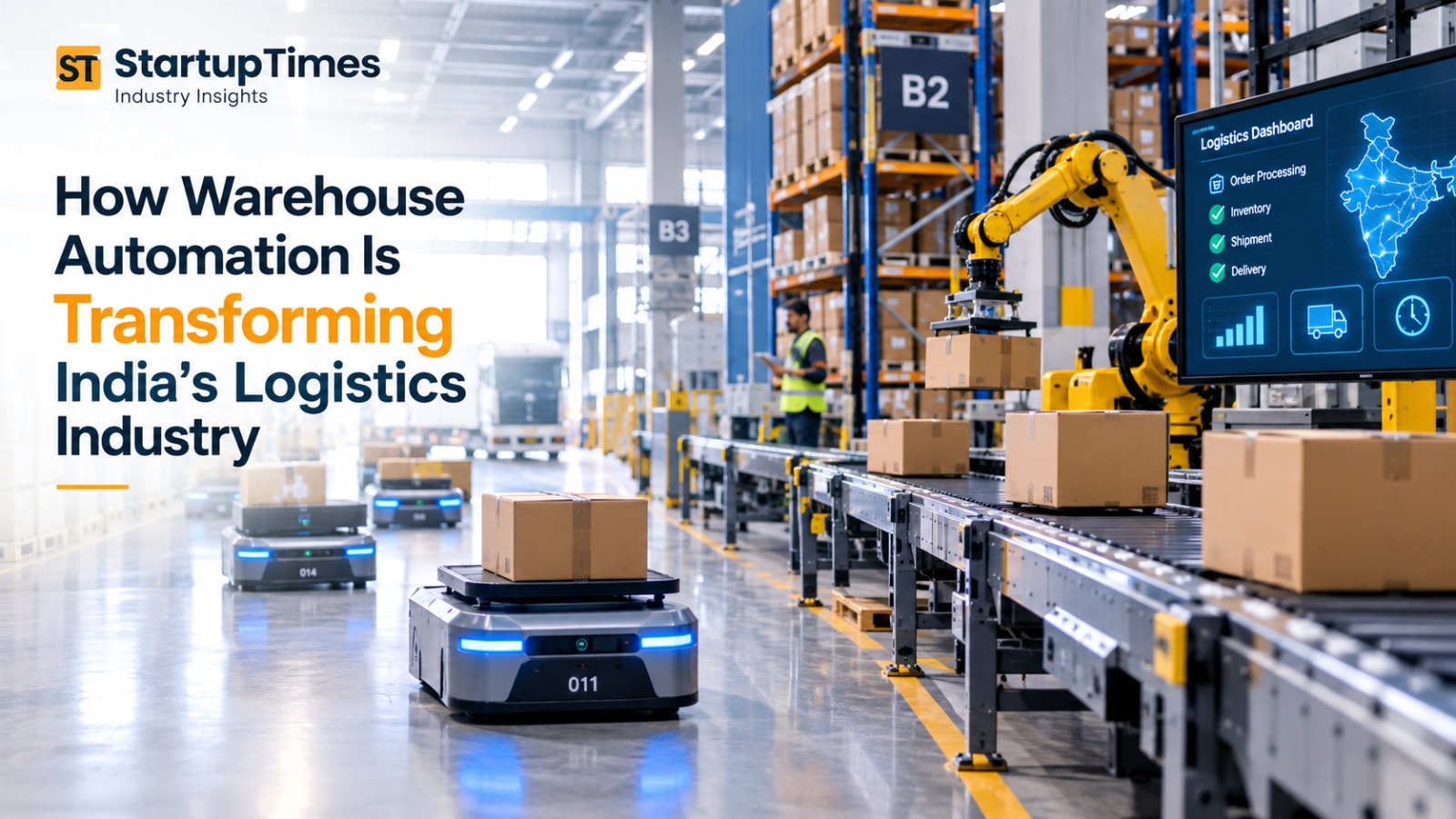
How Warehouse Automation Is Transforming India's Logistics Industry
Discover how warehouse automation is reshaping India's logistics industry through robotics, artificial intelligence, smart inventory systems, and faster order fulfilment, while examining the opportunities and challenges for businesses.
Key Technologies Driving Warehouse Automation
Robotics and Autonomous Mobile Robots
Robotics is changing how products are transported and handled within modern warehouses. Autonomous mobile robots, commonly known as AMRs, can navigate warehouse floors, move inventory between workstations, and support employees during picking and replenishment activities. Unlike conventional fixed conveyor systems, many mobile robots can adapt their routes to changing warehouse conditions using sensors and navigation software. Robotic arms can also assist with repetitive handling, sorting, and packaging tasks. These technologies can reduce unnecessary walking, improve the consistency of repetitive operations, and help warehouses process orders more efficiently. Nevertheless, their performance depends on proper integration, safe operating procedures, and regular maintenance.
Artificial Intelligence and Smart Inventory Management
Artificial intelligence is helping warehouse operators make better use of operational data. AI-enabled systems can analyse historical order patterns, identify demand fluctuations, and support decisions about where products should be stored. For example, frequently ordered products can be positioned closer to picking and packing areas, potentially reducing the distance employees or robots must travel. Predictive analytics can also help businesses anticipate inventory requirements and identify unusual patterns that may indicate stock discrepancies. When integrated with reliable inventory records, these capabilities can improve planning and help businesses respond to changing customer demand. AI is not a replacement for accurate data or sound operational decisions, but it can provide useful insights when implemented appropriately.
Warehouse Management Systems
A Warehouse Management System, or WMS, is software that helps businesses manage inventory and coordinate warehouse activities. It can track incoming goods, assign storage locations, manage picking instructions, monitor stock movements, and record dispatches. When connected to barcode scanners, RFID technology, conveyors, or robots, a WMS can help coordinate different stages of warehouse operations. For instance, when a new shipment arrives, employees can scan the products and update the system rather than relying entirely on handwritten records. The information can then help staff locate inventory, process orders, and identify stock discrepancies. A well-configured WMS provides the digital foundation needed for many automation projects, even when a warehouse does not use advanced robotics.
Internet of Things and Real-Time Tracking
The Internet of Things, or IoT, connects physical devices and sensors to digital systems so that information can be collected and monitored. In warehousing, IoT devices can support equipment monitoring, environmental tracking, and the movement of goods through different operational stages. RFID tags and barcode systems can help identify products and record their movement, while suitable sensors can monitor temperature and humidity in facilities handling sensitive products. This is particularly relevant to industries such as pharmaceuticals and food distribution, where storage conditions can affect product quality. Real-time information can help warehouse managers identify problems earlier and respond before they disrupt operations. However, effective tracking requires suitable infrastructure, reliable connectivity, and appropriate data management practices.
How Warehouse Automation Improves Business Operations
One of the most important benefits of warehouse automation is the potential to improve operational efficiency. Automated conveyors, guided picking systems, and mobile robots can reduce unnecessary movement and help products travel through the warehouse in a more organised manner. Employees can spend less time searching for inventory or transporting goods over long distances, allowing them to focus on tasks that require judgement, supervision, and problem-solving. These improvements can be particularly valuable in facilities handling large numbers of orders or operating under tight dispatch deadlines. The actual gains, however, vary according to implementation quality, warehouse design, and the type of operation being automated.
Accuracy is another important consideration. Manual processes can be affected by misplaced items, incorrect quantities, and data-entry mistakes. Barcode scanning, RFID identification, digital picking instructions, and automated verification systems can help reduce some of these errors. Better inventory visibility also makes it easier for businesses to understand which products are available, where they are stored, and whether stock levels need replenishment. More reliable records can support purchasing decisions, improve order fulfilment, and reduce avoidable delays caused by missing or incorrectly recorded products.
Warehouse automation can also help businesses make better use of limited space. Automated storage and retrieval systems can organise products within carefully designed storage structures and retrieve them when required. Depending on the technology, facility height, and product characteristics, these systems can help increase storage density and reduce the floor space needed for certain activities. For businesses operating in locations where suitable warehouse space is expensive or difficult to obtain, improving storage utilisation can be an important consideration. However, automated storage systems require careful planning because structural requirements, installation costs, maintenance access, and product compatibility all influence their suitability.
A Practical Example: An Automated E-Commerce Warehouse
Consider an e-commerce warehouse that receives thousands of orders from customers across different cities. In a conventional setup, employees may need to locate products manually, transport them to packing stations, and sort completed packages according to their destinations. During busy periods, this process can become difficult to manage, especially when inventory records are inaccurate or several orders require the same products.
In an automated setup, a warehouse management system receives the order information and identifies the products that need to be picked. Digital instructions guide employees or robots towards the relevant locations, while conveyors transport packages between operational areas. Automated sorting equipment can direct parcels towards designated dispatch zones, and scanning systems can record important movement updates. Warehouse supervisors can use operational dashboards to monitor pending orders, inventory levels, and bottlenecks. The combination of connected technologies can help the facility process orders more systematically and improve visibility throughout the fulfilment process. This example illustrates a possible implementation rather than a guarantee that every automated warehouse will achieve the same results.
Challenges Businesses Must Consider
Despite its advantages, warehouse automation comes with significant challenges. The initial investment can include equipment, software licences, installation, infrastructure upgrades, employee training, and ongoing technical support. Smaller businesses may find it difficult to justify a large investment when their order volumes are relatively low or unpredictable. Automated systems can also require changes to warehouse layouts, product packaging, storage arrangements, and existing operational procedures. Businesses must therefore evaluate their current problems and expected benefits before choosing a solution.
Integration is another challenge. A warehouse may already use inventory software, accounting systems, transport management platforms, and order-processing tools. If these systems cannot exchange information reliably, automation may create additional complexity instead of solving existing problems. Businesses need to consider software compatibility, data accuracy, system reliability, cybersecurity, and backup procedures. Equipment downtime is also an important concern because a failure in one part of an interconnected operation can affect other activities. Maintenance planning, technical support, staff training, and contingency procedures should therefore be included in the implementation strategy.
Workforce readiness is equally important. Automation changes the nature of warehouse jobs by introducing new requirements for operating equipment, monitoring systems, analysing information, and resolving technical problems. Some repetitive tasks may be reduced, while demand may increase for employees with skills in maintenance, robotics, inventory systems, and operations management. Businesses should plan for this transition through appropriate training and opportunities for employees to develop new skills. A successful automation strategy considers not only machines and software but also the people responsible for using and maintaining them.
The Future of Warehouse Automation in India
The future of Indian warehousing is likely to involve a combination of digital systems, connected equipment, robotics, and human expertise. Not every warehouse will become fully automated, nor will every business need the same technology. Large distribution centres handling high order volumes may benefit from advanced robotics and automated storage systems, while smaller facilities may achieve meaningful improvements through barcode scanning, inventory software, digital documentation, and selected conveyor or sorting solutions. Modular systems can allow businesses to introduce automation gradually as operational needs and budgets evolve.
Sustainability is another area to watch. Better inventory planning and warehouse layout optimisation can help reduce unnecessary movement and wasted resources. Automation may also support more efficient equipment usage and improved space utilisation, although its environmental impact depends on factors such as energy consumption, equipment lifespan, and the wider supply chain. Businesses should evaluate both operational performance and resource use when considering new technologies.
India's logistics transformation will also depend on coordination beyond individual warehouses. Improvements in road, rail, port, and digital infrastructure can influence how effectively goods move between manufacturers, distribution centres, and customers. Digital logistics platforms and better information sharing can help businesses improve shipment visibility and coordination across supply chains. Warehouse automation can contribute to these broader improvements, but its full potential depends on reliable infrastructure, suitable investment, skilled employees, and effective integration between different parts of the logistics network.
Conclusion: Building Smarter and More Efficient Supply Chains
Warehouse automation is becoming an important part of the evolution of India's logistics industry. Robotics, artificial intelligence, warehouse management systems, and connected tracking technologies offer businesses new ways to manage inventory, coordinate fulfilment, and improve operational visibility. At the same time, successful adoption requires careful investment decisions, reliable systems, employee training, and a clear understanding of business requirements. The goal is not to automate every task simply because the technology exists, but to identify where technology can solve genuine operational problems and create measurable value.
As India's supply chains continue to evolve, businesses that combine appropriate technology with strong processes and skilled people will be better positioned to respond to changing customer expectations. Warehouse automation is therefore not just about faster machines or more advanced equipment; it is about building logistics operations that are more organised, adaptable, and prepared for future demands.
To explore more industry trends, technology developments, and business insights, visit Startup Times – Industry Insights.

Leave a comment
Your email address will not be published. Required fields are marked *
Add a newsletter to your widget area.
Top Stories