
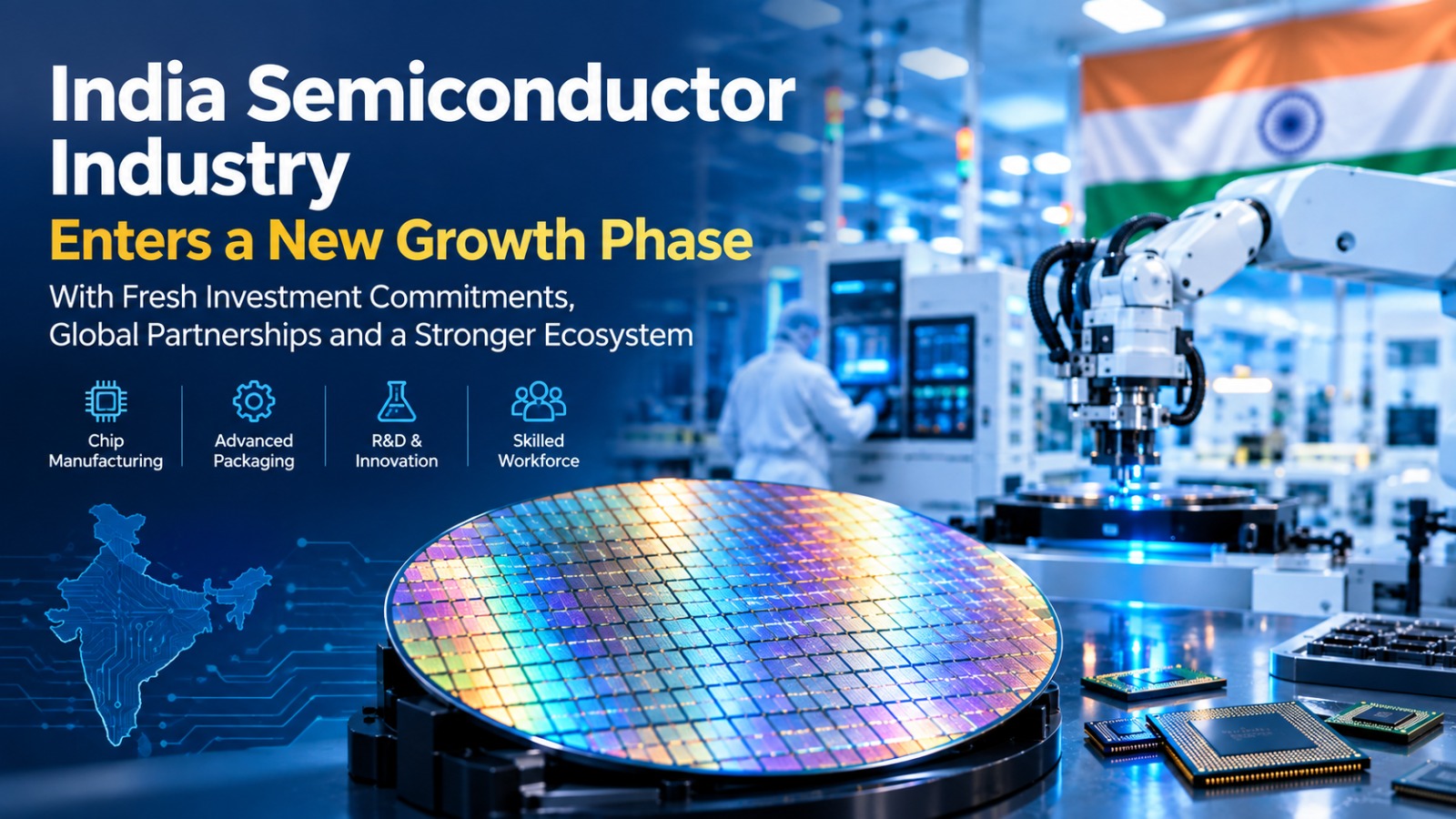
India Semiconductor Industry: $12 Billion Investment Push in 2026
India’s semiconductor industry gains momentum with around ₹1 lakh crore in investment commitments and new global partnerships under Semicon 2.0.
The India semiconductor industry is gaining significant momentum as the country moves beyond building basic semiconductor capabilities toward developing a broader manufacturing and supply-chain ecosystem. Recent developments around SEMICON India 2026, held in New Delhi from September 17 to 19, have brought renewed attention to investments in chip manufacturing, semiconductor equipment, advanced packaging, research and development, materials and workforce development.
One of the most significant developments is the emergence of fresh investment commitments under Semicon 2.0. According to India's Ministry of Electronics and Information Technology, investment commitments of around ₹1 lakh crore, or approximately $11–12 billion, have been received for the semiconductor ecosystem. The government expects these investments to materialise over the next two to three years, subject to the required corporate approvals.
India Semiconductor Industry Attracts Global Investment
The latest developments demonstrate that semiconductor manufacturing is no longer limited to chip fabrication. India is attempting to build a wider ecosystem covering chip design, semiconductor equipment, materials, chemicals, packaging, testing, research and talent development.
At SEMICON India 2026, more than 600 exhibitors participated, including around 300 international participants, highlighting the growing international interest in India's semiconductor ecosystem. The event also included country and state pavilions, startups and workforce-development initiatives.
A major corporate announcement came from Applied Materials, which plans to invest $5 billion in India over the next decade. The semiconductor equipment company said its investment will focus on areas including research, supply-chain development and workforce expansion. Reuters reported that the announcement came as global demand for semiconductor production capacity continues to rise, particularly because of increasing demand for AI computing.
Semicon 2.0 Expands the Semiconductor Ecosystem
The latest phase of India's semiconductor programme is designed to move beyond establishing individual manufacturing projects. According to the Ministry of Electronics and Information Technology, Semicon 2.0 will focus on six broad areas, including semiconductor design, precision manufacturing, equipment, fabrication, advanced packaging, research and development, and talent development.
This approach is important because a competitive semiconductor industry requires multiple connected industries. A chip manufacturing facility depends on specialised equipment, chemicals, gases, materials, engineering services, packaging facilities, testing capabilities and highly skilled employees.
Building these supporting industries can therefore create opportunities for both large corporations and smaller technology companies.
Semiconductor Manufacturing Could Strengthen India's Electronics Industry
The expansion of the India semiconductor industry is closely connected to the country's broader electronics manufacturing ambitions. Semiconductors are essential components in smartphones, automobiles, computers, telecommunications equipment, medical devices, industrial machinery and data-centre infrastructure.
As semiconductor manufacturing and packaging capacity expands domestically, electronics companies can potentially gain access to a larger local supply ecosystem. At the same time, domestic suppliers may find opportunities to participate in global semiconductor value chains.
The government's semiconductor strategy therefore extends beyond producing chips. It aims to develop capabilities throughout the value chain, including design, fabrication, assembly, testing, equipment and materials.
AI Is Increasing Demand for Semiconductor Capacity
Artificial intelligence is another major factor influencing the semiconductor industry. AI applications require significant computing infrastructure, including advanced processors, memory and specialised chips.
Reuters reported that the global semiconductor industry is experiencing strong demand linked to AI computing, while geopolitical considerations are encouraging companies to diversify supply chains and manufacturing locations.
For India, this creates an opportunity to participate in a rapidly evolving technology supply chain. However, establishing a semiconductor ecosystem requires substantial capital, specialised infrastructure, reliable utilities and highly trained professionals.
Employment and Skill Development Become Important
The semiconductor industry's expansion is also expected to create demand for specialised talent. The Ministry of Electronics and Information Technology has estimated that the investment commitments under Semicon 2.0 could generate close to one lakh employment opportunities across the semiconductor ecosystem.
These opportunities are expected to extend beyond traditional engineering roles. Semiconductor expansion can create demand in areas such as:
- Semiconductor design
- Electronics engineering
- Manufacturing and production
- Equipment maintenance
- Quality control
- Supply-chain management
- Research and development
- Data and automation
- Industrial software
- Semiconductor testing and packaging
Workforce development will therefore remain an important part of India's semiconductor strategy.
Challenges for India's Semiconductor Industry
Despite the investment momentum, semiconductor manufacturing remains a technically complex and capital-intensive industry. Building a globally competitive ecosystem requires consistent execution, advanced infrastructure, specialised suppliers and access to skilled talent.
India is also entering an industry where established manufacturing hubs have decades of experience. Reuters reported that India has approved multiple semiconductor projects and that commercial production has begun at chip-packaging facilities, while large-scale fabrication remains a major development challenge.
The next phase will therefore be closely watched for project execution, supplier development, technology partnerships and the ability to integrate different parts of the semiconductor value chain.
What the Semiconductor Investment Means for India's Industry
The latest developments indicate that India's semiconductor strategy is increasingly focused on creating an end-to-end industrial ecosystem rather than concentrating on a single manufacturing stage.
The combination of government support, global technology partnerships, domestic electronics demand and private investment could expand opportunities across manufacturing, engineering, logistics, technology services and industrial automation.
For businesses, the emerging ecosystem could also create opportunities in areas such as semiconductor equipment servicing, specialised materials, industrial software, automation, testing, packaging and supply-chain services.
The Road Ahead for India's Semiconductor Industry
The India semiconductor industry is entering an important stage in its development. The latest investment commitments under Semicon 2.0, the $5 billion investment plan announced by Applied Materials and the expansion of semiconductor projects demonstrate growing activity across the sector.
The focus is now shifting from announcements and policy frameworks toward execution, production capacity and ecosystem development. Over the coming years, the progress of semiconductor fabs, packaging facilities, equipment suppliers, materials companies, design firms and talent programmes will determine how deeply India becomes integrated into global semiconductor supply chains.
For India's wider industrial sector, the semiconductor push could become an important component of the country's technology and manufacturing expansion, while also creating new opportunities for businesses participating across the electronics and industrial ecosystem.
Sources: Ministry of Electronics & Information Technology/PIB and Reuters.
To Read More Such News Visit Startup Times .

Leave a comment
Your email address will not be published. Required fields are marked *
Add a newsletter to your widget area.
Top Stories