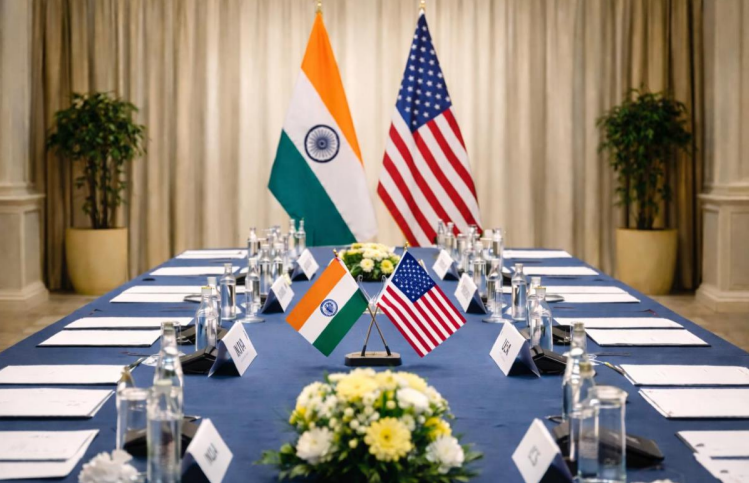
India and the United States have initiated a new round of high-level trade negotiations in Washington, marking a crucial step toward advancing a long-anticipated bilateral trade agreement. The three-day talks, scheduled from April 20 to April 22, 2026, bring together senior officials from both sides to address unresolved trade issues and identify pathways for deeper economic cooperation. The discussions come at a time when global trade dynamics are undergoing rapid transformation, driven by geopolitical tensions, supply chain realignments, and shifting economic priorities.
The Indian delegation, comprising approximately 12 officials, is being led by Darpan Jain, a senior figure in the Ministry of Commerce. The U.S. side includes representatives from the Office of the U.S. Trade Representative and key economic agencies. This round of talks is expected to focus on the first phase of a broader bilateral trade agreement (BTA), with emphasis on resolving market access issues, tariff barriers, and regulatory concerns that have long characterized India–U.S. trade relations.
These negotiations carry significant weight not only for the two economies involved but also for the global economic landscape. As nations increasingly adopt strategies to diversify supply chains and reduce dependence on single markets, the India–U.S. partnership is being positioned as a critical axis in the evolving trade architecture. The outcome of these talks could influence investment flows, export strategies, and geopolitical alignments in the years ahead.
Strategic Context of the Talks
The renewed push for a bilateral trade agreement between India and the United States reflects a broader strategic convergence between the two nations. Over the past decade, both countries have strengthened ties across defense, technology, and economic domains, recognizing each other as key partners in maintaining stability and growth in the Indo-Pacific region. Trade negotiations, therefore, are not merely economic engagements but also instruments of strategic alignment.
India’s growing importance as an alternative manufacturing hub has gained momentum amid the global “China+1” strategy, where multinational corporations seek to diversify production bases. The United States has actively encouraged this shift, viewing India as a reliable partner for supply chain resilience. In this context, the current negotiations aim to create a more predictable and facilitative trade environment that can support increased bilateral trade volumes, which currently exceed $190 billion annually.
At the same time, the talks are shaped by evolving domestic priorities in both countries. The United States has been focusing on strengthening domestic industries through industrial policies and subsidies, while India continues to pursue its “Make in India” and production-linked incentive (PLI) schemes. Balancing these domestic imperatives with the need for open trade is one of the central challenges facing negotiators in Washington.
Key Issues on the Negotiation Table
Several longstanding issues are expected to dominate the discussions during this round of talks. Market access remains a critical point of contention, particularly in sectors such as agriculture, dairy, and medical devices. The United States has consistently sought greater access for its agricultural products, while India has emphasized the need to protect its domestic farmers and food security.
Tariff structures and non-tariff barriers are also under scrutiny. India has faced criticism from the United States for relatively high import duties in certain sectors, while India has raised concerns about U.S. regulatory standards that restrict its exports, particularly in pharmaceuticals and information technology services. Addressing these differences will be essential for achieving meaningful progress in the negotiations.
Another important area of discussion is digital trade and data governance. As both countries emerge as major players in the digital economy, issues related to data localization, cross-border data flows, and digital taxation are becoming increasingly significant. The outcome of these discussions could set important precedents for global digital trade norms.
Economic Implications and Opportunities
The potential benefits of a successful India–U.S. trade agreement are substantial. For India, enhanced access to the U.S. market could boost exports in key sectors such as textiles, pharmaceuticals, engineering goods, and information technology services. Increased trade flows could also attract foreign direct investment, supporting job creation and economic growth.
For the United States, a stronger trade partnership with India offers opportunities to expand exports in areas such as energy, defense equipment, and advanced technologies. India’s large and growing consumer market presents significant potential for U.S. companies seeking to diversify their global operations. Moreover, closer economic ties could strengthen supply chain resilience, reducing dependence on single-country sources.
Beyond bilateral benefits, the agreement could have wider implications for global trade. It may serve as a model for other countries seeking to balance protectionist tendencies with the need for economic integration. In an era marked by uncertainty and fragmentation, a successful India–U.S. trade pact could reinforce confidence in the prospects of collaborative economic growth.
Challenges and Negotiation Hurdles
Despite the potential benefits, the path to a comprehensive trade agreement is fraught with challenges. Differences in economic structures, regulatory frameworks, and political priorities have historically complicated India–U.S. trade negotiations. Bridging these gaps will require careful negotiation and a willingness to make concessions on both sides.
Domestic political considerations also play a significant role. In India, concerns about protecting local industries and farmers often limit the scope for trade liberalization. In the United States, trade agreements are subject to scrutiny from lawmakers and industry groups, which can influence the pace and direction of negotiations. These factors add layers of complexity to the process.
Furthermore, global uncertainties such as geopolitical tensions, economic volatility, and shifting alliances can impact the negotiations. External factors, including changes in trade policies or unexpected economic shocks, may alter priorities and timelines. As a result, while the current talks are a positive step forward, achieving a comprehensive agreement will likely require sustained effort over an extended period.
Outlook
The ongoing trade talks between India and the United States represent a critical juncture in the economic relationship between the two nations. By addressing longstanding issues and exploring new areas of cooperation, both sides have the opportunity to lay the foundation for a more robust and mutually beneficial partnership. The significance of these discussions extends beyond bilateral trade, influencing broader geopolitical and economic dynamics.
Looking ahead, the success of these negotiations will depend on the ability of both countries to balance their domestic priorities with the demands of a globalized economy. Incremental progress, rather than sweeping breakthroughs, is likely to characterize the process. However, even modest advancements can build momentum and pave the way for more comprehensive agreements in the future.
In a rapidly changing global landscape, the India–U.S. trade relationship holds considerable promise. As both nations navigate the challenges and opportunities of the 21st-century economy, their ability to collaborate effectively will be a key determinant of their economic and strategic trajectories. The current round of talks in Washington is an important step in that direction, signaling intent, commitment, and the possibility of a more integrated economic future.