India’s Renewable Energy Industry: The Next Phase of Growth
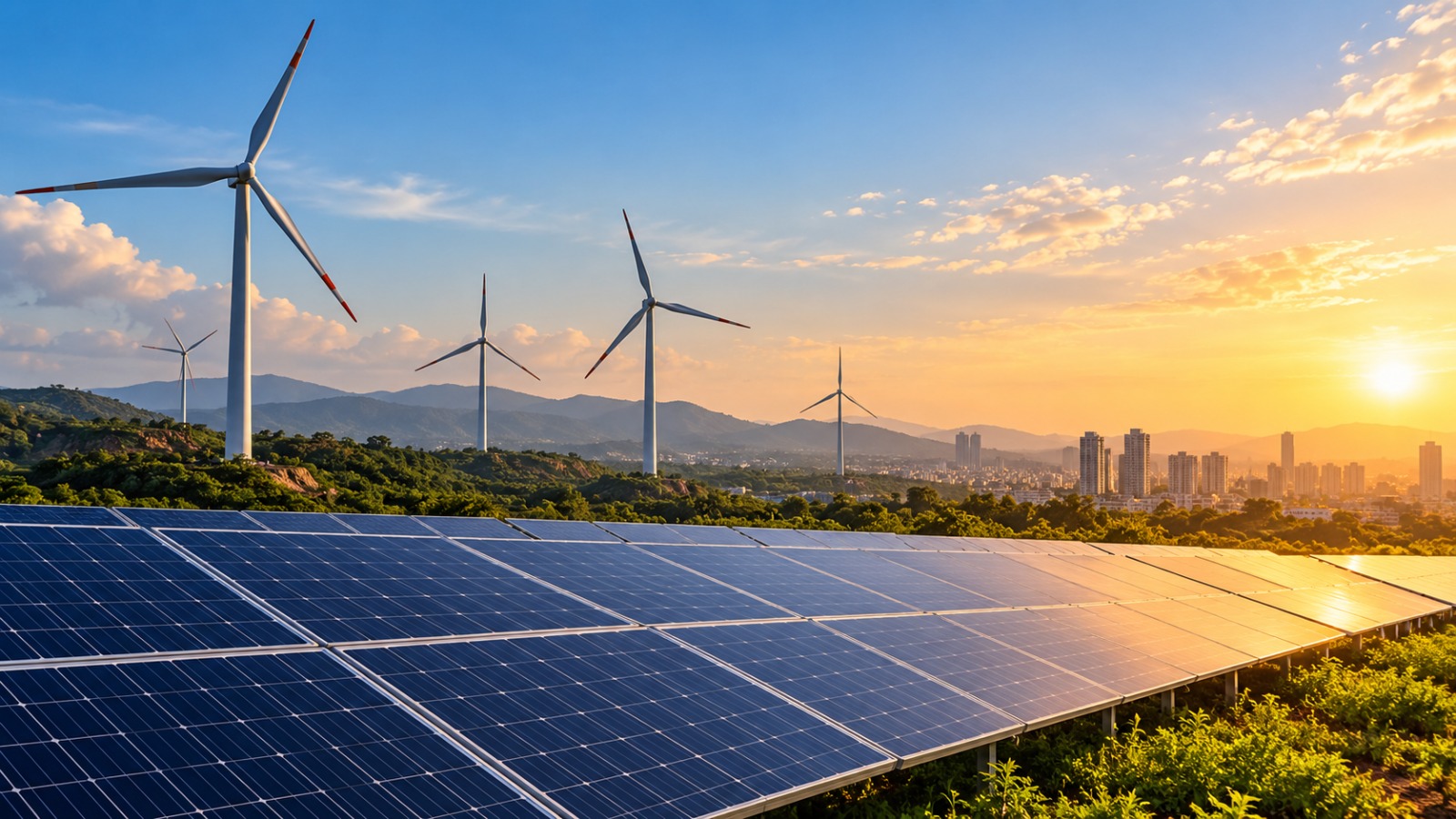
India’s renewable energy sector is entering a new phase of growth, driven by solar power, wind energy, battery storage, green hydrogen and rising demand for clean electricity.
India’s energy landscape is undergoing a significant transformation. As electricity demand continues to rise across households, industries, transport and commercial spaces, renewable energy is becoming an increasingly important part of the country’s power mix. Solar and wind power are expanding rapidly, while technologies such as battery storage and green hydrogen are creating new opportunities across the wider energy ecosystem.
India’s renewable energy growth is no longer limited to adding solar panels and wind turbines. The next phase is increasingly about building the infrastructure needed to integrate clean power into the grid, manufacture energy equipment domestically, store electricity and create new businesses around clean energy.
India’s Renewable Energy Growth Is Accelerating
India has made renewable energy a major component of its long-term energy strategy. The country has set a target of achieving 500 GW of non-fossil fuel-based installed capacity by 2030. By December 2025, India had reached around 267 GW of non-fossil capacity, according to the International Energy Agency.
The pace of new installations has also increased. In 2025, India’s annual renewable capacity additions increased significantly, with nearly 50 GW of solar PV capacity added during the year. Wind additions also increased substantially.
This growth reflects a broader shift in the energy industry. Renewable power is increasingly being viewed not only as an environmental priority but also as an important part of India’s future electricity and economic infrastructure.
Solar Power Continues to Lead
Solar energy remains at the centre of India's renewable energy expansion. Falling technology costs, large-scale solar parks, rooftop installations and increasing demand for clean electricity have supported rapid growth in solar generation.
The opportunity extends beyond large utility-scale projects. Rooftop solar is becoming increasingly relevant for households, commercial buildings, factories and institutions that want to generate part of their own electricity. The growth of distributed solar can also create opportunities for installation companies, equipment manufacturers, financing providers and maintenance businesses.
Solar PV is expected to play a major role in meeting India's additional electricity demand in the coming years. This makes solar not only an important source of clean energy but also a growing business ecosystem involving manufacturing, installation, financing and maintenance.
Wind Energy Remains an Important Part of the Mix
While solar has received much of the attention, wind energy continues to play an important role in India's renewable energy sector. Wind installations can complement solar generation because the availability of wind and sunlight varies across locations and times of day.
India's wind industry also supports a broader manufacturing ecosystem involving turbines, components, engineering services, construction and maintenance. As renewable capacity expands, demand for these supporting industries is expected to remain an important part of the sector.
The continued development of wind projects, particularly in areas with strong wind resources, will remain an important part of India's transition towards a more diversified renewable-energy system.
Energy Storage Could Become the Next Major Opportunity
One of the biggest challenges associated with renewable energy is its variability. Solar power is generated during daylight hours, while wind generation depends on weather conditions. As the share of renewable energy increases, the electricity system needs ways to store energy and supply it when demand is high.
This is where battery energy storage systems are becoming increasingly important. Storage can help move electricity from periods of high renewable generation to periods of high demand while also supporting grid stability.
Energy storage can also create opportunities beyond power generation itself. Battery manufacturing, energy-storage projects, software, grid-management technologies and maintenance services could all become important parts of India's emerging clean-energy ecosystem.
Green Hydrogen Adds Another Dimension
India's renewable energy ambitions also extend beyond electricity generation. Green hydrogen is emerging as another area of interest, particularly for industries where directly replacing fossil fuels with electricity can be difficult.
Green hydrogen is produced using electricity from renewable sources to split water into hydrogen and oxygen. It can potentially be used in industries such as refining, chemicals, fertilisers and some forms of heavy transport.
The development of this industry could create opportunities across the value chain, including electrolyser manufacturing, renewable power generation, hydrogen storage, transportation and industrial applications.
India's National Green Hydrogen Mission is also supporting the development of skills and capabilities required for the emerging green hydrogen economy.
Investment and Manufacturing Opportunities Are Expanding
The renewable energy transition is creating opportunities not only for energy companies but also for manufacturers, technology businesses, financial institutions and service providers.
India has been attracting investment into renewable power as well as domestic manufacturing of solar modules, batteries and other energy components. A growing share of investment in India's power sector is now going towards clean energy.
This expanding ecosystem could benefit businesses involved in engineering, procurement and construction, equipment manufacturing, software, financing, energy management and infrastructure development.
For startups and smaller businesses, opportunities may emerge in specialised areas rather than only in large-scale power generation. Digital platforms for energy management, maintenance technologies, financing solutions, battery services and tools that help businesses monitor energy consumption are examples of areas that could develop alongside the larger renewable-energy market.
The Grid Will Be Just as Important as Generation
Adding renewable capacity is only one part of the transition. India will also need to strengthen its electricity transmission and distribution infrastructure to move renewable power from generation centres to areas where electricity is needed.
Transmission infrastructure can become a major factor in determining how quickly new renewable projects can be connected to the grid. Expanding transmission networks and improving grid flexibility will therefore be an important part of achieving India's renewable-energy ambitions.
The challenge becomes even more important as electricity demand grows. India's electricity consumption is expected to increase significantly over the coming years, creating the need for more generation capacity as well as stronger transmission and distribution networks.
This means India's future energy industry will need to focus not only on producing more clean electricity but also on making sure that electricity can be stored, transmitted and delivered reliably.
What the Next Phase Could Look Like
India's renewable energy industry is moving from a phase focused primarily on capacity addition towards a broader ecosystem built around clean power, storage, manufacturing and digital infrastructure.
Solar and wind are likely to remain central to this transition, while battery storage, green hydrogen, transmission infrastructure and energy-management technologies could become increasingly important. The combination of rising electricity demand and expanding renewable capacity is also creating opportunities for companies across multiple industries.
For businesses and entrepreneurs, this transition could open new markets across the renewable-energy value chain. For investors and policymakers, the focus will increasingly include grid infrastructure, financing, domestic manufacturing and the ability to integrate large amounts of variable renewable power.
India's renewable energy story, therefore, is no longer simply about replacing one source of electricity with another. It is becoming a much broader industrial transformation involving technology, manufacturing, infrastructure and new business models.
The Road Ahead
The next phase of India's renewable energy journey will be defined by how effectively the country can combine generation, storage, transmission, manufacturing and innovation. With electricity demand expected to grow strongly and renewable capacity continuing to expand, the sector is likely to remain an important area of investment and business development.
As India works towards its long-term clean-energy goals, the opportunities may extend well beyond traditional power companies. Startups, manufacturers, technology providers and service businesses could all have a role to play in building the infrastructure and solutions needed for the country's evolving energy system.
For more insights on India's evolving industries, emerging business opportunities and the startup ecosystem, visit Startup Times and explore the latest Industry Insights.
Leave a comment
Your email address will not be published. Required fields are marked *
Add a newsletter to your widget area.
Top Stories