India’s Currency Under Pressure as Global Tensions Escalate
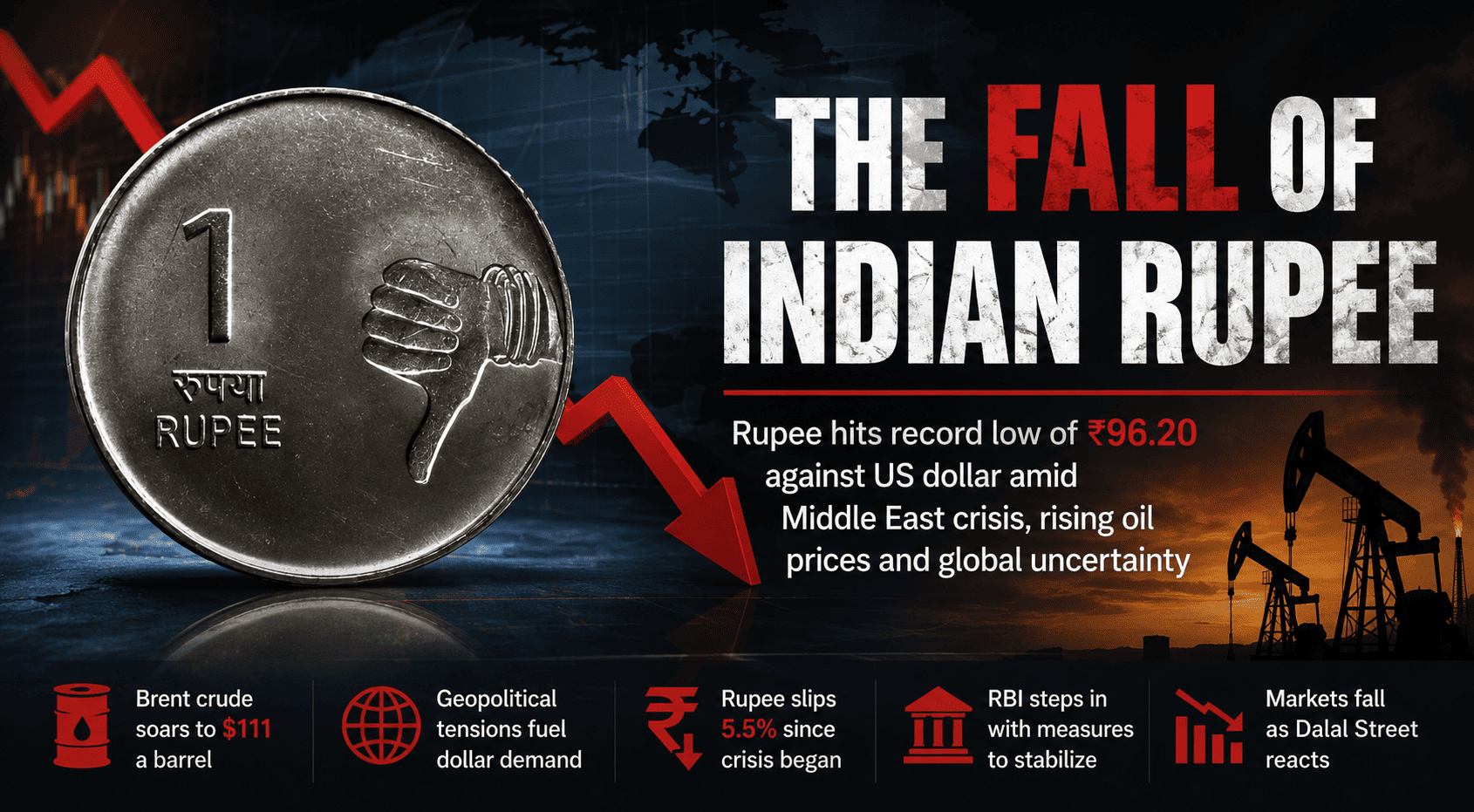
The Indian rupee continued its sharp decline on Monday, opening at an all-time low of ₹96.20 against the US dollar. The domestic currency slipped nearly 0.2% from its previous close, reflecting growing uncertainty in global financial markets amid escalating geopolitical tensions in the Middle East.
The latest fall marks a significant 5.5% depreciation in the rupee since the beginning of the ongoing crisis. Last week, the currency breached the crucial ₹96-per-dollar mark for the first time in history, touching an intraday low of ₹96.14 before ending the session at ₹95.97.
Rising Crude Oil Prices Deepen Pressure on Rupee
One of the biggest reasons behind the rupee’s weakness is the sharp rise in crude oil prices. Brent crude surged to nearly $111 per barrel following reports of an attack on a nuclear power facility in the United Arab Emirates. Investors are also closely watching developments surrounding possible military discussions involving the United States and Iran.
India, being one of the world’s largest oil importers, faces immediate economic pressure whenever crude prices rise sharply. Higher oil prices increase the country’s import bill, widen the trade deficit, and place additional strain on the rupee.
According to market experts, global demand for the US dollar has intensified as investors move towards safer assets during uncertain times.
Investor Sentiment Weakens Across Financial Markets
The rupee’s historic slide has triggered fresh concerns about India’s macroeconomic stability. Economists believe the country could face mounting challenges due to rising inflation, weaker foreign capital inflows, and a widening current account deficit.
Ponmudi R, CEO of Enrich Money, stated that ongoing geopolitical uncertainty and energy-driven macroeconomic pressures have fueled strong dollar demand globally, pushing the rupee beyond the ₹96 mark.
He further noted that the weakening currency could significantly impact India’s inflation outlook and economic growth trajectory at a time when global markets are already under stress.
Stock Markets React Negatively
Indian equity markets also reflected the negative sentiment on Dalal Street. Benchmark indices opened sharply lower on Monday morning:
Market Opening Snapshot
- Nifty50 opened at 23,396.45, down 247 points or 1.04%
- BSE Sensex opened at 74,430.35, down 808 points or 1.07%
Investors remain cautious as fears of prolonged geopolitical instability continue to dominate market sentiment.
RBI and Government Step In to Control Volatility
Authorities have already initiated several measures to slow the rupee’s decline. The government recently tightened restrictions on precious metal imports, particularly silver, after import tariffs on gold and silver were eased earlier.
Meanwhile, the Reserve Bank of India (RBI) has actively intervened in currency markets and strengthened rules surrounding banks’ net open foreign exchange positions in an attempt to stabilize the rupee.
Economists at JP Morgan noted that growing balance-of-payments pressures may need to be managed through a combination of currency depreciation, foreign exchange intervention, capital inflow incentives, and current account adjustments.
What Lies Ahead for the Rupee?
Currency traders believe volatility may continue throughout the week as global geopolitical developments remain uncertain. Market participants are closely monitoring RBI intervention strategies, which could determine whether the rupee’s decline remains controlled or accelerates further.
For Indian businesses, startups, and import-dependent sectors, the weakening rupee could increase operational costs, impact margins, and create additional pressure on growth planning. However, export-oriented companies and IT firms may benefit from improved dollar earnings.
As the global economic environment grows increasingly fragile, the rupee’s movement will remain one of the most closely watched indicators for investors and policymakers alike.
Read more such stories and news on Startup Times