Ultraviolette’s ₹779 Crore EV Bet: New Tamil Nadu Plant
Ultraviolette Automotive plans a ₹779 crore EV manufacturing plant in Tamil Nadu as it expands production and targets India’s growing electric two-wheeler market.
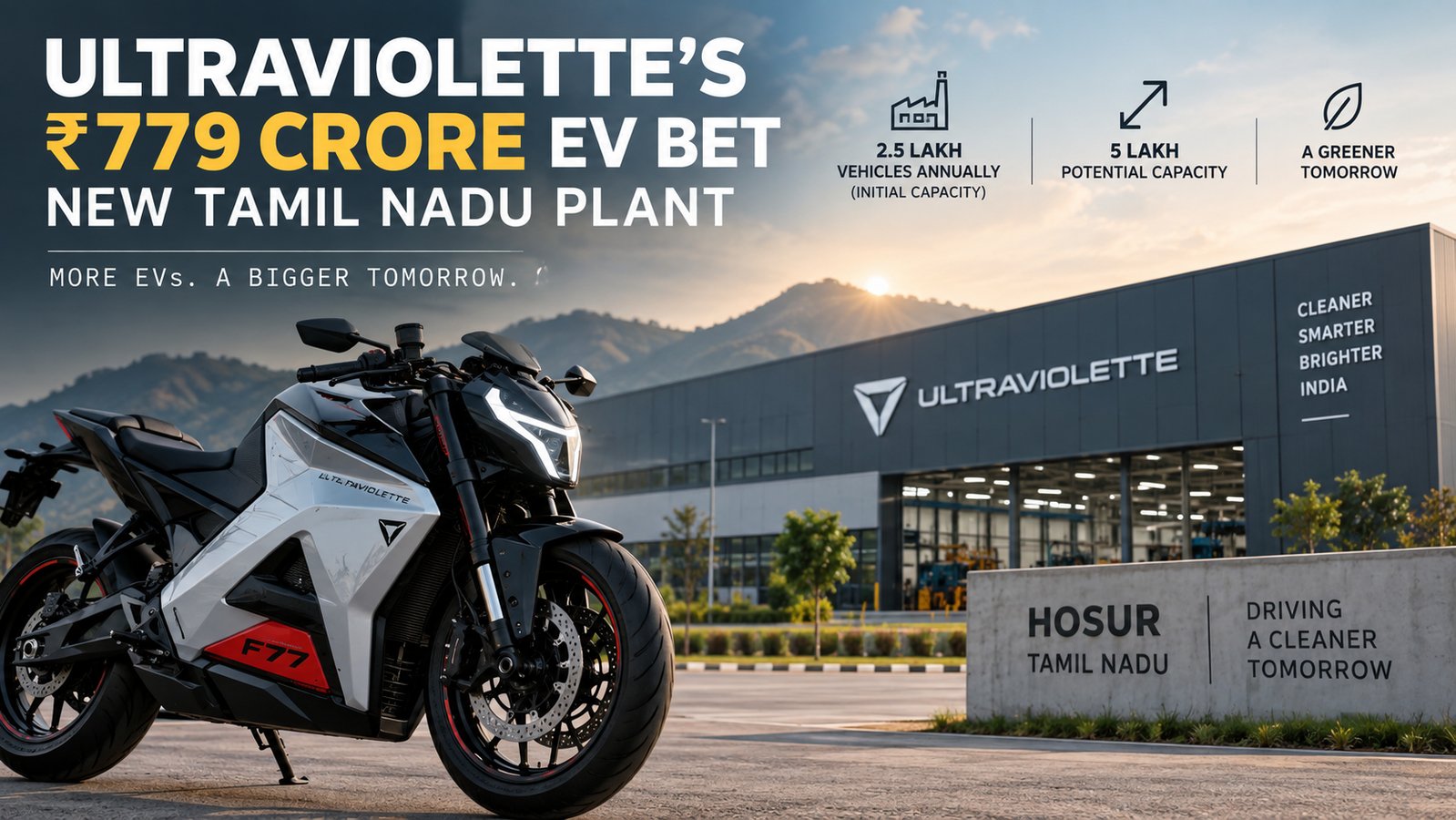
India’s electric two-wheeler market is entering a new phase of expansion, and Bengaluru-based startup Ultraviolette Automotive is betting heavily on that growth. The company plans to invest around ₹779 crore ($82 million) in a new electric vehicle manufacturing facility in Hosur, Tamil Nadu, as it prepares to increase production and expand into a broader market.
The new facility will initially have an annual production capacity of 2.5 lakh vehicles, with the potential to scale up to 5 lakh units a year as demand increases. The plant will complement Ultraviolette’s existing manufacturing facility near Bengaluru, which currently has a capacity of around 50,000 vehicles annually.
The investment comes as Ultraviolette prepares to move beyond its established premium electric motorcycle segment. The company is known for models such as the F77 and X47, but its upcoming Tesseract electric scooter and Shockwave motorcycle are aimed at reaching a wider customer base. According to Reuters, Ultraviolette expects the Tesseract to be priced below ₹1.5 lakh and the Shockwave below ₹2 lakh.
India’s EV Market Is Scaling Up
Ultraviolette’s manufacturing expansion comes at a time when electric two-wheelers are gaining significant traction in India. Government data cited by Reuters shows that electric two-wheeler sales crossed 1.03 million units during the first eight months of 2026. Their share of overall two-wheeler sales also crossed 10% for the first time in August.
Other industry data points to similarly strong momentum. The four major electric two-wheeler manufacturers—TVS, Bajaj, Ather and Vida—collectively recorded more than 1.03 million retail sales between January and August 2026, representing an 84% increase compared with the same period in 2025. The broader electric two-wheeler market recorded around 1.36 million units during the period, according to data reported by Autocar India.
The longer-term outlook is also attracting manufacturers and investors. Consulting firm McKinsey estimates that electric two-wheelers could account for 40% to 45% of India's overall two-wheeler sales by fiscal 2030, according to Reuters.
From Premium EVs to a Larger Market
Founded in 2016 by Narayan Subramaniam and Niraj Rajmohan, Ultraviolette has built its identity around technology, performance and electric mobility. The company’s official timeline shows its development from early battery and vehicle platforms to the launch of the F77 and subsequent expansion into international markets.
Its strategy is now changing from primarily establishing itself as a premium electric motorcycle brand to building products that can appeal to a much larger section of the two-wheeler market.
The Tesseract is central to that strategy. Ultraviolette currently lists the electric scooter for Q1 2027 and says it uses a 100V architecture designed to deliver higher power and faster charging. The company lists three battery variants with claimed IDC ranges of up to 162 km, 220 km and 261 km.
However, the move into a larger market has not been without challenges. The Tesseract, originally expected earlier, has been delayed to Q1 2027 as Ultraviolette continues to make engineering changes to the scooter.
Why Tamil Nadu?
The decision to establish the new facility in Hosur also reflects Tamil Nadu’s growing importance as an automobile and EV manufacturing hub. Hosur is located close to Bengaluru, allowing Ultraviolette to remain near its existing research and development operations while gaining access to Tamil Nadu’s established automotive supply chain.
The state has attracted investments from several automotive and technology companies, strengthening its position as a major manufacturing destination. In August 2026, Tamil Nadu announced investment agreements across multiple sectors, including automobile, EV, electronics and aerospace projects.
For Ultraviolette, the new facility is therefore more than simply an increase in production capacity. It is part of a larger attempt to build manufacturing scale at a time when competition in India's electric two-wheeler industry is intensifying.
The Road Ahead
Ultraviolette says demand for its upcoming products is already beyond what its existing manufacturing facility can accommodate. Co-founder and CEO Narayan Subramaniam told Reuters that demand for the company’s products, including the Tesseract and Shockwave, is significantly higher than the capacity of its current facility.
The company expects domestic demand for its scooters alone to reach at least 10,000 units a month. It also plans to increase the contribution of international markets, with exports to Europe and Latin America currently accounting for around 15% of sales and potentially rising to 25% within five years.
The ₹779 crore investment will be made over the next five years and is expected to be funded through a combination of internal reserves, equity and future cash flows, with limited reliance on debt, according to co-founder and CTO Niraj Rajmohan.
For Ultraviolette, the challenge now is not simply building more electric vehicles. It is proving that a technology-focused Indian EV startup can scale production, reach a broader customer base and compete with much larger players in an increasingly crowded market.
As India's electric two-wheeler adoption accelerates, Ultraviolette's new manufacturing facility could become an important test of whether India's next generation of EV startups can turn technological innovation into large-scale commercial success.


Leave a comment
Your email address will not be published. Required fields are marked *
Add a newsletter to your widget area.
Top Stories