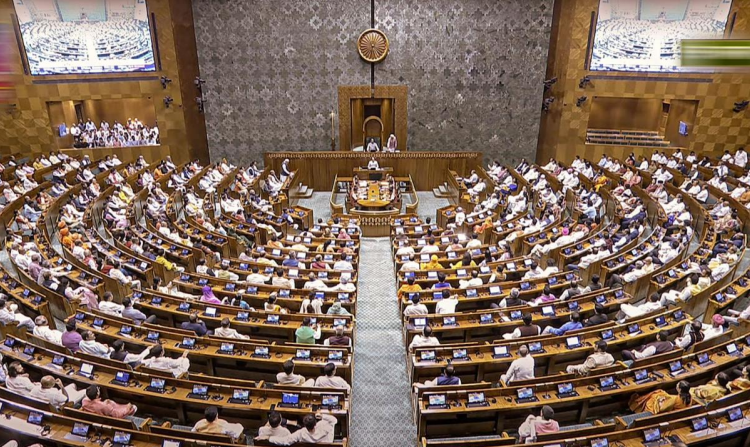
India has entered a transformative phase in its democratic evolution with the enforcement of the 106th Constitutional Amendment, widely known as the Nari Shakti Vandan Adhiniyam. Effective from April 16, 2026, the law mandates a 33 percent reservation for women in the Lok Sabha and state legislative assemblies, marking one of the most consequential constitutional reforms in recent decades. This development is the culmination of a legislative journey spanning nearly three decades, reflecting sustained efforts to correct gender imbalance in political representation.
The move is being positioned by the government as a historic milestone aimed at strengthening inclusive governance and empowering women within India’s democratic framework. Prime Minister Narendra Modi described the legislation as a defining moment in parliamentary history, emphasizing its long-term potential to reshape policymaking and governance structures.
Despite broad support, the implementation of the law has triggered intense debate across political and regional lines. Questions around its timing, linkage with delimitation, and actual rollout mechanisms continue to dominate public discourse, highlighting the complexity of translating constitutional intent into electoral reality.
The Constitutional Framework and Key Provisions
The 106th Constitutional Amendment establishes a mandatory reservation of one-third of seats for women in the Lok Sabha and state assemblies. Importantly, this quota includes sub-reservations for Scheduled Castes (SC) and Scheduled Tribes (ST) women, ensuring that representation extends across socio-economic categories.
A distinctive feature of the law is the rotational allocation of reserved constituencies. Seats designated for women will rotate periodically, ensuring that no single constituency remains permanently reserved. This mechanism aims to distribute opportunities more equitably across regions while maintaining electoral competitiveness.
However, the implementation of the reservation is tied to the completion of a nationwide census and subsequent delimitation exercise. This means that while the law has come into force, its full operational impact is expected to be visible only in future elections, most likely from the 2029 general elections onward.
Political Significance and Parliamentary Developments
The enforcement of the women’s reservation law has unfolded alongside a high-stakes special session of Parliament, where multiple related bills—including delimitation proposals—are being debated. The legislative process has seen both strong endorsement and sharp opposition, reflecting the far-reaching implications of the reform.
Voting patterns in Parliament indicate a divided political landscape. While a significant majority supported amendments linked to the reservation framework, a substantial number of lawmakers opposed aspects of the proposal, particularly those related to constituency restructuring.
Opposition leaders have raised concerns about the conditional nature of implementation. Critics argue that linking the reservation to delimitation could delay its benefits, while others have called for immediate enforcement without procedural dependencies. These debates underscore the tension between political consensus and structural reform.
Impact on Representation and Democratic Structure
The introduction of a 33 percent reservation is expected to significantly alter the composition of legislative bodies in India. Currently, women hold less than 15 percent of seats in the Lok Sabha, indicating a substantial representation gap that the new law seeks to address.
By ensuring a minimum threshold of female participation, the law has the potential to influence policy priorities, governance styles, and legislative outcomes. Increased representation of women is often associated with greater focus on social welfare, education, healthcare, and gender equity, suggesting broader societal benefits.
At a structural level, the reform is also linked to potential expansion and redistribution of parliamentary seats through delimitation. This could lead to shifts in political power across states, adding another layer of complexity to the implementation process and intensifying regional sensitivities.
Challenges, Criticism, and Implementation Concerns
While the law has been widely hailed as a progressive step, it is not without challenges. The requirement of a fresh census and delimitation exercise introduces uncertainty regarding timelines, with critics warning of possible delays in actual implementation.
Another area of concern is the absence of specific provisions for Other Backward Classes (OBC) women, which has been highlighted by several political leaders and social groups. This has sparked calls for further amendments to ensure more inclusive representation.
Regional disparities also remain a contentious issue. Some southern states have expressed apprehension that delimitation could alter their representation in Parliament, potentially diluting their political influence. These concerns reflect the broader challenge of balancing demographic realities with federal equity.
Outlook
The coming into force of the women’s reservation law marks a watershed moment in India’s democratic journey. It represents a decisive effort to institutionalize gender equality within the political system, addressing a longstanding gap in representation and participation.
However, the true impact of the reform will depend on its execution. The linkage with census and delimitation processes introduces both opportunities and uncertainties, making the next few years critical for shaping the law’s effectiveness. Political consensus, administrative preparedness, and timely implementation will be key determinants of success.
Looking ahead, the legislation has the potential to redefine India’s political landscape by bringing a new generation of women leaders into the forefront. If implemented effectively, it could not only transform governance but also serve as a model for other democracies seeking to enhance inclusivity and representation in public institutions.