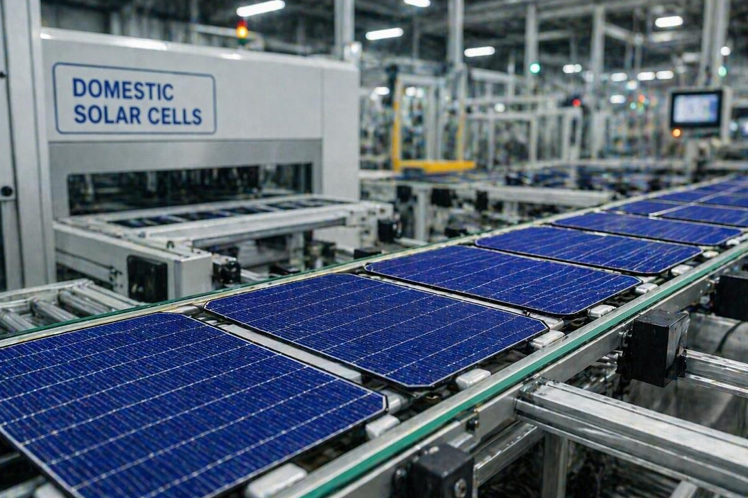
India is preparing a significant policy shift in its renewable energy strategy as the government considers mandating the use of 100% domestically manufactured solar cells for new projects starting June 2026. The move is part of a broader push to strengthen domestic manufacturing capabilities, reduce reliance on imports, and secure long-term energy independence in a rapidly evolving global energy landscape.
The proposal, currently under review by the Ministry of New and Renewable Energy, comes at a time when India is aggressively expanding its renewable energy capacity to meet ambitious climate targets. Solar power has emerged as a cornerstone of this transition, with the country aiming to install 500 GW of non-fossil fuel capacity by 2030. However, a significant portion of solar components—particularly cells—continues to be imported, primarily from China.
This dependency has raised concerns about supply chain vulnerabilities and strategic exposure. The proposed mandate seeks to address these challenges by encouraging domestic production, fostering industrial growth, and positioning India as a key player in the global clean energy supply chain.
Policy Framework and Proposed Mandate
The proposed policy centers on requiring all new solar power projects to use solar cells manufactured within India. While modules are already subject to domestic content requirements under existing schemes, extending this mandate to cells represents a substantial tightening of policy aimed at deepening local value addition.
Officials have indicated that the rule could come into effect as early as June 2026, giving developers a limited window to adjust procurement strategies. The government is currently evaluating industry feedback, with stakeholders expressing both support and concern over the feasibility of the timeline.
The policy aligns with broader initiatives such as the Production Linked Incentive (PLI) scheme, which aims to boost domestic manufacturing of high-efficiency solar modules. By integrating cell production into this framework, the government hopes to create a more self-reliant and competitive solar industry.
Rationale: Reducing Import Dependency
One of the primary drivers of the proposed mandate is India’s heavy reliance on imported solar cells. Currently, a large share of these imports originates from China, making the sector vulnerable to geopolitical tensions, trade disruptions, and price volatility.
Recent global developments, including supply chain disruptions and rising protectionism, have underscored the risks associated with such dependency. By mandating domestic production, India aims to insulate its renewable energy ambitions from external shocks and ensure greater control over critical components.
At the same time, the policy is expected to stimulate investment in local manufacturing facilities. Increased demand for domestically produced cells could encourage both Indian and international companies to expand production capacity within the country, contributing to job creation and technological advancement.
Industry Response and Implementation Challenges
While the policy has been welcomed by domestic manufacturers, it has also raised concerns among project developers. Industry stakeholders have pointed out that current domestic production capacity for solar cells may not be sufficient to meet the anticipated demand, particularly in the short term.
Developers have warned that a sudden shift to 100% domestic sourcing could lead to supply shortages and increased costs. These challenges could, in turn, slow down project execution and impact India’s renewable energy targets.
To address these concerns, the government is considering phased implementation and potential support measures, such as incentives and capacity-building initiatives. The success of the policy will depend on striking a balance between promoting domestic manufacturing and maintaining the pace of renewable energy deployment.
Economic and Strategic Implications
The proposed mandate carries significant economic implications. By fostering a domestic solar manufacturing ecosystem, India could reduce its import bill, improve trade balance, and enhance industrial competitiveness. The policy also aligns with the government’s broader “Make in India” initiative, which seeks to position the country as a global manufacturing hub.
From a strategic perspective, the move reflects a growing emphasis on energy security. As renewable energy becomes increasingly central to national development, ensuring reliable access to key components is critical. The policy aims to build resilience in the face of global uncertainties, including geopolitical tensions and supply chain disruptions.
Furthermore, the initiative could strengthen India’s position in international climate negotiations. By demonstrating a commitment to both renewable energy expansion and domestic capability building, India reinforces its role as a leader in the global energy transition.
Conclusion and Outlook
India’s consideration of a mandatory domestic solar cell policy marks a pivotal step in its clean energy journey. The move underscores a strategic shift toward self-reliance, reflecting both economic priorities and geopolitical realities. While challenges remain, particularly in terms of capacity and cost, the policy has the potential to reshape the country’s solar industry.
Looking ahead, the effectiveness of the mandate will depend on careful implementation and collaboration between government, industry, and investors. Ensuring adequate production capacity and addressing cost concerns will be critical to maintaining momentum in renewable energy deployment.
Ultimately, the policy represents more than just a regulatory change—it is a statement of intent. As India seeks to balance sustainability, economic growth, and strategic autonomy, the push for domestic solar manufacturing could play a defining role in shaping the country’s energy future.