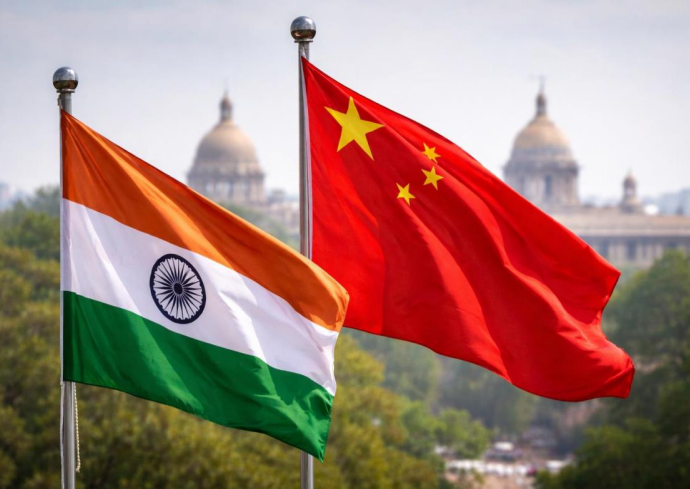
India is preparing to lift restrictions that have, since 2020, effectively barred Chinese companies from bidding for government procurement contracts, marking a significant recalibration of its economic engagement with China. Officials familiar with the matter say the proposal is being examined by the finance ministry and will require final approval from the Prime Minister’s Office.
The restrictions were introduced in the aftermath of the deadly border clashes in eastern Ladakh, which sharply worsened bilateral relations and prompted New Delhi to tighten scrutiny of Chinese participation in sensitive sectors. Under the policy, companies from China were required to obtain additional security and political clearances before being allowed to participate in public tenders, a hurdle that, in practice, excluded most firms from the process.
Scale of the procurement market at stake
The proposed rollback carries major economic implications, given the size of India’s public procurement ecosystem. Government contracts across infrastructure, power, transport, telecom and manufacturing are estimated to be worth $700–$750 billion, a market from which Chinese firms have largely been absent for nearly five years.
During this period, Indian authorities sought to reduce strategic dependence on Chinese suppliers, encourage domestic manufacturing and diversify sourcing. While these objectives remain central to policy, officials say capacity constraints, rising project costs and delivery timelines have prompted a reassessment of blanket exclusions, particularly in non-sensitive sectors where Chinese firms remain globally competitive.
From security-first to selective openness
The planned move does not signal an unconditional reopening. Instead, policymakers describe it as a shift from a broad security-first approach to a more targeted, risk-based framework. Sensitive areas such as defence, telecommunications networks and critical digital infrastructure are expected to remain tightly regulated, while other sectors could see a relaxation of entry barriers.
The proposal reflects an acknowledgement that Chinese companies play a significant role in global supply chains for capital goods, renewable energy equipment and large-scale construction. Allowing controlled participation could help accelerate project execution and lower procurement costs, particularly as India pursues ambitious infrastructure and energy transition targets.
Political oversight and diplomatic context
The decision is subject to clearance from Prime Minister’s office, underscoring its political sensitivity. Since the 2020 standoff, India has taken a firm public stance on national security and economic self-reliance, including restrictions on Chinese apps, tighter foreign investment rules and enhanced screening of technology imports.
However, recent months have seen cautious signs of stabilisation in India–China relations, including disengagement talks along parts of the border and a resumption of limited diplomatic dialogue. Analysts say the proposed policy change reflects this tentative easing, even as core strategic disagreements persist.
Impact on domestic industry and foreign investors
The possible easing of procurement restrictions is also being closely watched by domestic manufacturers and foreign investors. Indian industry groups have previously argued that the exclusion of Chinese firms helped create space for local suppliers, particularly in sectors such as infrastructure equipment, power transmission and railways. However, project authorities have faced higher costs and limited supplier options in certain categories, prompting calls for greater competition.
For global investors, the move could signal a more predictable and pragmatic policy environment, reinforcing India’s position as a large, rules-based market open to international participation under clearly defined safeguards. Analysts note that how India implements the revised framework, especially its transparency and sectoral carve-outs will shape investor confidence not only among Chinese firms but across the wider foreign business community.
Outlook
If approved, the easing of procurement curbs would mark one of the most tangible shifts in India’s China policy since the border crisis, signalling a willingness to separate economic pragmatism from geopolitical tensions where feasible. For Chinese firms, it would reopen access to one of the world’s largest government contracting markets; for India, it could improve competition, pricing and delivery capacity in large public projects.
At the same time, officials stress that safeguards will remain in place to protect national security and strategic interests. The challenge ahead will be to strike a balance between openness and oversight, allowing economic engagement to resume without diluting the policy objectives that emerged from one of the most serious episodes in India–China relations in decades.