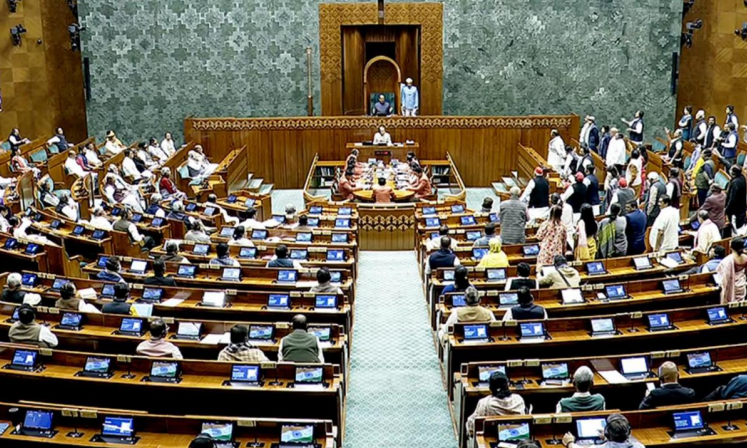
India's Parliament witnessed a highly charged political confrontation after the Lok Sabha rejected a resolution seeking the removal of Speaker Om Birla, bringing to an end a rare parliamentary challenge against the presiding officer of the House.
The motion, moved by opposition parties during the ongoing parliamentary session, triggered a lengthy debate marked by sharp exchanges between ruling National Democratic Alliance (NDA) members and opposition lawmakers.
The resolution was ultimately defeated through a voice vote, reflecting the ruling coalition's numerical strength in the Lok Sabha.
Key Details of the Motion
Introduction:
The motion was introduced by Congress MP Mohammad Jawed.
Support:
It was supported by over 50 Members of Parliament, allowing it to be formally admitted under parliamentary rules.
Signatories:
A total of 118 opposition MPs reportedly signed the notice.
Allegations:
The opposition accused Speaker Om Birla of displaying partisan conduct and failing to maintain the neutrality expected from the office.
Opposition Accuses Speaker of Partisan Conduct
Opposition leaders justified the resolution by arguing that the Speaker had failed to maintain an impartial position while presiding over the Lok Sabha.
Democratic Concerns:
Congress MP Gaurav Gogoi, who initiated the debate, stated the motion was driven by concerns over the functioning of parliamentary democracy and the need to protect the dignity of the House.
Restricted Participation:
Gogoi and others alleged that Leader of the Opposition Rahul Gandhi had repeatedly been prevented from raising key issues.
Speaking Rights:
The opposition believed the Speaker's conduct affected their ability to freely participate in debates, specifically citing discussions during the motion of thanks to the President's address.
Biased Remarks:
Several MPs argued that the Speaker made remarks they considered inappropriate or biased toward the ruling government.
Procedural Objections:
Lawmakers from the Congress, Trinamool Congress, and AIMIM questioned whether the presiding officer for the proceedings had been appointed through a neutral process.
Government Defends Speaker's Record
Leaders from the ruling coalition strongly rejected the allegations, maintaining that Om Birla conducted proceedings in accordance with established rules and traditions.
Constitutional Provisions:
Parliamentary Affairs Minister Kiren Rijiju noted that the office of the Speaker is governed by procedures requiring members to seek permission before speaking.
Unprecedented Action:
Union Home Minister Amit Shah delivered a forceful defense, stating that questioning the Speaker's integrity was unprecedented in recent history.
Neutral Custodian:
Shah emphasized that once elected, the Speaker serves as a neutral custodian of the House.
Political Motivation:
Government members argued the resolution was aimed at disrupting parliamentary functioning rather than addressing genuine concerns.
Historical Context:
Ruling alliance MPs pointed out that the BJP had never brought a motion to remove a Speaker during its many years in opposition.
Procedural Disputes and Tensions
Even before the debate began, disputes arose regarding how the motion should be conducted.
Presiding Officer:
Because the motion involved himself, Om Birla did not preside over the session. BJP MP Jagdambika Pal, from the panel of chairpersons, was appointed to preside instead.
Neutrality Questioned:
Opposition leaders, including AIMIM leader Asaduddin Owaisi, questioned this arrangement, noting that Pal’s original appointment to the panel was made by Speaker Birla.
Government Rebuttal:
The government rejected these objections, citing parliamentary rules and constitutional provisions that authorize the panel of chairpersons to preside over such debates.
A Rare Parliamentary Challenge
The attempt to remove the Speaker is considered a highly unusual step in India's parliamentary history.
Amit Shah pointed out that such a motion had not been brought against a Lok Sabha Speaker for nearly four decades.
While the motion was unlikely to succeed due to the ruling coalition's majority, observers noted the debate served as a platform for opposition parties to highlight concerns regarding legislative procedures and speaking rights.
Conclusion
The rejection of the motion has reaffirmed the ruling coalition's dominance while highlighting ongoing tensions between the government and opposition.
Although the resolution failed, it became one of the most politically charged episodes of the current session.
Moving forward, this confrontation is expected to influence future debates on parliamentary norms and the functioning of democratic institutions in India.