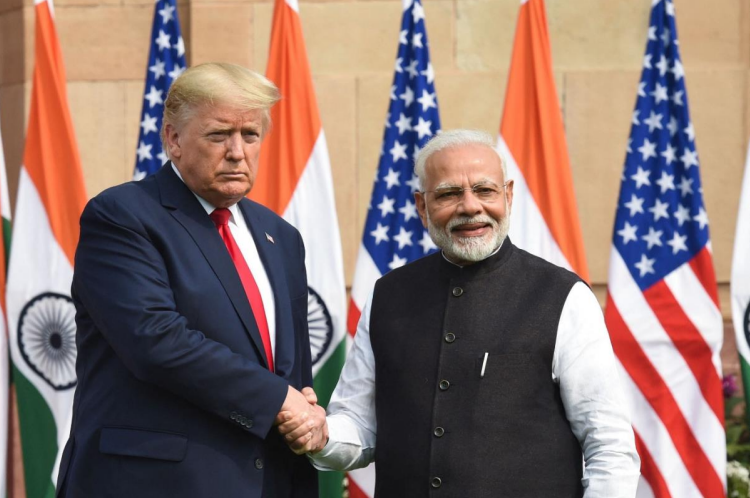
In one of the most significant bilateral economic developments in recent years, India and the United States have formally concluded a landmark trade agreement that introduces substantial tariff reductions, expands market access for key Indian exports and commits India to increase purchases of American petroleum, defence equipment and commercial aircraft.
The agreement was confirmed today following a high-level discussion between Narendra Modi and Donald Trump, marking a defining milestone in the economic and strategic partnership between the two nations.
Senior officials described the agreement as a “reset in trade cooperation” after several years of tariff friction. The deal includes a significant lowering of U.S. tariffs on select Indian goods, with many categories expected to fall to around 18%, enabling broader access for Indian manufacturers in sectors that previously faced steep trade barriers.
In turn, India has agreed to expand procurement of essential U.S. goods to support energy security, defence modernisation and commercial aviation demand. The agreement is expected to strengthen bilateral trade, which surpassed $200 billion for the first time in 2025, reflecting the deepening strategic and economic alignment between the two nations.
Tariff Reductions Open New Pathways
The centrepiece of the new trade deal is the U.S. decision to significantly lower tariff duties on a range of Indian exports that had been under elevated trade restrictions since 2019.
Officials confirmed that categories such as industrial goods, textiles, engineering products, select agricultural commodities and small-scale manufactured items will benefit from reductions that ease the cost of entry into the U.S. market. The revised tariff structure is expected to take effect in phases over the next six months, allowing exporters time to adjust to new compliance requirements and certification protocols.
Trade ministry sources in India noted that tariff rationalisation could increase export competitiveness by up to 15–20 percent in certain product categories. Industry associations welcomed the reduction, calling it a decisive step that restores market balance for Indian exporters who had faced elevated costs and restricted margins in recent years.
Analysts added that sectors such as pharmaceuticals, specialty chemicals and processed food may also see indirect benefits through smoother regulatory pathways and improved bilateral cooperation.
Government officials emphasised that the tariff cuts will especially support medium and large manufacturers integrated into global value chains. With the United States being India’s largest export destination, enhanced access is expected to contribute significantly to annual trade targets and stimulate investment in sectors geared toward global markets.
India’s Commitments: Energy, Defence and Aviation
As part of the agreement, India has agreed to increase annual purchases of key American products across three critical sectors: petroleum, defence hardware and commercial aircraft.
Officials stated that the procurement framework is designed to support India’s long-term energy security, modernisation of defence capabilities and expansion of domestic aviation requirements.
Energy cooperation forms a substantial component of the pact. India, now the world’s third-largest oil consumer, will expand its annual purchase of American crude and petroleum products, diversifying supply lines and reducing reliance on geopolitically sensitive regions. Economic advisers noted that the agreement could stabilise energy imports over the next five to seven years, offering predictable pricing and logistical support.
On the defence front, India will procure advanced systems aligned with its broader military modernisation goals. U.S. defence suppliers are expected to benefit with increased orders across surveillance, transport and tactical equipment categories. Strategic analysts view this as an affirmation of India’s deeper alignment with U.S. defence technology pathways.
The commercial aviation component includes India’s interest in expanding its fleet through large aircraft orders to support domestic and international air travel demand. Aviation growth in India remains one of the strongest globally, with annual passenger traffic expected to cross 300 million travellers by 2027.
The deal is expected to support fleet expansion of Indian carriers while intensifying commercial engagement between U.S. aerospace manufacturers and Indian airlines.
Broader Economic Impact and Market Response
The announcement of the trade deal triggered immediate reactions across financial markets, with the Indian rupee recording its sharpest single-day gain in over seven years, reflecting renewed investor confidence.
Market strategists attributed the currency’s appreciation to the positive outlook for exports, reduced trade friction and expectations of increased capital inflows as bilateral economic stability strengthens.
Equity markets also reflected optimism, with gains recorded in sectors likely to benefit from improved trade terms, including chemicals, manufacturing, textiles, information technology and defence-linked companies.
The finance ministry noted that the agreement reduces global uncertainty surrounding India’s external trade position, providing a stable foundation for long-term economic planning.
Economists emphasised that the deal supports India’s broader growth momentum by integrating its industrial base more deeply with global markets. The agreement is also expected to encourage foreign investment in manufacturing and technology sectors aligned with export demand.
As supply chains across Asia continue to diversify, India’s expanded trade partnership with the U.S. is projected to elevate its role in global economic frameworks.
Diplomatic Significance and the Path Forward
Beyond tariff reductions and sectoral commitments, the agreement is seen as a major diplomatic breakthrough that reinforces strategic cooperation between the two nations.
Senior officials from both sides highlighted that the deal reflects a shared commitment to stable economic governance, technology exchange, defence collaboration and long-term commercial engagement.
The timing of the agreement is particularly significant given global geopolitical complexities and the growing importance of resilient supply chains.
Diplomatic observers noted that the trade deal will serve as a foundation for future negotiations on services, digital trade, intellectual-property cooperation and regulatory harmonisation. Both governments are expected to form joint working groups to monitor implementation, address sectoral challenges and ensure smooth execution of the agreement.
The deal also carries geopolitical weight, signalling a firm strategic alignment between India and the U.S. at a time when global trading blocs are undergoing rapid reconfiguration. Officials emphasised that the agreement marks “a stable foundation for the next decade of bilateral engagement,” with implications extending beyond trade into technology, security and global governance.
Conclusion
The newly announced India–U.S. trade agreement marks a defining moment in bilateral economic relations, combining substantial tariff reductions with long-term commitments across energy, defence and aviation.
By lowering systemic barriers and strengthening strategic procurement partnerships, the two nations have set the stage for accelerated trade growth and deeper commercial integration.
As implementation progresses over the coming months, policymakers and industry leaders expect the agreement to reshape export patterns, expand market access and enhance India’s position within global trade dynamics.
The deal is widely regarded as one of the most consequential bilateral engagements of 2026, underscoring India’s growing economic weight and the enduring importance of the India–U.S. partnership in shaping global economic stability.