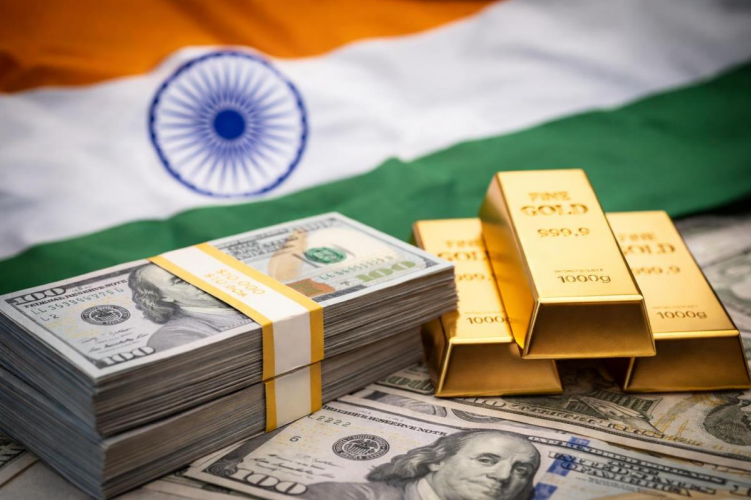
India’s external financial position has come under renewed focus following a sharp decline in its foreign exchange reserves, which fell by $10.3 billion to approximately $688 billion in the week ending March 27, 2026. This marks one of the steepest weekly drops in recent months and reflects mounting pressure on the country’s currency and external sector amid global economic turbulence.
The decline has been primarily attributed to active intervention by the Reserve Bank of India, which has been selling dollars to stabilise the Indian rupee. The rupee has faced sustained depreciation pressures due to rising oil prices, capital outflows, and geopolitical tensions, prompting the central bank to step in aggressively to curb volatility.
This development underscores the delicate balance policymakers must maintain between preserving foreign exchange reserves and ensuring currency stability. While India continues to hold one of the largest forex reserves globally, the recent decline highlights emerging vulnerabilities in an increasingly uncertain global economic environment.
Drivers Behind the Sharp Decline in Forex Reserves
The most immediate factor behind the fall in reserves is the RBI’s intervention in currency markets. As the rupee weakened, the central bank sold US dollars from its reserves to support the domestic currency and prevent excessive volatility. This intervention is a standard policy tool but comes at the cost of reducing the overall reserve buffer.
In addition to intervention, valuation changes in global assets also contributed to the decline. Data shows that foreign currency assets fell by over $6.6 billion, while gold reserves declined by around $3.6 billion during the same period. These fluctuations are influenced by movements in global currency markets and commodity prices, particularly gold.
The broader global context has further intensified these pressures. Rising crude oil prices, driven by geopolitical tensions, have increased India’s import bill, while foreign investor outflows have added to currency weakness. Together, these factors have created a challenging environment for reserve management.
Role of RBI Intervention and Currency Stabilisation Strategy
The RBI’s actions reflect a proactive approach to maintaining currency stability in the face of external shocks. By selling dollars, the central bank aims to smooth volatility and prevent disorderly movements in the rupee, which could have wider economic implications.
In recent weeks, the RBI has also introduced additional measures to curb speculative activity in currency markets, including tighter controls on foreign exchange positions held by banks. These steps are designed to reduce excessive demand for dollars and stabilise the rupee’s trajectory.
However, such interventions come with trade-offs. While they provide short-term stability, sustained use of reserves can reduce the buffer available to absorb future shocks. Policymakers must therefore carefully calibrate their actions to balance immediate needs with long-term financial resilience.
Trends in Forex Reserves and External Sector Pressures
The latest decline marks the fourth consecutive weekly drop in India’s forex reserves, with total losses exceeding $40 billion over this period. This trend indicates sustained pressure on the external sector rather than a one-off fluctuation.
Historically, India’s forex reserves have served as a critical buffer against external shocks, including currency volatility, capital flight, and trade imbalances. The reserves reached record highs earlier in 2026 before beginning their recent downward trajectory.
The current trend reflects a combination of structural and cyclical factors, including rising import costs, global monetary tightening, and geopolitical risks. These elements are reshaping the dynamics of India’s external sector and influencing the trajectory of its reserve position.
Economic Implications and Market Impact
The decline in forex reserves has important implications for India’s broader economy. A reduction in reserves can limit the country’s ability to manage external shocks, particularly in periods of heightened global uncertainty. It may also influence investor sentiment, as reserves are often seen as a key indicator of economic strength.
At the same time, the RBI’s intervention has helped prevent sharper depreciation of the rupee, thereby containing imported inflation. A stable currency is crucial for controlling the cost of imports, particularly oil, which constitutes a significant portion of India’s import bill.
Financial markets are closely monitoring these developments, with analysts assessing the sustainability of current policy measures. While the reserves remain at a comfortable level in absolute terms, continued declines could raise concerns about external vulnerability and policy effectiveness.
Outlook
India’s sharp decline in foreign exchange reserves highlights the complex interplay between currency management, global economic conditions, and domestic policy responses. The RBI’s intervention has been effective in stabilising the rupee in the short term, but it has also underscored the cost of defending the currency in a volatile environment.
In the near term, the trajectory of forex reserves will depend on global factors such as oil prices, capital flows, and geopolitical developments. Continued volatility in these areas could necessitate further intervention, potentially placing additional pressure on reserves.
Looking ahead, maintaining a strong external buffer while ensuring currency stability will remain a key challenge for policymakers. As global uncertainties persist, India’s ability to navigate these pressures will play a critical role in sustaining economic stability and growth.