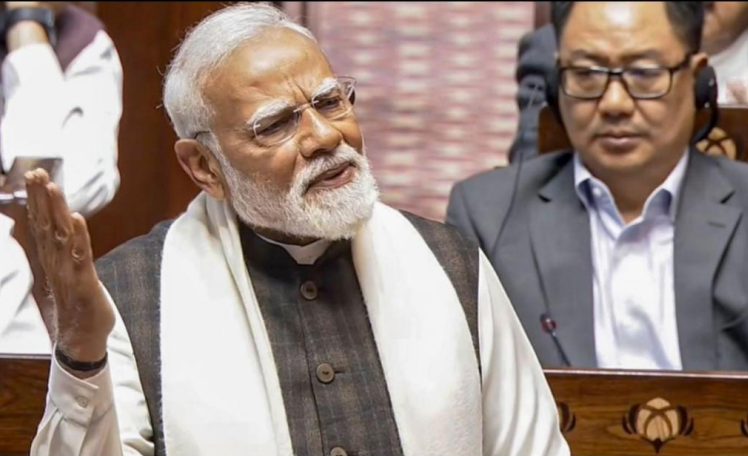
India’s political landscape is witnessing a renewed push toward gender representation as Prime Minister Narendra Modi has strongly urged Parliament to expedite the passage and operational framework of the Women’s Reservation Bill ahead of the upcoming special session. The Prime Minister described any delay in implementing the legislation as a “gross injustice,” signaling the government’s intent to prioritize the long-pending reform.
The proposed legislation, widely known as the Nari Shakti Vandan Adhiniyam, seeks to reserve 33% of seats in the Lok Sabha and state legislative assemblies for women, marking one of the most significant structural reforms in India’s democratic framework. While the bill was passed in principle earlier, its implementation mechanisms—particularly delimitation and census-linked provisions—are now at the center of political and legislative focus.
The urgency expressed by the government reflects both political momentum and societal demand. With women constituting nearly half of India’s population but holding significantly lower representation in legislative bodies, the reform is being framed as essential for inclusive governance and democratic deepening.
Political Push and Leadership Messaging
Prime Minister Modi’s recent outreach has been direct and symbolic, appealing to both lawmakers and citizens to support the bill. In a public message addressed to women across the country, he emphasized that increasing women’s representation is critical to making Indian democracy more “vibrant and participative.”
He further underlined that the idea of women’s reservation is not new but rooted in a historical vision of equality, tracing its origins back nearly a century. By invoking leaders such as Sardar Vallabhbhai Patel and Dr. B.R. Ambedkar, the government has sought to frame the reform as part of India’s constitutional and ideological legacy.
The messaging also carries a strong political undertone, as the government attempts to build consensus across party lines ahead of the parliamentary session scheduled for mid-April. The Prime Minister has called for bipartisan support, positioning the bill as a national rather than partisan initiative.
Legislative Framework and Implementation Challenges
The Women’s Reservation Bill mandates a one-third reservation for women in Parliament and state assemblies, including sub-quotas for Scheduled Castes and Scheduled Tribes.
However, its implementation is contingent upon two critical processes:
- The completion of the national census
- A subsequent delimitation exercise to redraw constituency boundaries
This linkage has sparked debate, as it effectively delays the rollout of the reservation until at least the 2029 general elections, raising questions about the immediacy of the reform. Critics argue that the conditional framework undermines the urgency emphasized by the government.
Despite these challenges, the bill remains a landmark constitutional amendment, reflecting decades of advocacy and political negotiation. Its passage represents a formal commitment, even as operational hurdles continue to shape the timeline of its implementation.
Political Debate and Opposition Concerns
While the bill has received broad support, it has also triggered significant political debate.
Opposition parties have raised concerns regarding the delimitation process, arguing that it could alter the balance of representation between states and potentially disadvantage regions with lower population growth.
Some leaders have called for immediate implementation within the existing parliamentary structure, without waiting for delimitation. Others have questioned the absence of specific provisions for Other Backward Classes (OBC) women, highlighting the need for more inclusive representation.
The debate reflects deeper structural questions about India’s federal balance and electoral system. As discussions intensify, the Women’s Reservation Bill has become a focal point for broader political negotiations and ideological differences.
Socio-Economic Significance and Gender Representation
The push for women’s reservation is rooted in the persistent underrepresentation of women in Indian politics. Despite making up nearly half of the population, women account for only a small fraction of elected representatives at the national and state levels.
Proponents argue that increased representation will lead to more inclusive policymaking, improved governance outcomes, and greater attention to issues such as healthcare, education, and social welfare. Evidence from local governance, where reservation for women has been implemented since the 1990s, suggests positive impacts on community development and gender equality.
The reform is also seen as a catalyst for broader societal change, encouraging greater political participation among women and challenging traditional gender norms. By institutionalizing representation, the bill aims to create a more equitable political landscape.
Conclusion
The renewed push for the Women’s Reservation Bill marks a critical moment in India’s democratic evolution. With strong backing from the government and growing public support, the legislation has the potential to transform the composition and functioning of legislative institutions.
In the immediate term, the focus will remain on building political consensus and addressing implementation challenges, particularly those related to delimitation and electoral restructuring. The upcoming parliamentary session is expected to play a decisive role in shaping the next phase of this reform.
Looking ahead, the success of the Women’s Reservation Bill will depend not only on its passage but also on its effective implementation. If realized, it could redefine political representation in India, paving the way for a more inclusive and participatory democracy that reflects the aspirations of its citizens.