
Sustainable Business Model: How Startups Can Build for Long-Term Growth
Discover how startups can build a sustainable business model focused on profitability, responsible growth, resource efficiency and long-term value.
In today’s competitive business environment, startups are increasingly looking beyond rapid growth and short-term profits. Investors, customers and employees are paying greater attention to how businesses create value over the long term. This shift has made the sustainable business model an important part of modern entrepreneurship.
A sustainable business model is designed to generate consistent revenue while using resources responsibly, maintaining customer trust and creating long-term value. For startups, adopting such a model can help reduce unnecessary costs, strengthen their brand reputation and build resilience against changing market conditions.
What Is a Sustainable Business Model?
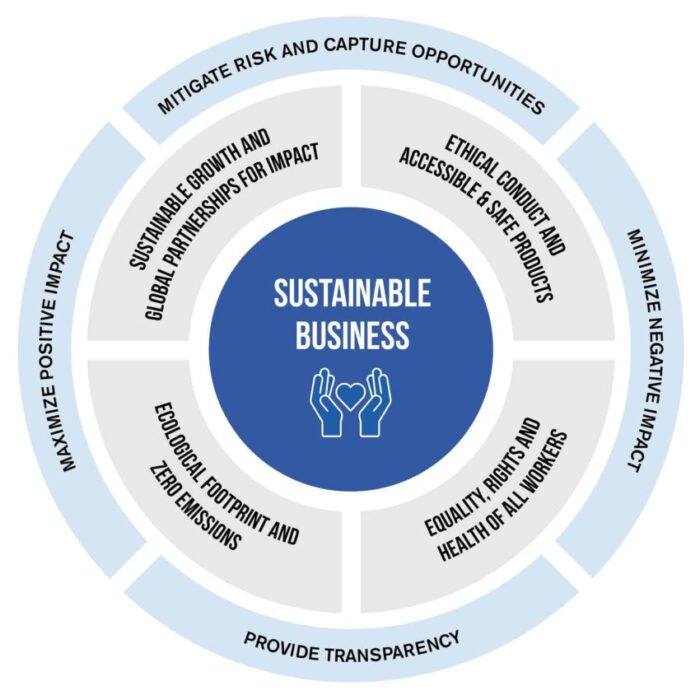
A sustainable business model is an approach to running a company that balances financial performance, environmental responsibility and social impact. Unlike traditional models that may focus primarily on revenue and profitability, sustainable businesses consider how their operations affect customers, employees, communities and the environment.
Sustainability does not necessarily mean that a company must be entirely focused on environmental products or renewable energy. A software startup, for example, can adopt sustainable practices by reducing waste, improving energy efficiency, supporting remote work and creating products that solve long-term customer problems.
The main objective is to create a business that can remain profitable and relevant without exhausting the financial, human or natural resources it depends on.
Why Sustainable Business Models Matter for Startups
Startups operate in an environment where resources are often limited. They need to manage cash flow, acquire customers, retain employees and compete with established businesses. A sustainable model can help startups make better decisions about how they use these resources.
One major advantage is long-term financial stability. Businesses that depend heavily on discounts, excessive advertising spending or unsustainable customer acquisition costs may struggle when funding conditions become difficult. Building recurring revenue and controlling operating expenses can provide greater stability.
Sustainability can also improve customer loyalty. Consumers are increasingly interested in the values and practices of the companies they support. Startups that demonstrate genuine responsibility can differentiate themselves in crowded markets.
For investors, sustainable business practices can also indicate that a startup is thinking beyond its next funding round. A company with healthy unit economics, responsible operations and a clear path toward profitability can be better positioned for long-term growth.
Key Elements of a Sustainable Business Model
1. Strong and Predictable Revenue
Revenue is the foundation of any sustainable business. Startups should focus on developing revenue streams that can continue to grow without requiring disproportionately higher expenses.
Subscription models, repeat purchases, long-term contracts and recurring services are examples of revenue structures that can provide greater predictability. However, the right model depends on the startup's industry and customer base.
2. Healthy Unit Economics
Fast growth does not always mean a healthy business. Startups need to understand how much they spend to acquire a customer and how much revenue that customer generates over time.
Metrics such as Customer Acquisition Cost (CAC), Customer Lifetime Value (LTV), gross margin and retention rate can help founders determine whether their growth strategy is financially sustainable.
If a startup spends more money acquiring customers than it can reasonably recover from those customers, rapid expansion could eventually create financial pressure.
3. Efficient Use of Resources
Resource efficiency is another important part of sustainability. Startups can reduce unnecessary expenses by adopting cloud-based tools, automating repetitive processes and optimizing their supply chains.
For product-based businesses, reducing packaging waste, improving inventory management and sourcing materials responsibly can lower costs while also reducing environmental impact.
4. Customer-Centric Products
A sustainable business should solve a genuine customer problem. Startups that build products simply because a trend is popular may find it difficult to maintain demand once the trend disappears.
Understanding customer needs, collecting feedback and continuously improving products can create stronger relationships and increase retention.
5. Responsible Workforce Practices
Employees are one of the most important resources for a startup. High employee turnover can increase recruitment and training costs while affecting productivity.
Creating a healthy workplace, offering opportunities for professional development and maintaining transparent communication can help startups attract and retain talent. A sustainable business model therefore includes not only environmental considerations but also the long-term well-being of employees.
Technology and Sustainable Business
Technology is helping businesses adopt sustainable practices without compromising productivity. Artificial intelligence, automation, data analytics and cloud computing can help companies identify inefficiencies and make better decisions.
For example, businesses can use data analytics to forecast demand and reduce excess inventory. AI-powered tools can automate repetitive administrative tasks, allowing employees to focus on higher-value activities.
Digital products can also allow startups to scale their services without increasing physical resources at the same rate. This can be particularly useful for software, education, consulting and other digital-first businesses.
However, startups should also consider the environmental cost of technology, including energy consumption and electronic waste. Sustainable technology adoption requires businesses to focus on efficiency rather than simply adding more technology.
Sustainable Business Models in India
India’s startup ecosystem provides significant opportunities for sustainable businesses. Startups are working across areas such as renewable energy, electric mobility, waste management, sustainable agriculture, financial technology and circular economy solutions.
At the same time, sustainability is becoming relevant to traditional businesses as well. Small businesses can adopt environmentally responsible packaging, digital payments, efficient logistics and responsible sourcing without completely changing their business model.
The growing interest in sustainable solutions also creates opportunities for entrepreneurs to address local problems with scalable business ideas. From reducing food waste to improving access to clean energy, startups can combine commercial opportunities with social and environmental benefits.
Challenges of Building a Sustainable Business Model
Although sustainability offers long-term advantages, implementing it can be challenging for startups.
The initial investment can sometimes be higher. Sustainable materials, energy-efficient equipment or responsible supply chains may cost more initially than conventional alternatives. Startups operating with limited capital therefore need to prioritize investments carefully.
Another challenge is avoiding greenwashing. Businesses should not make sustainability claims that they cannot support with evidence. Customers and investors are increasingly capable of scrutinizing corporate sustainability claims.
Startups must also find the right balance between growth and sustainability. Being sustainable does not mean avoiding growth. Instead, it means developing growth strategies that can continue without creating excessive financial, environmental or social costs.
How Startups Can Build a Sustainable Model
Founders can begin by examining every part of their business, from product development and sourcing to marketing and customer service.
The first step is to identify the company's most important revenue streams and expenses. Startups should then evaluate whether their customer acquisition strategy, pricing structure and operational costs can support long-term growth.
Businesses can gradually introduce sustainable practices rather than attempting to transform everything at once. Reducing unnecessary waste, improving energy efficiency, adopting responsible sourcing and measuring key business metrics can create meaningful improvements over time.
Most importantly, sustainability should become part of the company's strategy rather than being treated as a separate marketing initiative.
The Future of Sustainable Entrepreneurship
The future of entrepreneurship is likely to place greater emphasis on resilience, efficiency and responsible growth. Startups will increasingly need to demonstrate not only how quickly they can acquire customers but also whether they can create lasting value.
Investors are becoming more attentive to business fundamentals, while customers increasingly expect companies to demonstrate responsibility. This creates an opportunity for startups that can combine innovation with sustainable economics.
A successful sustainable business model ultimately comes down to one fundamental principle: building a company that can create value today without compromising its ability to create value tomorrow.
For startups, this approach can provide a stronger foundation for growth, improve resilience during uncertain economic conditions and help create businesses capable of surviving beyond the initial startup phase.
To read more such articles visit : Startuptimes


Leave a comment
Your email address will not be published. Required fields are marked *
Add a newsletter to your widget area.
Top Stories