The Tier-2 & Tier-3 Boom: How Smaller Indian Cities Are Powering India's Startup Growth
Explore India's Tier-2 and Tier-3 startup boom, from rising D2C demand and digital infrastructure to funding, talent and new opportunities for entrepreneurs.
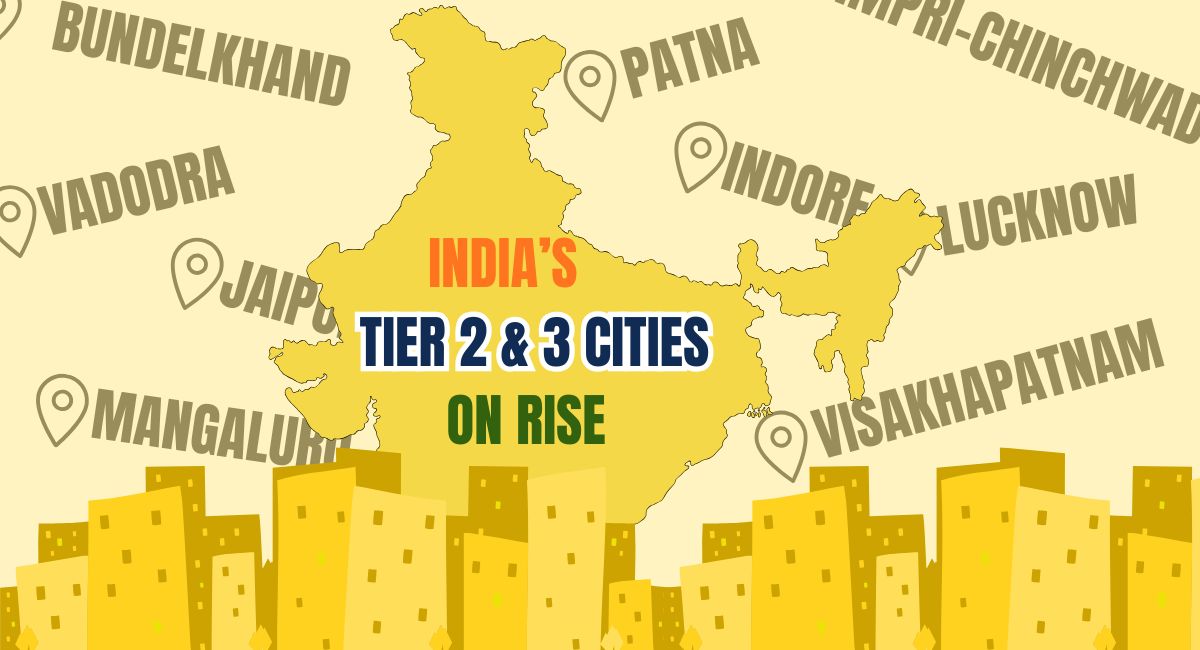
India’s startup story is entering a new phase. For years, Bengaluru, Mumbai, Delhi-NCR, Hyderabad and a handful of other metropolitan cities dominated the country’s entrepreneurial landscape. These cities attracted the largest pools of venture capital, technology talent, incubators and corporate opportunities. However, the geography of Indian entrepreneurship is changing rapidly.Tier-2 and Tier-3 cities are emerging as important centres for startups, digital businesses, innovation, consumption and employment.
The shift is particularly significant because entrepreneurship is no longer restricted to India's traditional metropolitan hubs. According to the Government of India, around 50% of DPIIT-recognised startups originate from Tier-II and Tier-III cities. By June 2026, India had more than 2.3 lakh DPIIT-recognised startups, highlighting the scale at which the country's startup ecosystem has expanded.
India’s Startup Boom Is Moving Beyond the Metros
The first decade of Startup India was closely associated with major startup hubs. Bengaluru became synonymous with technology startups, Mumbai with fintech and consumer businesses, Delhi-NCR with startups across multiple sectors, while Hyderabad and Pune developed strong technology and innovation ecosystems.
But India's startup map is becoming much more diverse. Cities such as Jaipur, Indore, Surat, Coimbatore, Kochi, Chandigarh, Lucknow, Bhubaneswar and many other emerging locations are increasingly participating in the country's entrepreneurial economy.
This does not necessarily mean that established metropolitan hubs are losing their importance. Instead, India's startup ecosystem is becoming more distributed. Founders can increasingly access customers, employees, digital infrastructure and business opportunities without being physically located in one of the country's largest cities.
Why Tier-2 and Tier-3 Cities Are Becoming Startup Hubs
One of the biggest reasons behind the Tier-2 and Tier-3 startup boom in India is the improvement in digital connectivity. Affordable smartphones, widespread internet access, digital payments, e-commerce platforms and cloud-based business tools have reduced many of the geographical limitations faced by entrepreneurs.
A startup founder operating from a smaller city can use cloud software, digital marketing, social media and online marketplaces to reach customers across the country. A local brand no longer needs to open stores in multiple metropolitan cities before building a national customer base.
This has fundamentally changed the economics of entrepreneurship. Businesses can start small, test demand digitally and expand when they find product-market fit.
Lower Operating Costs Are Attracting Entrepreneurs
Operating costs are another important factor behind the growth of smaller-city startups. Office space, accommodation and certain labour costs can be lower outside India's largest metropolitan areas. For early-stage companies that need to carefully manage cash flow, these differences can be significant.
A startup does not necessarily need a large office in a premium business district during its early years. With remote and hybrid working becoming more common, founders can build teams across different locations while keeping their headquarters in a smaller city.
This can allow entrepreneurs to allocate more resources towards product development, marketing, technology and hiring rather than spending a disproportionate amount on real estate and other metropolitan operating costs.
The Rise of Non-Metro Consumers
The opportunity is not limited to startups being founded in smaller cities. Consumers in Tier-2 and Tier-3 cities are also becoming an increasingly important part of India's growth story.
KPMG reported in April 2026 that Tier-2 and Tier-3 cities accounted for 66% of new D2C orders in FY2026. The same analysis highlighted growing activity in infrastructure, manufacturing, logistics and digital services outside India's largest metropolitan areas.
This creates a major opportunity for consumer startups. Companies that understand regional preferences, price sensitivity, languages and purchasing behaviour can develop products specifically for these markets.
For many businesses, the next major customer base may not be concentrated in Mumbai or Bengaluru. It may be distributed across hundreds of smaller cities and towns.
E-Commerce Is Expanding the Opportunity
E-commerce has played a major role in connecting smaller cities with national markets. Entrepreneurs can now sell products through online marketplaces, social commerce platforms, their own websites and emerging digital commerce networks.
A clothing brand operating from Jaipur, for example, can potentially sell to customers in Kerala, Assam or Maharashtra without opening physical stores in those states. Similarly, a regional food, handicraft, beauty or lifestyle brand can build a national audience through digital channels.
This has created opportunities for direct-to-consumer startups, particularly those that combine regional identity with modern branding and online distribution.
Regional Problems Are Creating New Startup Opportunities
Another reason smaller cities are becoming entrepreneurial centres is that founders are increasingly building businesses around problems they understand personally.
A founder living in a smaller city may have a deeper understanding of local transportation challenges, agricultural problems, healthcare access, education gaps, tourism opportunities or small-business requirements than an entrepreneur entering the market from a metropolitan area.
This local knowledge can become a competitive advantage.
Startups in sectors such as agri-tech, healthcare technology, fintech, education, logistics, tourism, local commerce and regional-language technology can address problems that are particularly relevant outside India's largest cities.
The result is a shift from simply copying metropolitan startup models towards creating businesses based on regional needs.
The Growth of Regional-Language Internet
Language is another major opportunity.
India's internet audience is highly diverse, and millions of users are more comfortable consuming information and purchasing products in languages other than English. Startups that create content, customer support, educational services and digital products in regional languages can therefore reach audiences that may have been underserved by English-first platforms.
Artificial intelligence is also making localisation easier. Translation, voice technology, speech recognition and AI-powered customer support can help businesses serve customers across multiple Indian languages.
This could become particularly important for fintech, edtech, healthcare and e-commerce companies trying to expand beyond India's major urban centres.
Smaller Cities Are Producing More Local Entrepreneurs
The Tier-2 and Tier-3 boom is also changing the profile of Indian entrepreneurship.
Young people who previously viewed moving to a major city as the primary route to professional success can increasingly explore entrepreneurship closer to home. Local colleges, incubators, startup programmes, online learning platforms and government initiatives can provide access to resources that were previously concentrated in metropolitan areas.
This creates a potentially powerful cycle. When a successful startup emerges from a smaller city, it can generate employment, attract talent and inspire other entrepreneurs in the same region.
Over time, successful businesses can contribute to the development of a local entrepreneurial ecosystem.
Government Support Is Helping Decentralise Entrepreneurship
Government programmes have also played an important role in expanding entrepreneurship across India.
The Startup India initiative, launched in 2016, has grown into a broad ecosystem involving startup recognition, funding programmes, incubation, mentorship and other forms of support. As of March 31, 2026, the government had recognised more than 2.23 lakh startups, which had generated over 23.36 lakh direct jobs. More than 55,200 startups were recognised during FY2025-26 alone.
Government programmes are also increasingly focusing on innovation outside established startup hubs. Initiatives involving incubators, entrepreneurship development and digital innovation can help entrepreneurs in emerging regions access mentoring, funding and infrastructure.
In April 2026, DPIIT also announced a partnership aimed at strengthening startup ecosystems and establishing five incubation and startup support centres, with a focus including Aspirational Districts, northeastern states and other emerging regions.
Funding Remains a Major Challenge
Despite the growth, funding remains one of the biggest challenges for Tier-2 and Tier-3 startups.
Venture capital networks are still heavily concentrated around established startup centres. Founders in smaller cities may have fewer opportunities to meet investors, experienced mentors and specialised startup advisors.
This means that geographical diversification of startups does not automatically translate into equal access to capital.
However, digital pitching, remote investor meetings, startup accelerators, government funding programmes and online founder communities are gradually reducing some of these barriers.
For the next phase of the Tier-2 and Tier-3 boom, improving access to early-stage capital could be just as important as improving physical infrastructure.
Talent Will Determine the Next Phase
Access to skilled talent is another important consideration.
Smaller cities often have large populations of educated young people, but startups may struggle to find specialised professionals in areas such as advanced software engineering, artificial intelligence, product management, growth marketing and venture finance.
Remote work can help address part of this problem. A startup based in a smaller city does not necessarily need every employee to live in the same location.
At the same time, the development of local universities, technology institutes, skill-development programmes and incubators can help create deeper talent pools within emerging startup cities.
Infrastructure Is Becoming Increasingly Important
The growth of startups cannot happen independently of infrastructure.
Reliable electricity, high-speed internet, roads, airports, logistics facilities, office spaces and urban services are important for companies trying to scale.
KPMG's 2026 analysis noted that Tier-2 and Tier-3 cities are increasingly becoming important for infrastructure, manufacturing and digital expansion. It also reported that these cities accounted for more than 100 million square feet of warehousing stock, while data-centre capacity in these markets was expected to expand significantly by 2030.
This means infrastructure development could become a major enabler of India's next startup wave.
D2C Brands Could Be Major Beneficiaries
The growth of non-metro consumption could particularly benefit D2C businesses.
A D2C startup can build a brand through Instagram, YouTube, marketplaces, influencer marketing and its own website without depending entirely on traditional retail distribution.
Regional businesses can use this model to take products with local appeal to national audiences. Handcrafted products, regional foods, clothing, beauty products and cultural products can all potentially benefit from this expansion.
At the same time, national D2C companies can use smaller cities as important markets for customer acquisition and expansion.
Technology Is Reducing the Geographic Advantage of Metros
Technology is perhaps the most important force behind the changing startup geography.
Cloud computing means companies do not need expensive physical infrastructure to begin operations. Digital payments make transactions easier. Social media provides inexpensive channels for marketing. AI tools can support customer service, content creation and business operations. E-commerce enables nationwide distribution.
Together, these technologies are reducing the importance of physical proximity in several parts of the startup economy.
This does not eliminate the advantages of major cities, but it allows entrepreneurs in smaller locations to compete in markets that were previously difficult to access.
Tier-2 and Tier-3 Cities Could Become Important Innovation Centres
The next stage of the boom could go beyond consumer startups.
Smaller cities have the potential to develop specialised ecosystems around manufacturing, agriculture, renewable energy, healthcare, tourism, logistics and deep technology.
For example, a city with a strong manufacturing base could develop startups focused on industrial automation. An agricultural region could support agri-tech businesses. A tourism-focused region could produce startups around hospitality and travel technology.
Such specialisation could create stronger regional startup ecosystems rather than simply replicating the same technology businesses found in metropolitan hubs.
The Opportunity for Investors
The expansion of entrepreneurship beyond metros also creates opportunities for investors.
Investors looking beyond established startup hubs may find businesses with strong local knowledge, lower operating costs and access to underserved markets. However, evaluating these businesses requires understanding regional market conditions rather than relying solely on traditional metro-centric startup indicators.
The development of local angel networks, regional venture funds, incubators and accelerators could therefore play an important role in the next stage of India's startup ecosystem.
The Challenges Cannot Be Ignored
The Tier-2 and Tier-3 boom should not be interpreted as evidence that every smaller city is ready to become a major startup hub.
Some cities continue to face limitations related to funding, specialised talent, infrastructure, market access and mentorship. Entrepreneurs may also need to travel to larger cities to access investors, customers or specialised services.
The challenge for policymakers and the private sector is therefore to build complete ecosystems rather than isolated startup programmes.
Infrastructure, funding, education, talent, mentorship and market connectivity need to develop together.
A More Distributed Indian Startup Economy
The long-term significance of the Tier-2 and Tier-3 boom lies in the possibility of creating a more geographically distributed Indian economy.
Instead of having a small number of cities absorb most startup investment and talent, entrepreneurship can become an opportunity across a much wider set of regions.
The government has already reported that around half of recognised startups are emerging from Tier-II and Tier-III cities. This trend suggests that India's entrepreneurial base is becoming broader and more geographically diverse.
The emergence of these businesses can also contribute to local job creation, innovation and economic activity.
What the Future Holds for Tier-2 and Tier-3 Startups
The next few years could be important for India's emerging startup cities. As digital infrastructure improves, consumer spending expands and businesses become more comfortable with distributed teams, geographical location may become less restrictive for entrepreneurs.
However, the real test will be whether startups from these cities can move beyond early-stage experimentation and build sustainable, scalable businesses.
If funding, talent, infrastructure and mentorship continue to improve, more Indian cities could develop specialised startup ecosystems of their own.
India's startup story is therefore no longer simply about the rise of Bengaluru, Mumbai or Delhi-NCR. It is increasingly about a much larger network of entrepreneurs spread across the country.
Conclusion
The Tier-2 and Tier-3 startup boom in India represents one of the most significant changes taking place in the country's entrepreneurial landscape. Digital connectivity, e-commerce, affordable technology, regional consumption, government support and the availability of local talent are creating new opportunities outside traditional startup hubs.
The government says nearly 50% of recognised startups now emerge from Tier-II and Tier-III cities, while current economic analysis points to growing consumption, logistics, infrastructure and digital activity in these markets.
The future of Indian entrepreneurship may therefore be increasingly distributed. The next generation of high-growth businesses could emerge not only from established metropolitan hubs but also from smaller cities where founders are using technology to solve local problems and reach national markets.
For entrepreneurs, investors and businesses, the message is clear: India's startup opportunity is becoming wider, more regional and increasingly connected.
To read more such articles visit : StatupTimes

Leave a comment
Your email address will not be published. Required fields are marked *
Add a newsletter to your widget area.
Top Stories