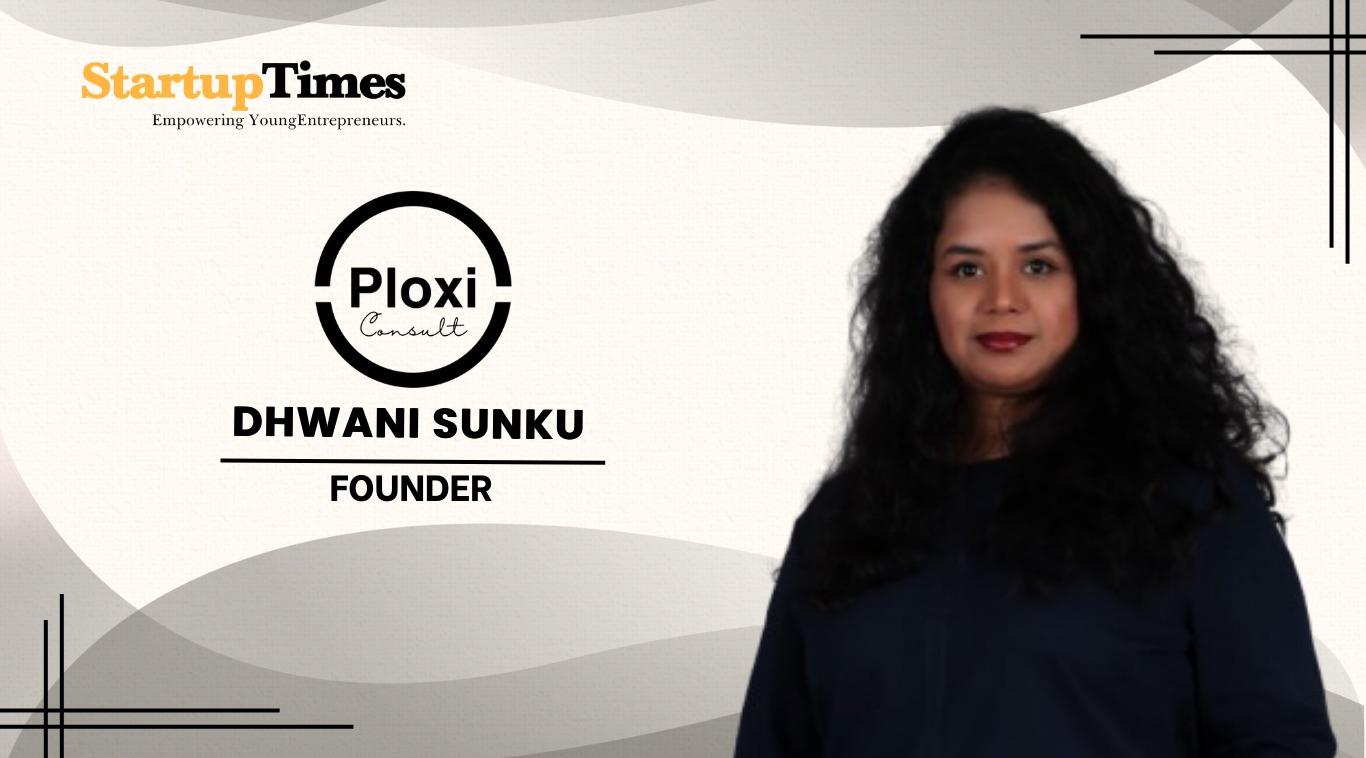
Sustainability conversations are everywhere today, yet action often lags behind intent. For Ploxi, that gap between ambition and execution is not just a challenge to observe, but a problem to solve. At the centre of this journey is Dhwani Sunku, a professional who has spent years working across India’s renewable energy landscape and who now channels that experience into helping organisations turn sustainability goals into outcomes that matter.
A Career Shaped by Clean Energy
Dhwani’s professional path was shaped long before Ploxi came into existence. With a background rooted in sustainability and clean energy, she spent several years in senior growth and strategy roles across solar EPC and clean energy development firms. Her work involved expanding markets, building commercial partnerships, and supporting the execution of utility-scale and distributed solar projects across India.
These roles gave her a front-row view of how renewable energy projects move from feasibility studies to assets on the ground. She worked closely with technical teams, investors, policymakers, and corporate stakeholders, translating policy frameworks and regulatory requirements into strategies that made commercial sense. Along the way, she helped scale operations, strengthen go-to-market approaches, and enable capital deployment across rooftop and ground-mounted solar assets.
What set Dhwani apart was her ability to work across silos. She consistently bridged finance, technology, and policy, ensuring that projects did not remain stuck at the planning stage. Alongside her professional roles, she also contributed to research, writing, and advisory engagements in sustainability and climate action, building a strong foundation in clean energy markets, economics, and impact-driven growth.
Seeing the System, Not Just the Symptoms
The idea for Ploxi did not emerge from a single defining moment. Instead, it took shape gradually as Dhwani observed recurring structural issues that slowed sustainability transitions across markets. Clean energy adoption showed her that sustainable choices could be good for both businesses and the environment. Yet she also saw how fragmented the ecosystem was.
Access to finance remained one of the biggest barriers. Capital for climate action existed, but it was often risk-averse, fragmented, or poorly aligned with early-stage and transition-focused projects. Many sustainability initiatives struggled to attract funding simply because they lacked the right financial structuring or data visibility.
Decision-making within organisations was another challenge. Regulatory pressure and stakeholder expectations were rising, but internal processes were slow and complex. Data silos and uncertainty around compliance often delayed action, not because organisations lacked intent, but because clarity was missing.
Clean technology companies faced their own hurdles. Many had strong technical solutions but struggled with market access, commercial strategy, or investor readiness. Without support across these areas, scalable technologies risked remaining underused.
Dhwani’s ability to think at a systems level led her to build Ploxi as a platform that could address these issues end to end, cutting across technology, finance, and execution.
What Ploxi Brings to the Table
Ploxi works across three key stakeholder groups, offering services designed to reduce complexity and accelerate action.
For Corporates
The firm provides end-to-end sustainability consulting, including ESG audits and gap analysis; decarbonisation and net-zero enablement across energy, water, air, and waste with a strong focus on execution of emission reduction; support for sustainability certifications such as GNFZ, LEED, GRIHA, IGBC, and WELL; and assistance with offsets and environmental attribute trading.
Ploxi also develops sustainability roadmaps and reporting aligned with frameworks like GRI, BRSR, and IFRS Sustainability Standards, relevant across India and the UAE. Ploxi doesn’t believe in checking off boxes for compliance, but in working with corporates to enable long-term net-zero or sustainability transition activities.
As a result, Ploxi Earth, an end-to-end sustainability platform, is under development, with early adopters soon using the platform to address all of the above in a singular enterprise management tool. For corporates and industries, this means ease of decision-making and tracking the entire sustainability value chain and roadmap, while also engaging with clean-tech and carbon offset stakeholders to achieve their goals.
Addressing climate change abatement and mitigation, in one stop.
What differentiates this approach is integration. Strategy, compliance, and execution are handled within a single engagement model, ensuring that sustainability decisions are actionable, finance-aware, and ready for audits.
For Clean Technology Companies
Ploxi focuses on commercialisation and scale. The team supports market entry strategies, pricing models, investor pitch development, partnership mapping, regulatory alignment, and the transition from pilot projects to scaled deployment. By combining real-world market experience with investor and policy insight, Ploxi helps clean-tech firms grow without losing sight of their technical or impact goals.
For Investors
Investors form the third pillar. Ploxi offers ESG risk and impact assessments, due diligence support, deal screening, and impact measurement frameworks. With tools like Ploxi Earth in development, the firm aims to better align capital with climate-aligned opportunities, moving beyond surface-level ESG scores to real-world performance and resilience.
Challenges on the Founder’s Path
Building Ploxi came with its share of challenges. One of the earliest was bootstrapping the business using personal savings while establishing credibility for a new brand. Without external funding, every decision had to be disciplined. Dhwani focused on client-led growth from the outset, securing paying clients early and reinvesting earnings back into the business.
Managing a distributed team across geographies was another hurdle. Ploxi is a remote-only company, giving it strategic advantage for engaging with clients across India, but not without its own challenges. Operating remotely required strong systems without sacrificing agility. Digital infrastructure and process automation, including tools like Zoho One, helped streamline operations, finance, and client delivery. Clear workflows and outcome-based metrics ensured alignment and accountability.
Market awareness also posed a challenge. Decarbonisation as a Service (DaaS) was still unfamiliar to many organisations. Dhwani hopes to address this by investing time in education through workshops, advisory engagements, and thought leadership, simplifying complex concepts and clearly linking sustainability to regulatory readiness, risk reduction, and financial value. Ploxi aims to showcase sustainability as a business practice rather than an afterthought for emission reduction alone, moving beyond compliance-based thinking on ESG for small and medium-scale Indian businesses.
A Shift from Advisory to Ecosystem
A major milestone for Ploxi came when it evolved from a standalone advisory into a platform-led ecosystem. A partnership with Colliers, along with a growing network of vetted clean-tech partners across energy, water, waste, and air quality, marked a turning point.
This shift reinforced a core belief: sustainability transitions cannot be delivered in silos. Corporates need integrated, execution-ready solutions. The ecosystem approach allowed Ploxi to move beyond recommendations into implementation enablement, offering clients access to credible technologies and service providers through a single interface.
Strategic partnerships with organisations such as Global Net Zero Foundation, FluxGen, NeoSan, Chakr Innovation, and RenewCred (just to name a few) further strengthened this model. Together, these collaborations enabled comprehensive decarbonisation services across energy, water, waste, air, and offsets, supporting clients from strategy and certification through to on-ground action.
Looking Ahead
Over the next five years, Dhwani envisions Ploxi playing a role in supporting India’s net-zero journey while expanding into the UAE and other regions across the Global South. The focus will remain on growing the ecosystem, enabling technology transfer, and helping organisations navigate sustainability transitions with confidence and clarity.
Words for Those Starting Out
For aspiring entrepreneurs, Dhwani’s advice is simple: take the leap. The world needs many kinds of entrepreneurs, not only those building cutting-edge products. In the climate space, collaboration across sectors is essential. Acting as a bridge that connects solutions, capital, and decision-makers can create meaningful value.
Connect with Dhwani Sunku and Ploxi Consult
Website:www.ploxiconsult.com | www.ploxi.earth
LinkedIn:https://www.linkedin.com/in/dhwani-sunku/
Instagram:https://www.instagram.com/ploxi.earth/