A two-stage political and economic debate has unfolded around India–US trade relations, first triggered domestically by the Opposition and subsequently amplified by remarks from US President Donald Trump.
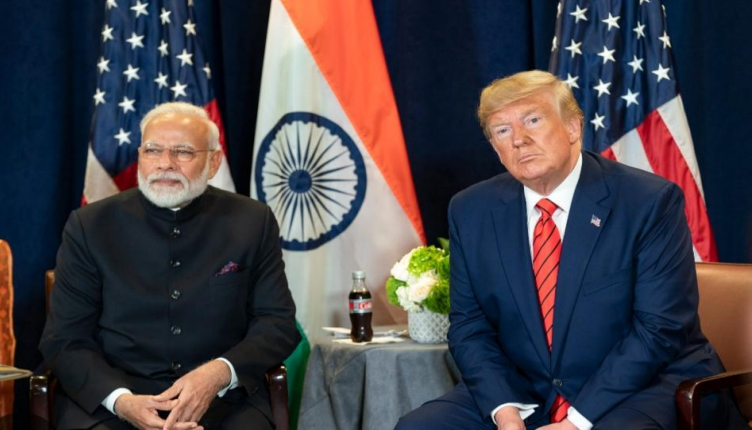
The sequence began with the Indian National Congress targeting the Centre over what it described as emerging tariff risks from the United States, and gathered fresh momentum after Trump said Prime Minister Narendra Modi was “not that happy” with him because India was paying “a lot of tariffs”.
Together, the developments have brought trade policy, economic diplomacy and political messaging into sharp focus, underscoring how external economic signals can quickly translate into domestic political pressure.
Congress Raises Early Alarm Over Tariff Threats
The issue first entered the political spotlight when the Congress took a swipe at the BJP-led Central government hours after US President Donald Trump warned that Washington could raise tariffs on India “very quickly”. The party accused the Centre of failing to pre-empt or adequately address potential tariff pressures from the United States.
Congress argued that repeated references by American political leaders to India’s tariff structure pointed to unresolved trade frictions that could resurface with force under shifting global political conditions.
Congress leaders framed the matter as one of national economic interest, warning that abrupt tariff actions by a major trading partner could adversely affect Indian exporters, small and medium enterprises and employment in trade-linked sectors. They also questioned whether the government’s trade engagement strategy had delivered sufficient safeguards for domestic industry, particularly at a time when global protectionist tendencies are resurfacing.
Trump’s Statement Rekindles the Debate
After the Congress’s criticism, Trump’s public remark added a new international dimension to the issue. By stating that Prime Minister Modi was unhappy because India was paying “a lot of tariffs”, Trump revived a familiar narrative from his presidency, when he frequently criticised India’s import duties and demanded greater market access for American goods.
While the comment was political in tone rather than policy-specific, its timing magnified the domestic debate already under way. It also brought back memories of earlier episodes when India faced trade pressure through the withdrawal of preferential benefits and threats of retaliatory tariffs.
Analysts note that even rhetorical statements from influential global figures can shape market sentiment and diplomatic discourse, especially when trade relations are already under scrutiny.
Tariffs and Their Broader Economic Impact
Tariffs remain one of the more sensitive elements of India–US economic relations, despite strong cooperation in defence, technology and strategic affairs. Persistent tariff-related rhetoric can create uncertainty for businesses, complicate long-term investment planning and disrupt supply chains that rely on predictable trade rules.
For India, the challenge is structural as well as strategic. Protecting domestic manufacturing and agriculture must be balanced against the need to remain globally competitive and attractive to foreign investors. Any escalation in tariff disputes could affect sectors such as engineering goods, textiles, pharmaceuticals and agri-exports, while also influencing broader perceptions of India’s trade policy stability.
Government’s Stance and Strategic Outlook
The government has so far refrained from responding directly to either the Opposition’s criticism or Trump’s remarks, maintaining a measured posture focused on dialogue and long-term partnership. Official responses in the past have emphasised that trade differences are best addressed through institutional negotiations rather than political rhetoric.
Looking ahead, experts believe India–US trade relations are unlikely to face immediate disruption, but the episode highlights how quickly economic diplomacy can become politically charged. With global trade increasingly shaped by domestic politics in major economies, India’s ability to combine strategic patience with economic assertiveness will be crucial.
In the near term, the focus is expected to remain on preserving stability, protecting export interests and sustaining growth momentum. Over the longer horizon, the debate underscores the importance of building resilient trade frameworks that can withstand shifts in political tone without undermining national economic interests.