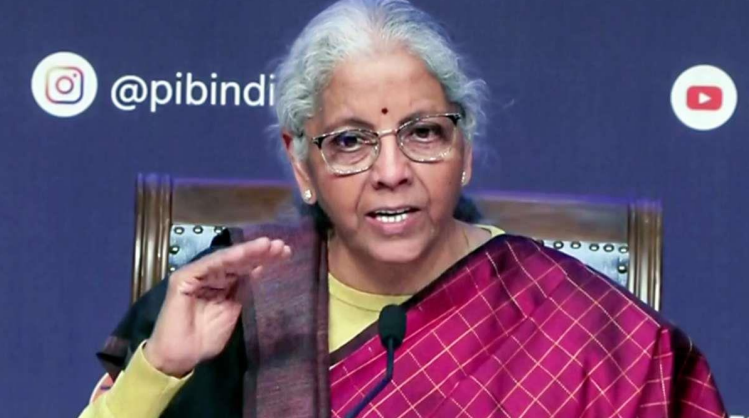
On February 1, 2026, Finance Minister Nirmala Sitharaman presented the Union India Budget 2026-27 in Parliament, unveiling a policy framework aimed at balancing fiscal discipline with sustained economic expansion.
This year’s Budget arrives at a critical moment for India, as the nation navigates geopolitical uncertainty, moderating global demand, and evolving domestic priorities.
The Budget embodies a strategic shift toward long-term reform, prioritising investment in infrastructure, national security, manufacturing ecosystems and digital innovation, while maintaining stability in personal taxation for citizens. With India projected to remain one of the world’s fastest-growing major economies in 2026, the Budget outlines a roadmap to strengthen macroeconomic fundamentals and support high-impact development.
Fiscal Balance and Macroeconomic Direction
The fiscal deficit for FY 2026–27 has been set at 4.3% of GDP, moving India closer to its medium-term target of 4.1% by FY 2027–28. Government data projects nominal GDP growth at around 10.4%, driven by a strong services sector and a recovery in manufacturing output.
Gross tax revenue is estimated at ₹44.2 lakh crore, reflecting a year-on-year increase of roughly 8.6%. Direct tax collections are projected to grow at 9% due to improved compliance and digital monitoring, while GST revenue is expected to rise to ₹22.4 lakh crore, supported by stronger consumption and expanding formalisation.
Net market borrowing for the year has been projected at ₹12.8 lakh crore, with the government signalling its intention to maintain a predictable supply of sovereign bonds to avoid volatility in the debt markets. Senior officials noted that the fiscal stance “creates adequate space for monetary stability without compromising fiscal consolidation”.
Economists have described the fiscal approach as “measured and credible”, highlighting its focus on balancing expenditure priorities while keeping public debt on a sustainable path. India’s general government debt is projected to decline to around 82% of GDP by March 2027, supported by steady growth and controlled expenditure.
Infrastructure Expansion and Capital Investments
A prominent pillar of Budget 2026–27 is the record capital expenditure outlay of ₹12.2 lakh crore, marking the fourth consecutive year of double-digit expansion in public investment. Capital expenditure now accounts for nearly 4.4% of GDP, significantly higher than pre-pandemic levels.
The government outlined several key transport and logistics initiatives that will shape India’s long-term competitiveness:
- Completion targets for seven high-speed rail corridors, including the priority Delhi–Varanasi, Ahmedabad–Rajkot and Chennai–Bengaluru segments
- Upgradation of two Dedicated Freight Corridors, expanding freight capacity by an estimated 22% by 2028
- Implementation of a national Unified Logistics Access Platform (ULAP) to integrate rail, road, port and air cargo systems onto a single digital interface
- A ₹38,000-crore port modernisation plan focusing on green hydrogen export terminals and fuel-efficient maritime operations
- Establishment of 50 multi-modal logistics parks under the PM Gati Shakti programme, aimed at reducing average logistics costs from 13% of GDP to below 9% over the next decade
Officials emphasised that infrastructure investments will generate nearly 4.5 million direct and indirect jobs nationwide over the next three years, supporting both urban and semi-urban labour markets.
Manufacturing, Technology and Reform Momentum
Budget 2026–27 emphasises the deepening of India’s manufacturing ecosystem, especially in high-technology and strategic sectors. The government announced extended support under the Production-Linked Incentive (PLI) framework, along with new investments in critical industries.
Key reforms and initiatives include:
- India Semiconductor Mission 2.0 with an enhanced allocation of ₹40,000 crore for fabrication facilities, chip-design clusters and advanced packaging technologies
- ₹9,500 crore dedicated to renewable energy storage, including grid-scale battery manufacturing and hydrogen fuel systems
- Expansion of incentives for aerospace and defence manufacturing, including tax exemptions on aircraft components and MRO inputs
- A national initiative for AI-enabled language translation and digital governance, supporting vernacular technology adoption across states
- A new industrial deep-tech R&D scheme offering 200% weighted deduction for scientific research in priority sectors
The Budget also boosts the MSME sector with expanded credit guarantee coverage and the creation of a ₹10,000-crore SME Growth Acceleration Fund focused on manufacturing, export-oriented units and digital services.
Finance Minister Sitharaman stated:
“India’s path to becoming a developed economy rests on innovation, self-reliance, and globally competitive manufacturing. This Budget strengthens each pillar with clarity and commitment.”
Taxation, Citizen Relief Measures and Social Priorities
The Union Budget 2026–27 maintained stability in the personal tax regime, with no changes to income tax slabs, continuing the simplified structure introduced in the previous fiscal year.
However, the Budget includes several notable relief measures. Customs duties were rationalised to reduce tariffs on many imported goods for personal use, enhancing ease of living. The exemption of basic customs duty on specified drugs and medicines—including life-saving and rare disease treatments—was announced to improve healthcare affordability.
Customs duty exemptions were also extended to aviation and defence manufacturing components used for domestic production and maintenance. Additional reforms focus on strengthening cooperative sectors, skill development and ethical business practices, including the decriminalisation of select penalty provisions to improve ease of doing business.
Defence Preparedness and National Security Commitments
Amid an evolving global security environment, the Budget allocates ₹7.85 lakh crore to defence, marking one of the largest increases in recent years.
Key allocations include:
- Acquisition of sixth-generation UAV systems, unmanned aerial combat platforms and autonomous reconnaissance systems
- Modernisation of the Indian Navy’s undersea warfare capabilities, including next-generation sensors and stealth platforms
- Funding for indigenous hypersonic missile systems and satellite-based surveillance
- Expansion of Defence Industrial Corridor projects in Uttar Pradesh and Tamil Nadu, with a target to raise defence exports from ₹21,000 crore to ₹40,000 crore by 2028
The government framed defence spending as essential to national sovereignty, maritime security and geopolitical stability.
Market Reactions, Outlook and Citizen Implications
Initial market reactions to Budget 2026 were mixed but reflected cautious optimism. Infrastructure and capital goods stocks responded positively to higher capex, while financial markets showed volatility due to changes in securities transaction tax on commodity futures and other regulatory adjustments.
Industry associations welcomed the stable macroeconomic stance and long-term reforms, while opposition parties and trade unions raised concerns over limited direct relief for lower-income households and rural employment.
For citizens, the focus on infrastructure, technology-led growth and tax stability is expected to translate into improved employment opportunities, enhanced services and better connectivity over time. GDP growth is projected to remain in the 6.8%–7.4% range, with fiscal discipline aimed at containing inflation and strengthening macroeconomic resilience.
Conclusion
India Budget 2026-27 presents a comprehensive growth strategy rooted in fiscal stability, reform momentum and strategic prioritisation. With record capital expenditure, ambitious manufacturing initiatives, stable taxation and strengthened defence commitments, the Budget positions India for sustained expansion amid global volatility.
As implementation unfolds, its success will depend on timely execution, industry response to incentives and continued alignment between fiscal and monetary policy. For citizens and markets alike, Budget 2026–27 offers a confident, forward-looking framework supporting economic resilience and reinforcing India’s trajectory as a major global economic power.