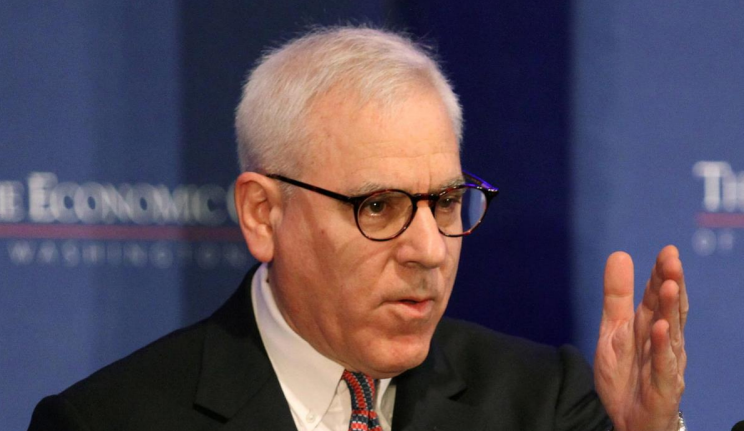
In a compelling address at the World Economic Forum in Davos, David Rubenstein, co-founder of the global investment giant The Carlyle Group, articulated a bold projection: India is on course to become the world’s largest economy within the next two to three decades. Speaking to an audience of policymakers, business leaders, and international media, Rubenstein framed India’s rise not as a future possibility but as an unfolding economic reality underpinned by demographic advantages, accelerating investment, and structural transformation.
This forecast arrives at a pivotal moment, as global growth slows in many advanced economies, geopolitical tensions strain trade frameworks, and emerging markets vie for capital and influence. Against this backdrop, India’s unique combination of scale, innovation, and reform is attracting renewed global attention.
Demographic Dividend: The Youth Advantage
At the heart of Rubenstein’s argument is India’s demographic profile, which he described as “a generational asset unmatched in the modern global economy.” With a population exceeding 1.45 billion, India is expected to have the largest workforce in the world by 2030, with more than 65% under the age of 35. This contrasts sharply with aging societies in North America, Europe, and East Asia, where labor force participation is declining due to demographic headwinds.
Rubenstein highlighted that a burgeoning young workforce gives India both productivity potential and consumer market scale. “A youthful population is not merely a statistic,” he said, “it is the foundation for innovation, resilience, and sustained growth.” He noted that India’s millennials and Gen Z cohorts are driving digital adoption, entrepreneurial ventures, and consumption trends that are redefining domestic markets and investor expectations.
Statistical projections support these claims. By 2040, India’s working-age population—those aged 15 to 64—is forecast to be larger than the combined working populations of the United States and the European Union. This demographic edge, Rubenstein argued, will transform India into both a global production hub and a consumption powerhouse, with lasting implications for global demand patterns.
Investment Momentum and Structural Reform
India’s trajectory is not based solely on population dynamics. Rubenstein underscored the role of policy reforms and investment flows that have strengthened the country’s economic infrastructure and global business appeal. A decade of economic reforms—from the implementation of a unified national goods and services tax to landmark improvements in ease of doing business—has improved India’s investment climate.
Foreign direct investment (FDI) inflows have expanded significantly, rising from around $34 billion in 2015 to more than $88 billion in 2025, propelled by sectors such as technology, manufacturing, and green energy.
Rubenstein also cited India’s G20 leadership role, which has showcased New Delhi’s capacity to shape global economic governance. “India is no longer a passive participant in global finance,” he said. “It is an active architect of policies that define supply chains, climate goals, and multilateral cooperation.”
Moreover, India’s digital infrastructure—including the world’s most extensive biometric ID system and widespread mobile internet penetration—is enabling financial inclusion and entrepreneurial scaling. Startups are flourishing; India is now home to more than 60 unicorns, spanning fintech, edtech, health tech, and e-commerce. This vibrant private-sector dynamism feeds into national economic resilience and global investor confidence.
Manufacturing and Global Supply Chains
A critical component of the economic leadership narrative is India’s role in global manufacturing and supply chains. Historically, global production networks were heavily concentrated in East Asia, particularly China. Over the past decade, however, multinational corporations have diversified their production footprints—a trend accelerated by geopolitical tensions and pandemic-era disruptions.
Rubenstein emphasized that India is emerging as a strategic alternative for global manufacturers seeking risk-mitigated supply bases. Government initiatives such as Production Linked Incentives (PLI) in sectors ranging from semiconductors to pharmaceuticals are attracting significant capital commitments. These policies aim not only to boost domestic manufacturing capacity but also to integrate Indian supply chains into global trade networks.
Sectors such as electric vehicles (EVs) and renewable energy are drawing particular interest. India’s commitment to expand renewable generation capacity to over 500 gigawatts by 2030, alongside ambitious EV adoption targets, is reshaping industrial priorities and fueling allied investments in battery ecosystems and component manufacturing.
Challenges and Strategic Imperatives
Despite the optimism, Rubenstein acknowledged that the path to becoming the world’s largest economy is neither automatic nor without significant challenges. India must navigate persistent structural constraints including infrastructure gaps, income inequality, and educational quality disparities.
He emphasized that human capital development remains a pivotal frontier. While India’s demographic trends are advantageous, the quality of education and skills training must accelerate to ensure that the workforce is prepared for the demands of the 21st-century economy. Investments in lifelong learning, vocational training, and STEM education were cited as priorities to harness the full economic potential of India’s youth.
Additionally, Rubenstein highlighted the importance of institutional strengthening, including enhancements to regulatory frameworks and legal systems that support business confidence and innovation. He also cautioned that India’s environmental sustainability agenda needs sharper integration with economic planning, noting that climate change poses risks across supply chains and agricultural systems. India’s future leadership, he stressed, must be both economically and ecologically resilient.
Global Impact and Strategic Partnerships
Rubenstein’s remarks in Davos carried significant implications for how nations and investors should perceive India’s role in a rapidly shifting global landscape. For traditional economic powers, India’s rise represents both competition and collaboration.
The United States, European Union, Japan, and ASEAN states are deepening strategic partnerships with India in areas including technology, defense, and energy. These collaborations reflect mutual interests in economic diversification and geopolitical stability.
Rubenstein highlighted that India’s engagement with multilateral institutions—including the IMF, World Bank, and G20—is helping reshape global economic governance. He pointed out that Indian policymakers are increasingly influential in discussions around global debt architecture, climate finance, and trade liberalization.
Conclusion: Redefining Global Economic Order
David Rubenstein’s projection that India could become the world’s largest economy within 20–30 years encapsulates a broader shift in the global economic zeitgeist. It reflects not just quantitative growth, but a qualitative transformation in how India engages with global markets, shapes regional alliances, and defines its strategic priorities.
As the world navigates uncertainty and competition, India’s rise offers a narrative of possibility—one rooted in scale, innovation, and the long view. If current trends hold, the coming decades may well witness India not only leading in GDP terms but also influencing the norms and institutions that define the global economy of the 21st century.