
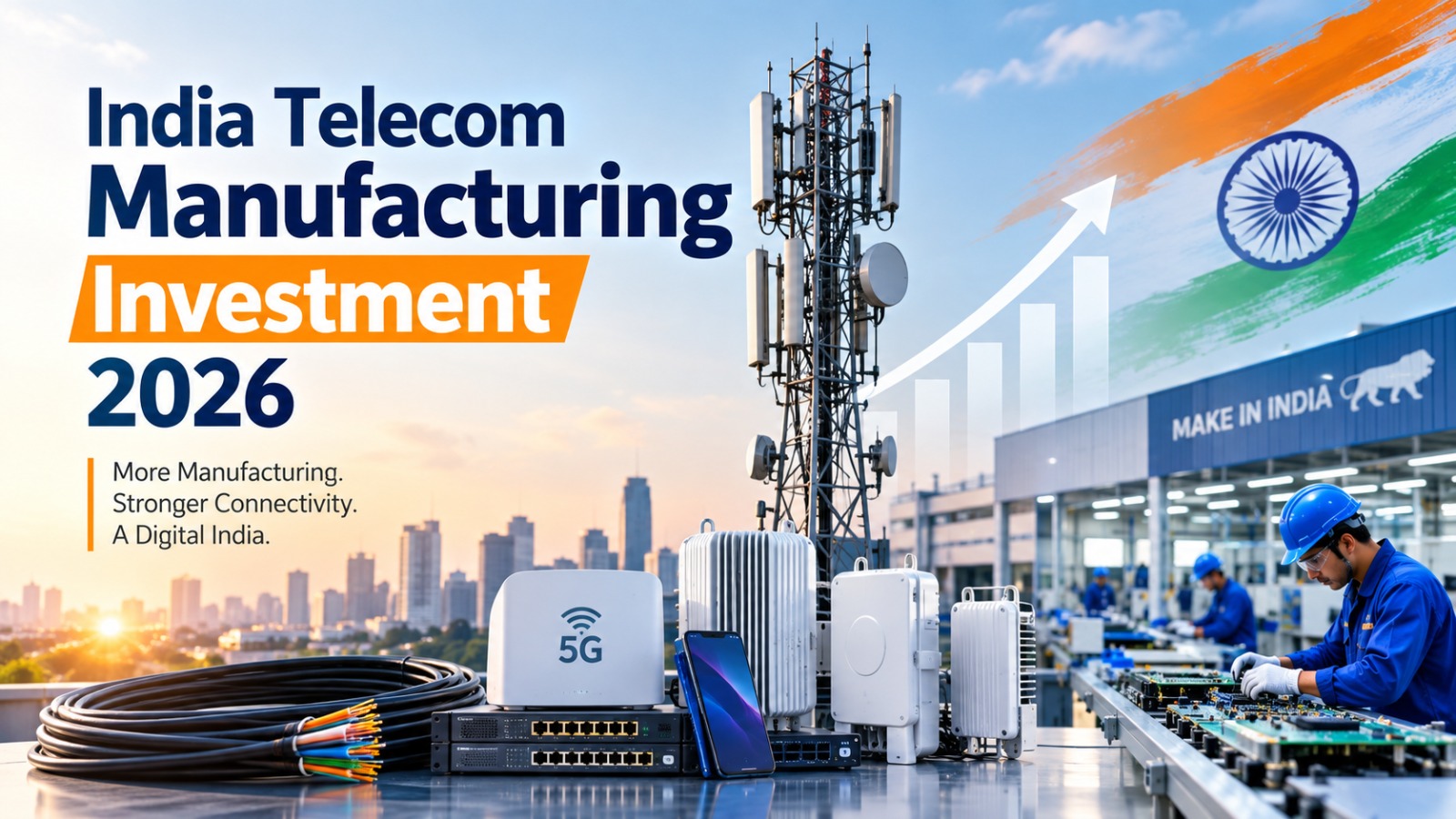
India Telecom Manufacturing Investment 2026: ₹5,500 Crore
India telecom manufacturing investment 2026 gains momentum as 24 companies propose ₹5,500 crore for Gwalior’s Telecom Manufacturing Zone.
India telecom manufacturing investment 2026 is gaining attention as Gwalior in Madhya Pradesh moves forward with plans for a dedicated Telecom Manufacturing Zone (TMZ). According to the Department of Telecommunications, 24 companies have proposed investments of around ₹5,500 crore in the project. The government expects the zone to strengthen domestic telecom manufacturing and create a broader industrial ecosystem.
Gwalior Plans a Dedicated Telecom Manufacturing Hub
The proposed Telecom Manufacturing Zone is being developed across approximately 170 acres within the Shrimant Madhavrao Scindia Counter Magnet City and Gwalior IT Park. The project is expected to accommodate around 24–25 telecom manufacturing units and related businesses.
The government has described the initiative as India's first integrated Telecom Manufacturing Zone, with the objective of bringing different parts of the telecom manufacturing ecosystem closer together.
The development reflects the broader effort to increase domestic manufacturing capabilities in sectors that are strategically important to India's digital economy.
₹5,500 Crore Investment Proposals
One of the key developments surrounding the project is the investment interest from companies.
Government officials said 24 companies have already come on board with proposed investments of approximately ₹5,500 crore. A recent investor roadshow in Bengaluru also generated around ₹700 crore in commitments for the Telecom Manufacturing Zone.
These proposed investments could support the development of manufacturing facilities, supply-chain businesses and supporting infrastructure within the zone.
It is important to distinguish between proposed or committed investment and capital already deployed. Actual investment will depend on project execution, approvals, financing and other business considerations.
Focus on Domestic Telecom Manufacturing
India's telecom sector has expanded significantly with the growth of digital connectivity, mobile networks, broadband services and enterprise technology.
The new manufacturing zone is intended to support domestic production rather than relying entirely on imported equipment and components.
The project is expected to cover multiple manufacturing verticals and include shared infrastructure, including a proposed ₹500 crore Common Testing Lab, according to industry reports.
Shared testing and support facilities can help manufacturers reduce duplication of infrastructure and create stronger connections between companies operating within the same ecosystem.
Potential Employment Impact
The proposed project could also have an impact on employment.
The Gwalior Telecom Manufacturing Zone is expected to create more than 18,000 direct employment opportunities, according to reports on the investment proposals.
Gwalior's existing educational and engineering talent base is another factor being highlighted in the development of the project. The city and surrounding region are expected to provide a workforce for manufacturing, engineering, testing, operations and related services.
Beyond direct employment, manufacturing clusters can also generate indirect opportunities for logistics companies, suppliers, maintenance providers, technology firms and other businesses.
Infrastructure Could Support the Investment
Connectivity is another factor being considered as Gwalior develops its manufacturing ecosystem.
The city's improved road, air and regional connectivity could help companies transport components and finished products. The proposed manufacturing zone is also positioned near existing industrial and technology infrastructure.
According to the Financial Express, the region produces around 25,000 engineering graduates annually, providing a potential talent pool for companies establishing operations in the area.
Part of India's Larger Manufacturing Strategy
The Gwalior project comes amid a wider push to expand India's manufacturing capabilities.
Semiconductors, electronics, telecommunications, renewable energy, defence manufacturing and other technology-intensive industries have attracted increasing investment interest.
For example, Applied Materials recently announced plans to invest $5 billion in India over the next decade, primarily around research, supply-chain development and workforce expansion. The announcement was made during SEMICON India 2026.
India has also received investment proposals worth approximately $11–12 billion under the second phase of its semiconductor manufacturing programme, according to the Electronics and IT Ministry.
These developments indicate that telecom manufacturing is emerging alongside other technology-related manufacturing segments.
Opportunities for the Telecom Supply Chain
The development of a dedicated manufacturing zone could create opportunities beyond large telecom equipment manufacturers.
Component suppliers, testing companies, electronics manufacturers, software providers, logistics businesses and industrial service providers could potentially become part of the wider ecosystem.
A concentrated industrial cluster can also make it easier for companies to collaborate, share suppliers and access common infrastructure.
For startups and smaller businesses, this could create opportunities to provide specialised services to larger manufacturers operating within the zone.
Challenges Ahead
While the proposed investment represents significant interest, establishing a large manufacturing ecosystem requires more than investment announcements.
Companies will need suitable infrastructure, skilled workers, reliable power and logistics networks, access to components and competitive operating costs.
The projects will also need to move from proposals and commitments to actual construction and commercial production.
The ability of the Telecom Manufacturing Zone to attract additional companies and develop a complete supply chain will therefore be an important factor in determining its long-term impact.
What the Development Means for India's Industry
The India telecom manufacturing investment 2026 trend reflects a broader shift toward building domestic capabilities in technology-intensive industries.
Gwalior's proposed ₹5,500 crore investment pipeline demonstrates the interest being generated around specialised manufacturing clusters. If the proposed projects are implemented successfully, the zone could contribute to telecom equipment production, supply-chain development and employment in the region.
At the same time, the actual economic impact will depend on how quickly proposed investments translate into operational manufacturing facilities.
For India's broader industrial ecosystem, the development is another example of how telecom, electronics and technology manufacturing are becoming increasingly important components of the country's investment landscape.
This article is for industry and business-news information and is not investment advice.
To Read More Such News Visit Startup Times .


Leave a comment
Your email address will not be published. Required fields are marked *
Add a newsletter to your widget area.
Top Stories