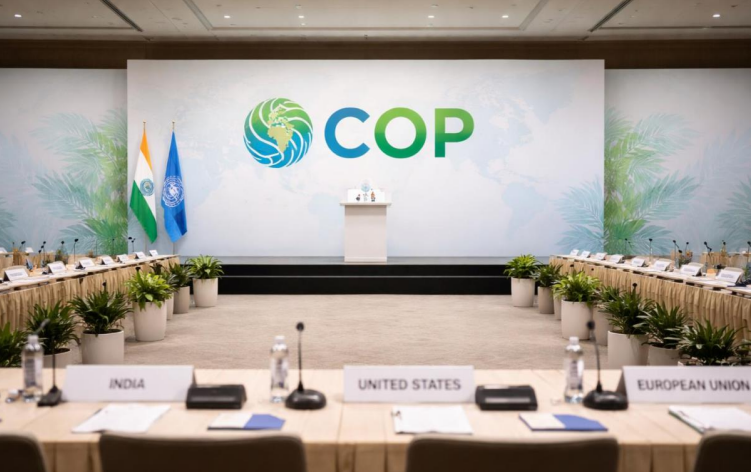
India has formally withdrawn its bid to host the 33rd Conference of the Parties (COP33), the United Nations’ flagship climate summit scheduled for 2028, marking a significant shift in its international climate diplomacy strategy.
The decision, communicated to the Asia-Pacific regional grouping under the United Nations Framework Convention on Climate Change (UNFCCC), comes after what officials described as a “review of its commitments for the year 2028.”
The move is particularly notable because India had previously positioned itself as a key contender to host the global climate summit. Prime Minister Narendra Modi had announced the country’s intent to host COP33 in 2023, reinforcing India’s ambitions to play a central role in shaping global climate negotiations.
However, the sudden withdrawal without a detailed public explanation has introduced new uncertainties regarding India’s future role in global climate governance. Analysts view this decision as part of a broader recalibration of national priorities amid evolving economic, geopolitical, and environmental pressures.
Background of COP33 and India’s Initial Bid
The Conference of the Parties (COP) under the UNFCCC represents the highest decision-making body for global climate policy, bringing together nearly 200 countries to negotiate emissions targets, climate finance, and sustainability frameworks.
Hosting such a summit carries both symbolic and strategic significance, positioning the host nation at the center of global climate discourse.
India’s bid to host COP33 was initially welcomed by several global stakeholders, including members of the BRICS grouping. Preparations had reportedly begun at the institutional level, with dedicated teams within the Ministry of Environment, Forest and Climate Change working toward logistical and policy readiness.
The Asia-Pacific group, which rotates hosting responsibilities among its members, had widely expected India to take on the role for 2028. This expectation made the withdrawal particularly significant, as it disrupts the anticipated sequence of host nations and requires a new candidate to step forward.
Reasons Behind the Withdrawal Decision
While the government has not issued a comprehensive public explanation, official communication indicates that the decision followed a “review of commitments for 2028.”
This suggests that India is reassessing its resource allocation, policy priorities, and international obligations for that period.
Hosting COP involves substantial financial, logistical, and administrative commitments. The event typically requires large-scale infrastructure development, security arrangements, diplomatic coordination, and sustained engagement with global stakeholders over multiple years. Experts suggest that competing domestic priorities may have influenced the decision.
Additionally, the evolving global geopolitical landscape marked by economic volatility, energy security concerns, and regional conflicts may have prompted a more cautious approach. By withdrawing, India may be prioritizing internal policy execution over international event leadership.
Implications for India’s Climate Policy and Global Standing
India’s withdrawal raises important questions about its positioning in global climate leadership.
While the country remains a key player in climate negotiations, stepping back from hosting COP33 could be interpreted as a shift toward a more inward-focused strategy.
However, India’s climate performance indicators remain strong. The country has made significant progress in reducing emissions intensity and expanding renewable energy capacity, positioning itself as a leading voice among developing nations advocating for climate equity and financial support from developed economies.
From a diplomatic perspective, the decision may not necessarily weaken India’s influence but could redefine its approach. Rather than focusing on symbolic leadership through hosting, India may aim to exert influence through policy frameworks, alliances, and negotiation strategies.
Global Reactions and Diplomatic Dynamics
The withdrawal has created a vacuum in the Asia-Pacific group, which must now identify an alternative host for COP33. Countries such as South Korea have shown interest at regional levels, though no formal bid has been confirmed.
International observers have responded with a mix of surprise and pragmatism. While some view the move as unexpected, others see it as a realistic adjustment to complex national and global challenges. The absence of an official explanation has, however, fueled speculation regarding the underlying motivations.
The decision also reflects broader trends in global climate diplomacy, where nations are increasingly balancing international commitments with domestic priorities. This recalibration is particularly evident among emerging economies navigating rapid development alongside sustainability goals.
Outlook
India’s decision to withdraw from hosting COP33 marks a pivotal moment in its climate policy trajectory.
While it represents a departure from earlier ambitions, it also highlights the complexities of balancing domestic priorities with global leadership roles.
In the short term, the focus will shift to identifying a new host for COP33 and ensuring continuity in global climate negotiations. For India, the emphasis is likely to remain on strengthening domestic climate initiatives and maintaining its influence within international forums.
Looking ahead, the move underscores a broader transformation in global climate governance, where leadership is increasingly defined not only by hosting high-profile events but also by the ability to implement effective policies and drive meaningful outcomes.