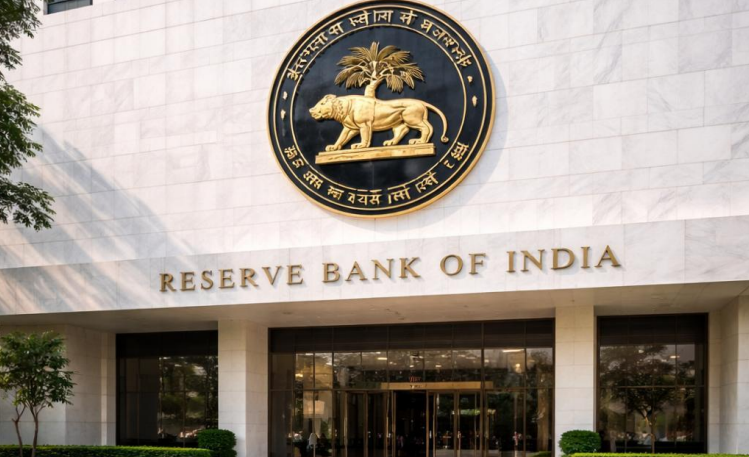
India’s monetary policy landscape is entering a crucial phase as the Reserve Bank of India (RBI) prepares to announce its latest policy decision against a backdrop of global uncertainty and rising inflation risks.
Economists widely expect the central bank to retain the benchmark repo rate at 5.25%, extending its pause in the rate cycle as it evaluates evolving economic conditions.
This expectation is shaped largely by the impact of the ongoing Middle East crisis, which has disrupted global energy markets and pushed crude oil prices above $100 per barrel, significantly raising inflation concerns for import-dependent economies like India.
The decision reflects a careful balancing act between sustaining economic growth and containing inflation. While domestic indicators remain relatively stable, external shocks—particularly from energy markets and geopolitical tensions—have introduced new uncertainties into India’s macroeconomic outlook.
Global Oil Shock and Inflationary Pressures
The primary driver behind the RBI’s cautious stance is the sharp rise in global crude oil prices, triggered by escalating geopolitical tensions in the Middle East.
The disruption of supply routes, including critical chokepoints, has led to a surge in energy costs, which directly impacts India’s import bill.
India imports nearly 85–90% of its crude oil requirements, making it highly sensitive to global price fluctuations. As oil prices rise, transportation costs, manufacturing expenses, and overall input prices increase, feeding into broader inflation across sectors.
Recent data indicates that inflation, while still within the RBI’s tolerance band, is showing early signs of upward pressure. Consumer price inflation rose to 3.21% in February, up from 2.75% in January, suggesting that cost pressures are gradually building.
RBI’s Monetary Policy Strategy and Rate Pause
The RBI’s decision to hold the repo rate reflects a deliberate “wait-and-watch” approach. By maintaining the rate at 5.25%, the central bank aims to preserve financial stability while allowing time to assess the full impact of global developments.
The Monetary Policy Committee (MPC), which meets from April 6 to April 8, is expected to maintain a neutral policy stance, giving it flexibility to respond to future changes in inflation or growth conditions.
Economists broadly agree that the current environment does not warrant immediate rate changes. Instead, the RBI is likely to focus on forward guidance, revising its projections for inflation and GDP growth in light of new global risks.
Financial Market Reactions and Currency Dynamics
Financial markets are closely watching the RBI’s policy decision, with significant movements already visible in currency and bond markets.
The Indian rupee has shown volatility, appreciating nearly 2% recently after RBI intervention, but remains under pressure due to capital outflows and rising oil prices.
Government bond yields have also risen sharply, with the 10-year yield crossing 7.13%, reflecting investor concerns about inflation and fiscal conditions. This increase indicates tightening financial conditions, which could impact borrowing costs across the economy.
The RBI has taken additional steps outside its policy framework, including tightening foreign exchange regulations to curb speculative trading. These measures aim to stabilise markets without altering the benchmark interest rate.
Growth Considerations and Domestic Economic Stability
Despite global challenges, India’s domestic economy continues to show resilience. Growth momentum remains steady, supported by strong consumption and investment activity. However, rising external risks are beginning to weigh on the outlook.
Higher energy costs could dampen economic activity by increasing production costs and reducing disposable income. This creates a complex policy environment where aggressive tightening could slow growth, while inaction could allow inflation to rise.
The RBI must therefore strike a delicate balance. Maintaining the current rate allows the economy to absorb external shocks while avoiding abrupt policy changes that could disrupt growth. This cautious approach reflects the central bank’s focus on long-term stability.
Outlook
The expected decision by the RBI to hold the repo rate at 5.25% underscores the challenges of managing monetary policy in an increasingly volatile global environment.
While domestic conditions remain relatively stable, external risks—particularly from energy markets—are reshaping the inflation outlook.
In the near term, the RBI is likely to continue its cautious stance, closely monitoring global developments and their impact on the Indian economy. Future policy decisions will depend on how inflation evolves and whether external pressures persist.
Looking ahead, the central bank’s ability to navigate these uncertainties will be critical in maintaining economic stability. As global conditions remain unpredictable, the RBI’s measured and flexible approach will play a key role in safeguarding growth while keeping inflation under control.