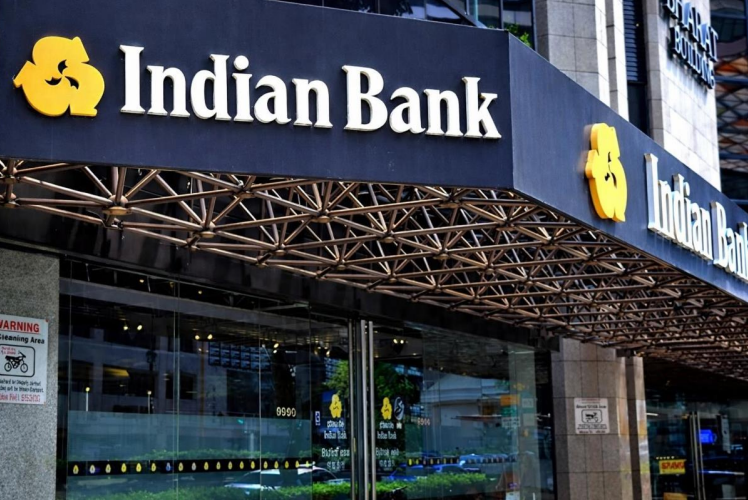
State-owned Indian Bank has taken a decisive step toward expanding its international footprint after its board approved planned operations in Southeast Asia and the United Arab Emirates, signalling a renewed push by Indian public-sector lenders to strengthen their presence across global trade and diaspora corridors.
The move underscores the bank’s robust financial health, marked by rising profitability, improved asset quality, and strengthened capital buffers over recent quarters.
The expansion aligns with India’s evolving vision of economic diplomacy, trade integration, and strategic financial presence abroad—particularly in markets where Indian businesses, workers, and investors form a substantial economic base.
With Indian Bank’s overseas strategy gaining momentum, the development positions the century-old institution for a more assertive role in regional banking networks.
A Strategic Leap Toward Global Banking Presence
The decision to enter Southeast Asia and the UAE is part of Indian Bank’s multi-year roadmap to become a globally active public-sector bank, capable of servicing cross-border corporate clients, trade ecosystems, and the large Indian diaspora.
Southeast Asia—most notably Singapore, Malaysia, and Indonesia—represents a critical hub for fintech innovation, maritime trade, and digital payment networks, while the UAE continues to serve as one of the largest financial gateways for Indian remittances, exports, and investment flows.
Officials familiar with the approval process stated that the bank will prioritise trade finance, SME support, remittance strengthening, and digital cross-border payment systems in its new overseas locations.
The bank’s enhanced liquidity position and technology upgrades are expected to form the backbone of this expansion model.
The move comes at a time when global trade corridors are being reshaped by geopolitical realignment, making India’s banking presence abroad increasingly important for maintaining competitive leverage.
Financial Stability and Growth Driving Overseas Ambitions
Indian Bank’s board approval follows a strong financial year marked by double-digit net profit growth, steady credit expansion, and significant reduction in non-performing assets (NPAs).
The bank’s gross NPA ratio fell below 4%, supported by tighter risk frameworks and rising recoveries, while its capital adequacy ratio improved to well above regulatory requirements, giving the management confidence to pursue new growth territories.
Additionally, the bank’s digital transformation initiatives—including AI-based underwriting, upgraded cybersecurity systems, and expanded mobile banking penetration—have enhanced operational efficiency.
Executives highlighted that the bank’s improved fundamentals make this “the right moment” to test international waters.
Industry analysts note that Indian Bank’s overseas expansion is consistent with a broader trend: public-sector banks strengthening their global relevance as India’s economic influence rises across Asia and the Gulf.
Serving Diaspora, Strengthening Trade Corridors
The UAE alone hosts over 3.5 million Indians, making it one of the largest expatriate communities globally and a core remittance partner for India.
Southeast Asia, meanwhile, accounts for billions in trade flows, with Indian businesses actively investing across Singapore, Vietnam, and Malaysia in sectors ranging from logistics to manufacturing to fintech.
Indian Bank aims to tap this customer base through specialised NRI services, cross-border corporate lending, and digital remittance routes that reduce transaction costs while improving speed and transparency.
The bank also plans to partner with fintech and payments companies in these regions to strengthen its competitiveness against private and global banks already entrenched in these markets.
Experts believe that public-sector participation in overseas markets is crucial for sustaining India’s long-term export growth strategy and enabling Indian firms abroad to access smoother financing channels.
Regulatory Approvals and Next Steps
While the board approval marks a major milestone, Indian Bank’s entry into these jurisdictions will depend on final clearances from the Reserve Bank of India (RBI) and corresponding regulatory authorities in Southeast Asian and Gulf nations.
Banking regulators in both regions emphasise strict compliance frameworks, strong capital backing, and commitments to anti-money-laundering standards—criteria that Indian Bank is prepared to meet.
The bank is expected to begin with representative offices or limited-purpose branches, gradually scaling to full operations as market traction grows.
Early plans include establishing a base in Dubai or Abu Dhabi, alongside a strategic presence in Singapore, positioning the bank within global financial circuits central to India’s trade and investment flows.
Conclusion
Indian Bank’s overseas expansion marks a strategic inflection point for India’s public-sector banking landscape.
With stronger balance sheets, enhanced digital capabilities, and rising global economic influence, Indian banks are increasingly stepping beyond domestic borders to support India’s growing international footprint.
The move reflects not only confidence in the bank’s financial stability but also India’s broader ambition to deepen its presence in regions vital to trade, remittances, and geo-economic partnerships.
As Indian Bank positions itself in Southeast Asia and the UAE, it signals a future in which Indian institutions play an expanded role in global finance—serving diaspora communities, enabling business growth, and strengthening India’s economic identity abroad.