Why Tier-2 and Tier-3 Cities Are Becoming India’s Next Startup Hubs
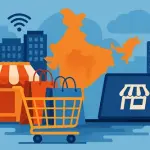
Tier-2 and Tier-3 cities are emerging as India’s next startup hubs, driven by lower costs, digital connectivity, growing talent, government support and expanding consumer markets.
For years, India’s startup story was closely associated with cities such as Bengaluru, Mumbai, Delhi-NCR and Hyderabad. These metropolitan centres offered startups access to venture capital, experienced talent, technology infrastructure, corporate networks and large consumer markets.
But India’s startup ecosystem is gradually changing.
Tier-2 and Tier-3 cities are emerging as important startup hubs, creating new opportunities for entrepreneurs beyond the traditional metropolitan ecosystem. Better digital connectivity, lower operating costs, growing consumer demand, improving infrastructure and government-backed startup initiatives are helping smaller cities become attractive destinations for entrepreneurship.
According to a SEBI report, Tier-2 and Tier-3 cities have increasingly emerged as centres of growth and innovation, supported by improved digital and physical infrastructure, government policies and a growing talent pool. The report also found strong representation from these cities across sectors such as IT services, healthcare, education and waste management.
This shift could significantly reshape the future of the Indian startup ecosystem.
The Rise of Startup Ecosystems Beyond Metros
India’s startup ecosystem is no longer restricted to a handful of metropolitan cities. Entrepreneurs are building companies in cities such as Jaipur, Lucknow, Indore, Chandigarh, Coimbatore, Bhubaneswar, Ahmedabad, Kochi, Dehradun and many other emerging centres.
A recent Startup India ecosystem report highlighted that around 45% of Indian startups originate from Tier-II and Tier-III cities, demonstrating how entrepreneurship is spreading beyond traditional startup hubs.
The trend is also visible in technology employment. Recent data reported by Financial Express showed a sharp rise in active tech job openings in Tier-2 and Tier-3 cities, with cities including Coimbatore, Chandigarh and Jaipur developing specialised capabilities in areas such as engineering, R&D and BPM services.
The growth of these cities does not necessarily mean that traditional hubs are losing importance. Instead, India is moving towards a more distributed startup ecosystem where innovation can emerge from multiple regions.
1. Lower Operating Costs Give Startups More Runway
One of the biggest advantages of Tier-2 and Tier-3 cities is the lower cost of doing business.
Office rentals, accommodation, salaries and other operational expenses can often be lower compared with major metropolitan areas. For early-stage startups operating with limited capital, controlling these costs can make a significant difference.
A startup that spends less on office space and employee costs can potentially use more of its capital for product development, marketing, technology and customer acquisition.
This is particularly important at a time when investors are increasingly paying attention to sustainable growth, profitability and efficient use of capital.
Instead of spending heavily to establish a presence in an expensive metro, some startups can build their initial operations in a smaller city while serving customers across India or even internationally.
2. Growing Digital Infrastructure Is Removing Geographic Barriers
The expansion of smartphones, affordable internet access, digital payments and cloud-based tools has changed what it means to run a business from a smaller city.
A founder in Jaipur or Lucknow can use the same digital marketing platforms, cloud software, social media networks, payment systems and collaboration tools available to a startup in Bengaluru.
Remote and hybrid work have further reduced geographical limitations.
This means a startup does not necessarily need to be physically located in a major technology hub to hire talent, communicate with customers or sell products.
Digital infrastructure is therefore helping smaller cities compete in areas that were traditionally dominated by metros.
3. Tier-2 and Tier-3 Cities Offer Untapped Consumer Markets
Another major reason startups are moving beyond metropolitan areas is the size of the opportunity.
India's next wave of consumers is not limited to large cities. Rising incomes, increasing internet penetration and greater digital adoption are creating new demand across smaller cities and towns.
For startups, these markets can provide opportunities in:
- E-commerce
- Fintech
- Healthcare
- Education
- Food delivery
- Logistics
- Mobility
- D2C brands
- Financial services
- Local-language technology
- Agritech
A product designed specifically for the needs of smaller cities can potentially address a market that has been underserved by traditional businesses.
This is particularly important because consumers outside major metros are becoming increasingly comfortable with online shopping, digital payments and app-based services.
4. Local Problems Are Creating New Startup Opportunities
Some of India's most interesting startup opportunities are emerging from problems that are highly specific to local communities.
For example, entrepreneurs in smaller cities may have a deeper understanding of challenges involving agriculture, logistics, healthcare access, education, transportation, tourism and local commerce.
This creates an important advantage: proximity to the problem.
A founder who understands the local market can identify customer pain points that may be overlooked by companies operating primarily from large metropolitan centres.
Startups can then build products specifically suited to regional requirements, languages and consumer behaviour.
This approach can create strong product-market fit and provide startups with an opportunity to expand from a local market to a national one.
5. A Growing Talent Pool Is Supporting Startup Growth
Talent availability was once considered one of the biggest disadvantages of building a company outside major cities.
That situation is changing.
Tier-2 and Tier-3 cities have large populations of graduates, engineers, designers, marketers and other professionals. Universities and educational institutions in these regions are also producing young talent interested in technology and entrepreneurship.
The rise of remote work has made this talent more accessible to companies.
Instead of forcing talented professionals to relocate to Bengaluru, Mumbai or Delhi-NCR, startups can increasingly build distributed teams and hire employees from their own regions.
This can benefit both companies and employees by reducing relocation costs while creating more employment opportunities locally.
6. Government Initiatives Are Supporting Regional Entrepreneurship
Government support is another important factor behind the growth of startup ecosystems outside major metros.
The Startup India initiative and state-level startup policies have helped increase access to incubation, mentorship, funding and entrepreneurship programmes.
Several states are also developing dedicated startup policies and innovation hubs to attract entrepreneurs.
For example, Karnataka's Beyond Bengaluru initiative is working to develop technology and innovation ecosystems outside the state capital. The Hubballi-Dharwad-Belagavi region already has hundreds of startups and thousands of technology-related jobs, with the state targeting further expansion.
Uttar Pradesh has also recently introduced a revamped startup policy aimed at improving funding opportunities and encouraging deep-tech ventures.
Such policies can help create the infrastructure required for entrepreneurs to build businesses without moving to traditional startup centres.
7. Startup Funding Is Gradually Expanding Beyond Traditional Hubs
Access to funding remains one of the biggest challenges for startups outside major cities.
However, the investment ecosystem is becoming more geographically diverse.
Incubators, accelerators, angel investors, venture capital firms, government-backed programmes and startup competitions are creating additional funding channels for entrepreneurs.
The emergence of successful companies from smaller cities can also encourage investors to look beyond established startup hubs.
As more startups demonstrate strong revenue growth and scalable business models, investors may become increasingly comfortable evaluating opportunities based on business fundamentals rather than just location.
8. Technology Allows Smaller-City Startups to Think Globally
Perhaps the biggest change is that a startup's location no longer determines the size of its potential market.
A software company based in Jaipur can serve customers in the United States. A D2C brand from a smaller city can sell products across India through e-commerce platforms. A technology startup can build a distributed team and acquire customers through digital marketing.
This creates a new model of entrepreneurship:
Build locally, sell nationally and scale globally.
Technology, social media, cloud computing and digital payments have made this model increasingly practical.
9. D2C and Consumer Brands Are Benefiting From the Shift
Tier-2 and Tier-3 cities are particularly promising for India's D2C ecosystem.
Entrepreneurs can build brands around regional products, traditional crafts, food, fashion, beauty and lifestyle categories and then take them to national and international consumers.
The combination of local knowledge and digital distribution can create a powerful competitive advantage.
For example, a founder may understand a traditional product or regional customer need better than a large national company while using Instagram, marketplaces and its own website to reach customers across the country.
This is helping transform smaller cities from consumption centres into brand-building and entrepreneurship centres.
10. The Growth of Specialized Startup Hubs
Not every emerging startup city will become another Bengaluru—and it does not need to.
Different cities can develop expertise in different sectors.
Coimbatore, for example, has strong industrial and engineering capabilities. Jaipur has developed a strong ecosystem around consumer businesses, tourism and technology. Chandigarh has a growing technology and services ecosystem, while cities across Karnataka are developing specialised technology and manufacturing capabilities.
This suggests that India's future startup ecosystem may consist of multiple specialised hubs rather than one dominant centre.
Such regional specialisation can make the overall ecosystem stronger by connecting startups with local industries, universities, talent and supply chains.
Challenges That Tier-2 and Tier-3 Startup Hubs Still Face
Despite their growing potential, smaller cities still face challenges.
Access to large-scale venture capital remains easier in established startup hubs. Some cities also lack mature incubators, specialised talent, corporate networks and advanced infrastructure.
Founders may also face difficulties when trying to recruit senior leadership or connect with investors.
Another challenge is visibility. A promising startup outside a major city may need to work harder to gain attention from investors, media and large enterprise customers.
Therefore, building a strong startup ecosystem requires more than government incentives. It requires sustained investment in talent, infrastructure, mentorship, funding networks and industry partnerships.
What the Future Looks Like
The future of India's startup ecosystem is likely to be more geographically distributed.
Bengaluru, Mumbai, Delhi-NCR and Hyderabad will continue to remain important startup centres. However, cities such as Jaipur, Coimbatore, Lucknow, Indore, Chandigarh and Bhubaneswar are increasingly capable of supporting startups and technology businesses.
Recent evidence supports this broader shift. A 2025 Meta-Alvarez & Marsal study of high-growth Indian startups found that nearly all surveyed startups were expanding into Tier-2 and Tier-3 markets to address demand and supply gaps.
The trend is therefore not simply about startups moving their headquarters away from metros. It is also about businesses discovering customers, talent and opportunities beyond India's biggest cities.
Conclusion
Tier-2 and Tier-3 cities are becoming India's next startup hubs because they combine lower operating costs, growing talent pools, expanding digital infrastructure, emerging consumer markets and increasing government support.
The biggest opportunity may not be about replacing India's traditional startup capitals. Instead, it is about creating a much larger and more diverse entrepreneurial ecosystem.
For founders, this means more locations from which to build a company. For investors, it means access to new markets and business models. For professionals, it means more opportunities without having to move to a metro.
India's next generation of startups may not all come from Bengaluru, Mumbai or Delhi.
Some of them could come from the cities that were once considered too small to build a startup in.

Leave a comment
Your email address will not be published. Required fields are marked *
Add a newsletter to your widget area.
Top Stories