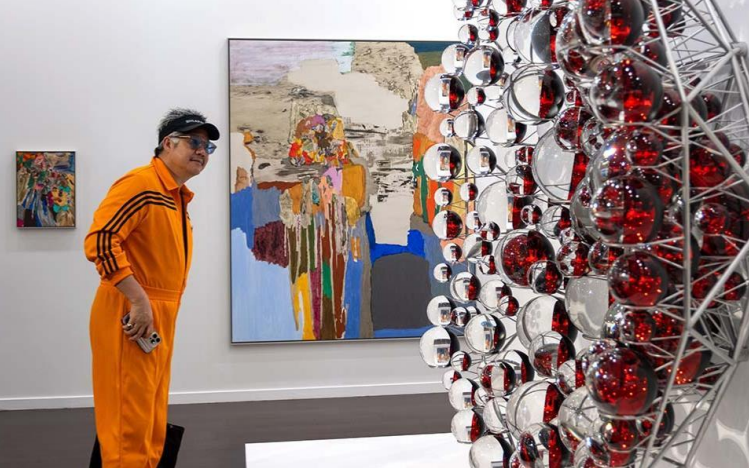
The India Art Fair opened its 2026 edition this week, drawing artists, curators, collectors and cultural institutions from across the world to one of Asia’s most influential contemporary art platforms. Held at the capital’s exhibition grounds, the fair features more than 100 galleries and institutions representing artworks from India, Europe, East Asia, Africa and the Americas, reaffirming its role as a pivotal space for cross-border artistic dialogue.
This year’s edition places a distinct emphasis on cultural diplomacy through art, including a major pavilion by the Korean Cultural Centre India, titled “Resonances of Light,” which showcases works from leading and emerging Korean contemporary artists. The fair’s organisers confirmed that 2026 marks the highest international participation since the event’s inception, signalling India’s rising relevance in the global arts economy.
International Participation and Expanding Global Reach
The 2026 edition of the fair reflects a substantial increase in international engagement, with exhibitors from 11 countries participating in specially curated sections dedicated to contemporary, digital and mixed-media works. Senior fair officials noted that global representation this year has grown by more than 30% compared to 2025, led by increased participation from East Asian and European galleries.
Several galleries from France, Germany, South Korea and Japan introduced works blending modern experimentation with traditional cultural elements, drawing significant interest from collectors seeking cross-cultural narratives. Curators observed that the fair’s expanding international footprint is strengthening India’s position in the global art circuit, especially as markets increasingly seek Asian voices and new thematic perspectives.
Art consultants attending the fair highlighted that rising demand for contemporary South Asian artists among global buyers has contributed to elevated visibility for Indian galleries. This increased attention has also opened new opportunities for collaborative exhibitions scheduled across 2026 in Seoul, Paris and Berlin.
Korean Pavilion ‘Resonances of Light’: A Cultural Centrepiece
A central attraction this year is the Korean pavilion, titled “Resonances of Light,” organised by the Korean Cultural Centre India. The pavilion features a curated selection of Korean contemporary artworks that explore luminosity, digital form, and traditional Korean aesthetics through abstraction, multimedia installations and kinetic light structures.
Korean curators noted that the visual theme symbolises shared cultural harmony and artistic exchange between India and Korea at a time when bilateral creative collaborations are increasing across art, cinema and design. Several Korean artists debuted works built around digital projection mapping, creating immersive spaces that attracted long queues of visitors over the opening weekend.
Fair organisers confirmed that this is the largest East Asian cultural showcase in the history of the event, and discussions are underway to extend Indo-Korean cultural partnerships through reciprocal exhibitions, heritage-led collaborations and youth-focused art programmes later in the year.
Market Dynamics and Collector Trends
The Indian and international art markets responded strongly to the fair’s opening, with early sales and institutional acquisitions reflecting shifting buyer preferences. Key market observations included:
• A surge in demand for mixed-media works integrating technology, digital textures and sensory experiences.
• Increased institutional interest in young Indian contemporary artists, driven by expanding museum programmes focused on South Asian art.
• Strong participation of corporate collectors seeking investment-grade works linked to sustainability, identity, and global socio-cultural themes.
• Interest from global buyers in Indo-Korean collaborative installations, marking a growing space for cross-national cultural investment.
Analysts noted that sustained collector turnout this year demonstrates confidence in India’s art-market resilience, even amid global economic uncertainty.
Cultural Significance and India’s Expanding Art Ecosystem
The India Art Fair has long served as a bridge between India’s evolving art movements and the global cultural ecosystem. This year’s edition underscores the increasing institutional support for contemporary art within India, including rising museum infrastructure, private patronage and state-supported cultural programmes.
Officials from the Ministry of Culture present at the event highlighted that India’s creative economy has expanded by nearly 11% over the past two years, driven by heritage tourism, digital art markets and increased participation in international exhibitions. The fair is viewed as both a cultural celebration and an economic catalyst, generating substantial revenue through tourism, hospitality, art commerce and international collaborations.
Cultural analysts noted that the 2026 edition signals a “turning point” for India’s global creative presence, as the fair continues to play a critical role in positioning the country as a key hub for artistic innovation, cross-cultural exchange and market expansion. The spotlight on Korean art further strengthens India’s ambition to host multi-national cultural dialogues across Asia.
Conclusion
The India Art Fair 2026 stands out as one of the most globally interconnected editions to date, offering a vibrant mix of artistic expression, international collaboration and market momentum. With its strong representation from global galleries, innovative Korean pavilion and flourishing Indian contemporary talent, the fair underscores India’s growing influence in global cultural networks.
As the fair continues through the week, curators and institutions anticipate expanded cross-regional dialogues, emerging artist recognition and enhanced cultural diplomacy outcomes. The event not only highlights the depth of India’s artistic landscape but also reinforces its strategic role in shaping the future of contemporary art across borders.