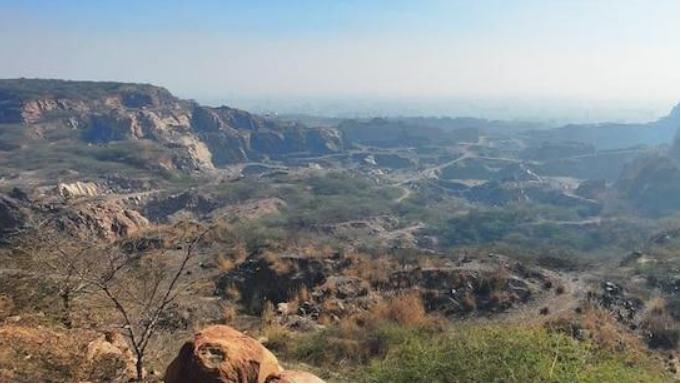
The Union government has announced a ban on granting any new mining leases across the Aravalli Range, a decisive step aimed at preserving the ecological integrity of one of India’s oldest mountain ranges. Stretching across Gujarat, Rajasthan, Haryana, and the National Capital Region (NCR), the Aravallis are a critical natural buffer, supporting groundwater recharge, preventing desertification, and maintaining regional biodiversity.
The directive instructs all states within the Aravalli belt to strictly enforce the ban, while ensuring that ongoing mining operations comply fully with environmental and safety regulations. Officials emphasized that this move is part of a long-term strategy to safeguard the range, curb environmental degradation, and restore areas already impacted by unregulated extraction and urban encroachment.
Earlier Circular and Public Backlash
The government’s earlier circular, issued in mid-2025, allowed new mining leases in parts of the Aravalli Range outside certain “protected” zones, sparking widespread controversy. Environmentalists, civil society groups, and local communities argued that the order weakened ecological safeguards and could accelerate habitat destruction, groundwater depletion, and soil erosion.
Critics also pointed out that the earlier definition of “protected zones” was ambiguous, leaving large stretches of ecologically sensitive areas vulnerable to unregulated extraction. The new directive addresses these concerns by enforcing a uniform ban across the entire range, while planning scientific identification of zones requiring restoration or stricter protection.
Ecological Significance and Conservation Priorities
The Aravalli Range, over 1.5 billion years old, is one of the world’s oldest mountain systems. Its forests, wetlands, and rocky outcrops play a crucial role in sustaining local climate, soil health, and wildlife habitats. Over the past decades, unregulated mining and rapid urban expansion have caused severe soil erosion, deforestation, and depletion of aquifers, impacting both human and ecological communities.
Environmental authorities have highlighted that the ban on new leases is aimed at halting further degradation, while ongoing monitoring and scientific studies will identify sensitive zones for conservation. Reforestation programs, waterbody restoration, and community-based management are also planned to enhance ecological resilience.
Policy Framework and Enforcement
The Ministry of Environment, Forest and Climate Change (MoEF&CC) has instructed state governments to implement the ban uniformly and transparently, ensuring that administrative lapses do not undermine its intent. Central agencies will assist states in monitoring compliance using modern tools such as satellite imagery, geospatial mapping, and real-time alerts.
A comprehensive management and conservation plan is being prepared to outline the long-term strategy for the Aravallis. This will define no-mining zones, restoration priorities, and guidelines for sustainable use of natural resources. Existing mining operations will continue, but only under stricter supervision and mandatory adherence to environmental safeguards.
Socio-Economic Impact and Local Concerns
While the ban is expected to benefit the environment in the long term, it raises challenges for regions where mining contributes significantly to local economies. Rajasthan, in particular, relies on the extraction of marble, dolomite, and other minerals for industrial and construction purposes. Local communities, miners, and ancillary businesses may face temporary disruptions, necessitating careful planning and alternative livelihood initiatives.
Officials have indicated that the government is exploring measures to mitigate economic impact, including skill development programs, alternative employment opportunities, and incentives for eco-friendly enterprises. Experts emphasize that integrating environmental protection with socio-economic support is key to ensuring sustainable outcomes.
National and Long-Term Implications
The ban is a landmark step toward strengthening India’s environmental governance and preserving its natural heritage. Experts note that protecting the Aravalli Range will not only improve ecological stability but also contribute to climate resilience, water security, and disaster mitigation in the densely populated NCR and surrounding regions.
By halting new mining leases and enforcing compliance, authorities are signaling a shift toward sustainable development, balancing economic interests with long-term environmental stewardship. Observers say this move could set a precedent for the conservation of other ecologically sensitive regions across the country.