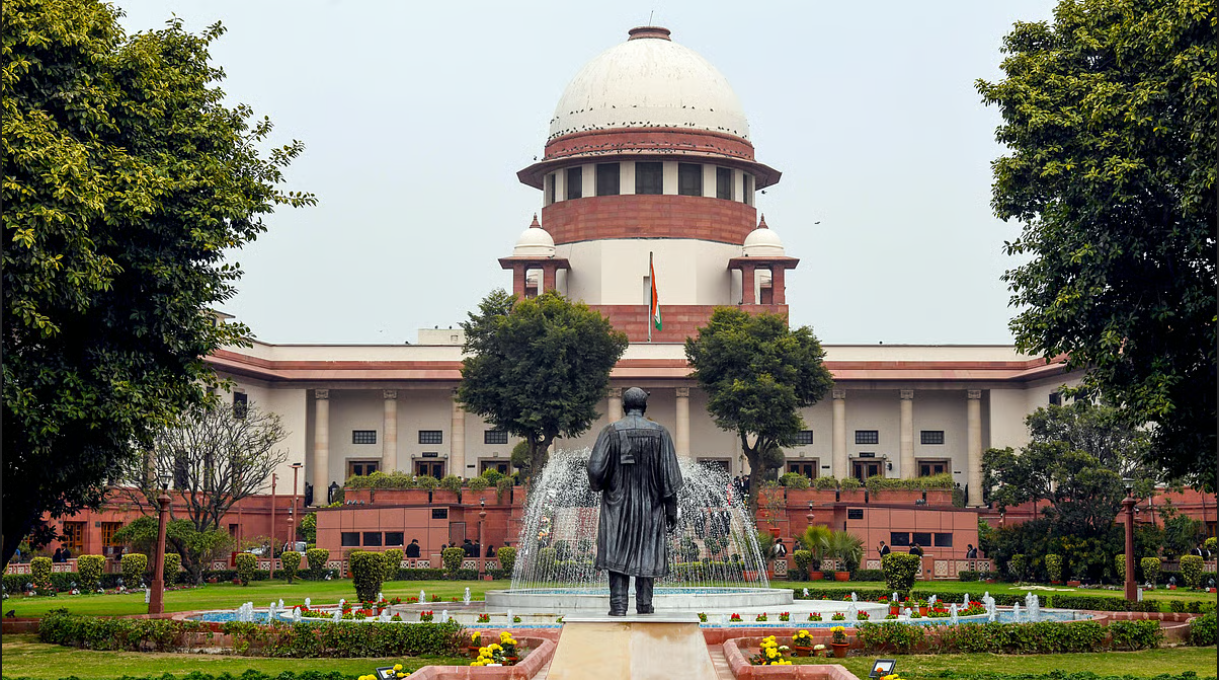
The Supreme Court of India has issued a strong directive to the central and state governments to take immediate and urgent steps to combat rising air pollution in major cities, with a special focus on the Delhi-National Capital Region (NCR). This order comes amid a sharp spike in PM2.5 levels, which have reached hazardous concentrations in several urban centers, posing severe health risks to millions of residents.
Background of the Air Pollution Crisis
Delhi-NCR has long struggled with air pollution, particularly during the winter months when temperature inversions trap pollutants close to the ground. However, recent data shows that PM2.5 levels have surged beyond the safe threshold set by the World Health Organization (WHO). In some parts of Delhi, PM2.5 levels have exceeded 400 micrograms per cubic meter—more than 15 times the WHO’s recommended limit of 25 micrograms per cubic meter.
The sources of pollution are multifaceted, including vehicular emissions, industrial discharge, construction dust, and the seasonal burning of crop stubble in neighboring states. The situation is further exacerbated by meteorological factors such as low wind speeds and high humidity, which prevent the dispersion of pollutants. This combination has led to frequent “severe” and “very poor” air quality days, with visibility dropping to dangerous levels and schools being forced to close intermittently.
Supreme Court’s Directive
In response to the deteriorating air quality, the Supreme Court convened a special hearing and issued a series of directives aimed at curbing pollution. The bench, headed by Chief Justice D.Y. Chandrachud, emphasized the right to clean air as a fundamental right under Article 21 of the Indian Constitution, which guarantees the right to life and personal liberty. The court criticized the slow pace of action by both the central and state governments and called for a coordinated, multi-pronged approach to address the crisis.
The key directives include:
Immediate Action Plans:
The court directed the Ministry of Environment, Forest and Climate Change, along with the governments of Delhi, Uttar Pradesh, Haryana, and Punjab, to submit detailed action plans within 48 hours. These plans must outline specific measures to reduce emissions from vehicles, industries, and construction sites, as well as steps to prevent crop stubble burning.Enhanced Monitoring:
The court ordered the installation of additional air quality monitoring stations in all major cities and mandated real-time data sharing with the public. This transparency is intended to hold authorities accountable and empower citizens to take protective measures.Strict Enforcement:
The court instructed enforcement agencies to impose stricter penalties on violators, including heavy fines and temporary closure of polluting industries. The court also emphasized the need for regular inspections and surprise checks to ensure compliance.Public Awareness Campaigns:
Recognizing the role of public behavior in pollution control, the court directed the government to launch extensive awareness campaigns. These campaigns will focus on promoting the use of public transport, carpooling, and reducing the use of firecrackers during festivals.
Government Response
Following the Supreme Court’s order, the central government convened an emergency meeting with state officials and environmental experts. Union Environment Minister Bhupender Yadav announced a series of short-term and long-term measures. In the short term, the government will implement the Graded Response Action Plan (GRAP), which includes measures such as banning diesel generators, restricting construction activities, and increasing the frequency of mechanized road sweeping.
For the long term, the government is considering a comprehensive policy overhaul. This includes promoting electric vehicles, incentivizing industries to adopt cleaner technologies, and investing in renewable energy sources. The government also plans to strengthen inter-state coordination to address the issue of crop stubble burning, which is a major contributor to Delhi’s winter pollution.
Health Implications
The health implications of the current pollution levels are severe. High concentrations of PM2.5 can penetrate deep into the lungs and bloodstream, causing respiratory and cardiovascular diseases. Vulnerable populations, including children, the elderly, and those with pre-existing health conditions, are at the greatest risk. Hospitals in Delhi have reported a surge in cases of asthma, bronchitis, and other respiratory illnesses, with many patients requiring emergency care.
The Supreme Court’s directive is expected to have a significant impact on public health. By mandating immediate action and stricter enforcement, the court aims to reduce exposure to harmful pollutants and prevent a public health crisis. The court also urged the government to provide free or subsidized masks and air purifiers to vulnerable populations and to ensure that schools and workplaces have adequate ventilation systems.
Public and Expert Reactions
The Supreme Court’s order has been widely welcomed by environmental activists, health experts, and the general public. Many see it as a much-needed intervention to address a crisis that has been neglected for too long. Environmental groups have called for sustained action and accountability, warning that temporary measures will not be enough to solve the underlying problem.
Experts have also highlighted the need for a holistic approach that goes beyond emergency responses. They emphasize the importance of long-term solutions such as urban planning, green infrastructure, and sustainable transportation. The court’s directive is seen as a step in the right direction, but experts caution that sustained political will and public cooperation are essential for lasting change.
Conclusion
The Supreme Court’s directive to combat air pollution in major Indian cities, especially Delhi-NCR, marks a critical moment in the country’s environmental policy. By recognizing the right to clean air as a fundamental right and demanding urgent action, the court has set a precedent for future environmental governance. The government’s response, while promising, will need to be implemented with rigor and transparency to ensure that the health and well-being of millions of citizens are protected. As India continues to grapple with the challenges of rapid urbanization and industrialization, the lessons learned from this crisis will be crucial for building a sustainable and resilient future.